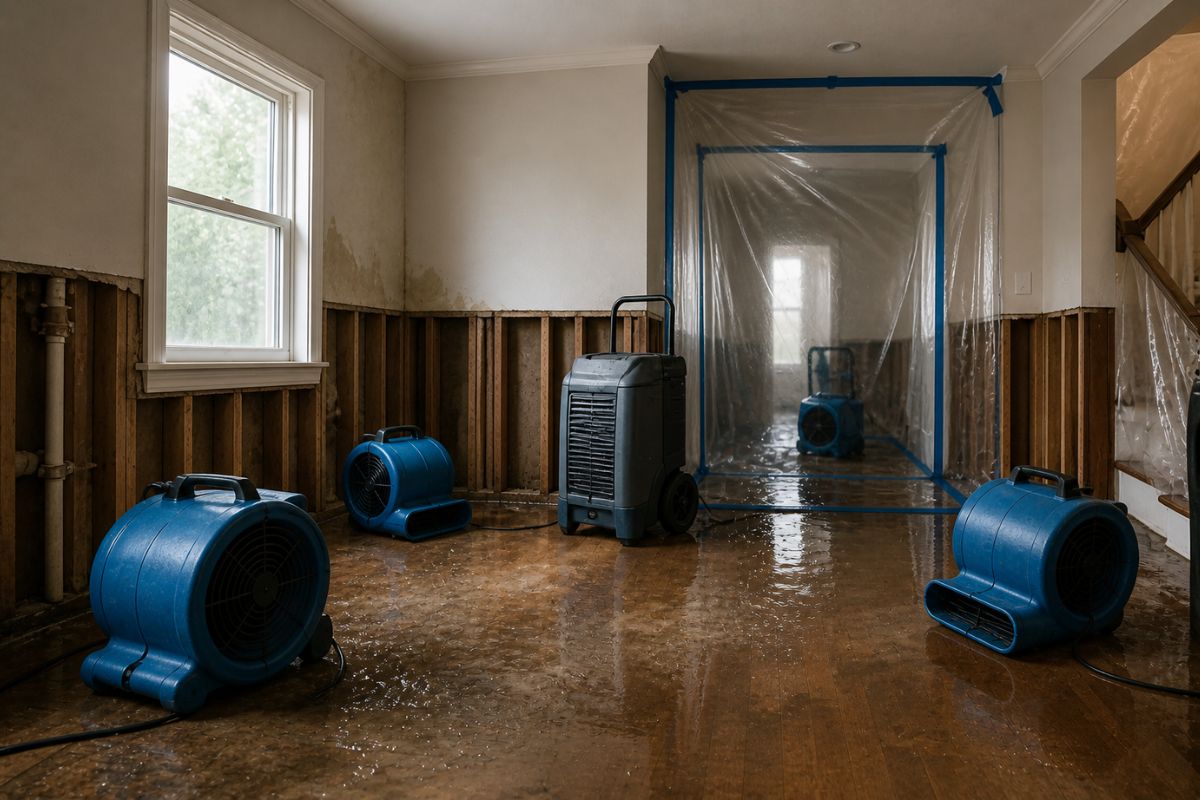
Water damage starts a clock.
You've got 24 to 48 hours before mold spores find the moisture they've been waiting for and start colonizing your drywall, your subfloor, and anywhere else they can get a grip.
Move fast and the right way, and you're dealing with repairs.
Move slow and you're dealing with remediation.
We’ll cover every step of preventing mold after water damage, from the first ten minutes to long-term protection.
Key Notes
Mold needs only 24 to 48 hours to colonize wet drywall, subfloor, and insulation.
Surfaces that feel dry rarely are – moisture meters and dry-standard benchmarks are the only reliable check.
New York State requires separate licensed assessors and abatement contractors for any job over 10 square feet.
The 24–48 Hour Rule: Why Timing Decides Everything
Mold needs four conditions to grow:
spores
organic material
temperature between 32 and 95°F
moisture
3 Of Those Are Always Present In Any Building…
Moisture is the only one you control, which is why how likely is mold after water damage comes down almost entirely to how fast you respond.
The Institute of Inspection, Cleaning and Restoration Certification (IICRC) treats 48 hours as the threshold. Past that, most porous materials need to be removed rather than cleaned. Inside the window, you have options.
The Water Category Also Shapes Your Risk:
Category | Source | Mold Risk | Action |
Cat 1 (Clean) | Supply lines, faucets, rainwater | Lowest – but degrades to Cat 2 within 48 hours if untreated | DIY possible if dried in 24 hours |
Cat 2 (Grey) | Dishwashers, washing machines, toilet overflow (no feces) | Moderate, faster growth from organic content | Professional response recommended |
Cat 3 (Black) | Sewage, flooding, river water | Guaranteed contamination, rapid growth | Licensed remediation only |
One Thing Worth Knowing:
Small leaks are more dangerous than people assume.
A slow drip behind a wall or under a sink can run for weeks before anyone notices, and by then, mold has colonized cavities and HVAC systems.
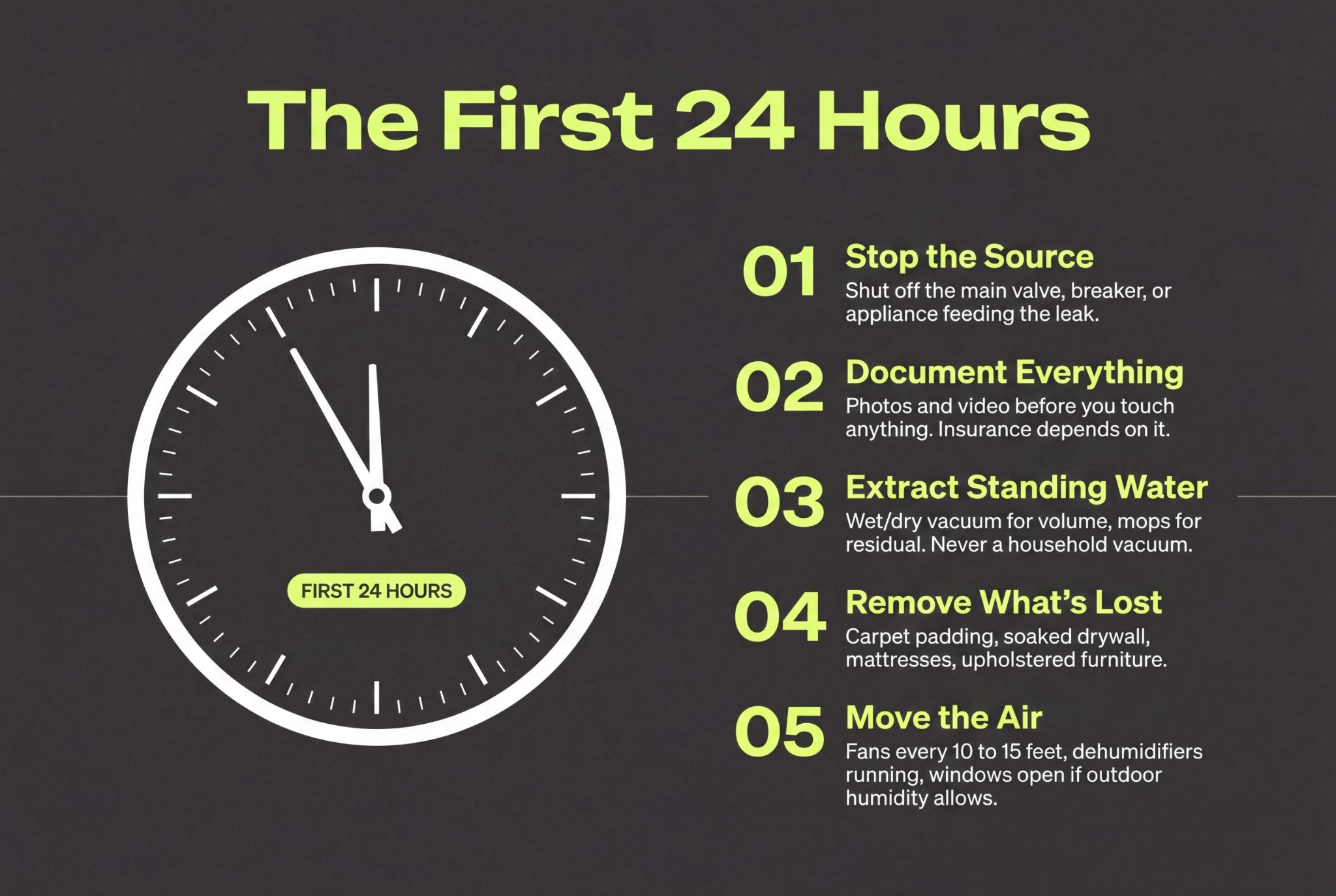
First 24 Hours: Stop, Document, Extract
What you do in hour one decides what's salvageable on day three.
Materials that could have been saved are often gone by Tuesday because nobody acted on Sunday.
Here's The Sequence:
The Mistakes That Cost The Most
A few moves we see constantly, and what they do to your property:
Waiting to see if it dries It won't, at least not fast enough. The 48-hour clock doesn't pause.
Bleach on porous surfaces. Bleach kills surface mold on tile or glass but can't penetrate drywall or wood, so the roots survive and the mold comes back.
Scrubbing visible mold without containment. Releases millions of spores into the air and contaminates rooms that were fine.
Painting over damp drywall. Traps moisture, hides growth, creates a much bigger problem six months later.
Drying: The Step Most People Get Wrong
Surfaces that feel dry to the touch are rarely dry.
Mold prevention after water damage fails most often during this stage because consumer-grade drying can't reach the moisture trapped inside building materials.
The Setup That Works
Effective drying combines three things working together:
Industrial air movers pointed directly at wet surfaces
Commercial dehumidifiers pulling moisture from the air
Temperature held at 70 to 80°F to speed evaporation without warping wood or cracking drywall
As a baseline, plan for one dehumidifier per 500 square feet of affected space, and empty the tanks every 8 to 12 hours.
The Hidden Areas That Get Missed
This is where DIY drying typically falls apart.
The places almost everyone overlooks:
Wall cavities and behind baseboards. Water seeps through cracks and pools out of sight.
Subfloors and under flooring. Moisture stays trapped long after the surface feels dry.
Insulation inside walls and ceilings. Absorbs and holds water for weeks.
Behind heavy furniture and built-ins. Areas that feel cooler or damp to the touch.
Crawl spaces and basement corners. Natural pooling zones with poor airflow.
How To Tell If Something Is Dry
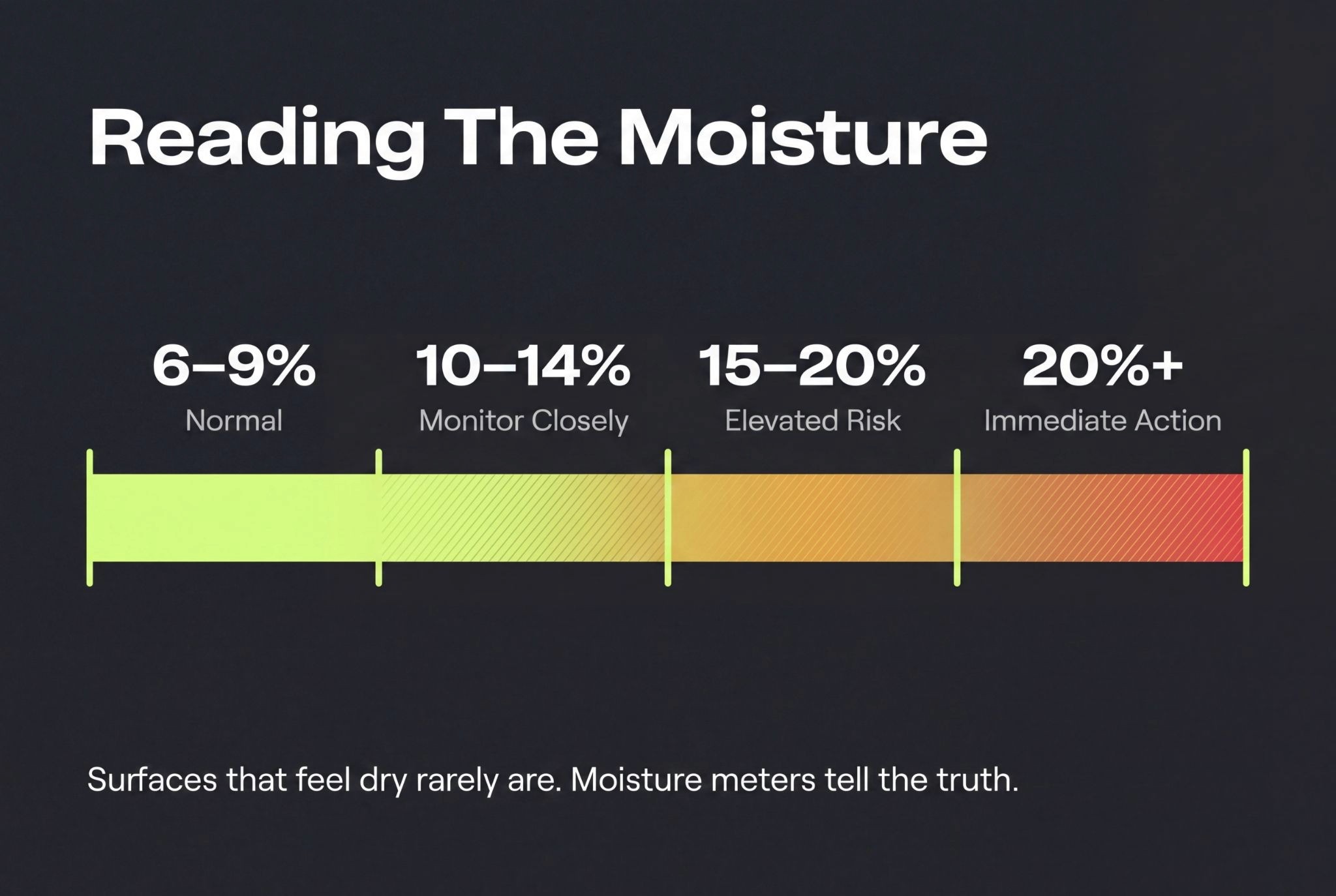
You can't reliably gauge dryness by sight or touch.
Professionals use moisture meters and compare readings against a "dry standard" – an unaffected area of the same material elsewhere in the building.
Drying is complete only when the affected material matches that benchmark.
Realistic Drying Timelines
Moderate damage with proper equipment: 3 to 5 days
Major flooding: Up to two weeks
Box-store fans and dehumidifiers move 10 to 15 times less moisture than industrial units, which is why hidden pockets of damp often outlast the drying effort and seed mold weeks after the visible cleanup wraps up.
What To Spray To Prevent Mold After Water Damage
Antimicrobial treatment goes on clean, dry surfaces – never wet ones, never moldy ones.
Apply it at the wrong stage and you trap moisture underneath, creating the exact problem you're trying to prevent.
What Works For Prevention:
Hydrogen peroxide (3%): Around 85% effective against mold species. Penetrates porous materials like wood and drywall. No residue, breaks down to water and oxygen. The best all-purpose option.
White vinegar: Roughly 82% effective and EPA-approved for general use. The acidity penetrates porous surfaces and kills mold at the root rather than just the surface. Safe around kids and pets.
Concrobium Mold Control: Professional-grade prevention spray that works by trapping spores. Used on porous surfaces after drying.
Bleach (1 cup per gallon of water): Only on non-porous surfaces like tile, glass, and metal. Useless on drywall, wood, or anything that absorbs.
On The Bathroom Question:
Will spraying vinegar in the shower prevent mold?
Yes, as a regular maintenance habit it reduces mold colonization on grout and caulk.
It doesn't replace ventilation or fix an underlying moisture problem, but used after showers it's a useful supplement.
Critical Safety Note:
Never mix hydrogen peroxide with vinegar.
The combination produces peracetic acid, which is corrosive and toxic.
Room-By-Room: How To Prevent Mold After Water Damage In House Hotspots
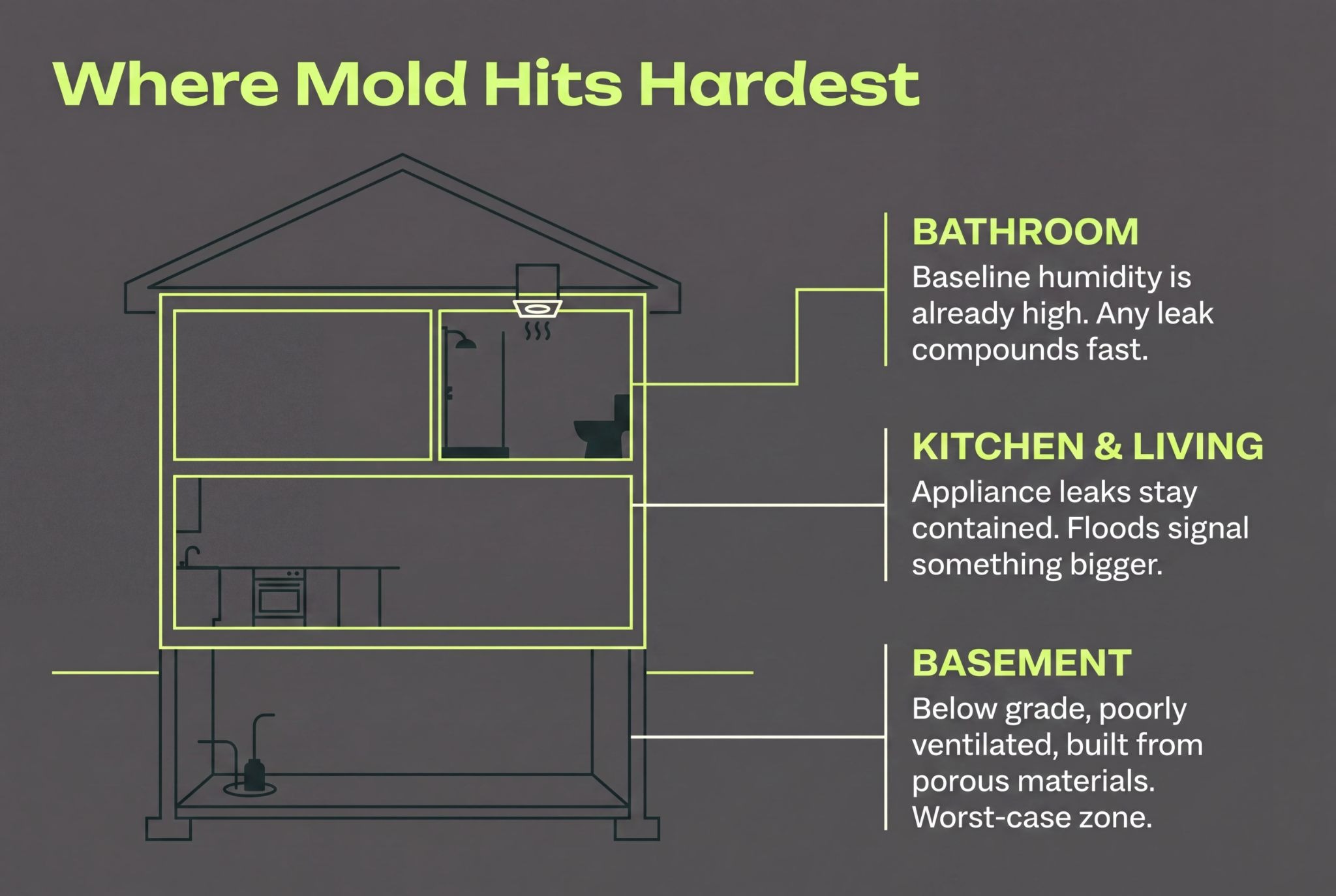
Bathrooms and basements account for most post-water-damage mold cases because they combine baseline humidity with limited airflow.
Bathroom
After Bathroom Water Damage:
Extract all standing water with a wet/dry vac
Run the exhaust fan continuously for at least 48 hours, and confirm it vents outside (venting into an attic relocates the moisture problem)
Pull caulk anywhere water seeped behind tile and re-seal after drying
Verify humidity drops below 50% with a hygrometer before painting or tiling
Basement
After Basement Flooding:
Pump standing water out before anything else – basements collect water from the entire building
Dry within 72 hours using both heat and dehumidification
Discard soaked carpet padding, insulation, and any drywall that's been wet over 48 hours
Inspect the sump pump, foundation cracks, and exterior grading – most basement floods repeat unless you fix the entry point
Run a dehumidifier continuously and hold humidity between 30 and 50%
Kitchens & Living Areas
Kitchen water damage usually stays contained and is DIY-manageable if caught within 24 hours.
Living area floods are a different story – they typically signal a burst pipe, roof failure, or exterior flooding, and almost always need professional assessment because of hidden damage in subfloors and wall cavities.
When To Call A Professional?
Call a licensed remediation contractor if any of these apply. The cost of waiting almost always exceeds the cost of professional response.
Affected area exceeds 10 square feet (roughly a 3x3 bath mat)
Water was Category 2 (grey) or Category 3 (black/sewage)
Materials have been wet over 48 hours
You can smell mold but can't see the source
HVAC systems, wall cavities, or subfloors are involved
Anyone in the building has respiratory symptoms
The property is multi-unit, rental, or under HPD/DOB jurisdiction where compliance documentation matters
How To Prevent Mold After Water Damage FAQs
How much does mold remediation cost in NYC?
Mold remediation cost in NYC starts at $800 for most residential cases, with larger or HVAC-involved jobs running higher. Costs depend on square footage, water category, materials affected, and whether testing and post-clearance are required. Ignored water damage often leads to repairs exceeding $20,000 (which is why early intervention saves money).
Can mold grow in HVAC and air ducts after water damage?
Yes, mold in air ducts is one of the most common consequences of unaddressed water damage in NYC properties. Damp ductwork, condensation on coils, and wet insulation around vents all create ideal conditions for colonization. If you smell musty odors when the system runs, schedule an HVAC mold inspection – DIY duct cleaning won't solve it.
How fast can a same-day mold inspection happen in NYC?
Same-day mold inspections in NYC are standard for licensed remediation companies with 24/7 response capability. South Bronx Restoration's licensed assessors typically arrive within hours of the call across NYC and Nassau County, run moisture mapping and air sampling on-site, and deliver lab-verified reports within 48 hours.
Do I need a licensed mold assessor in New York State?
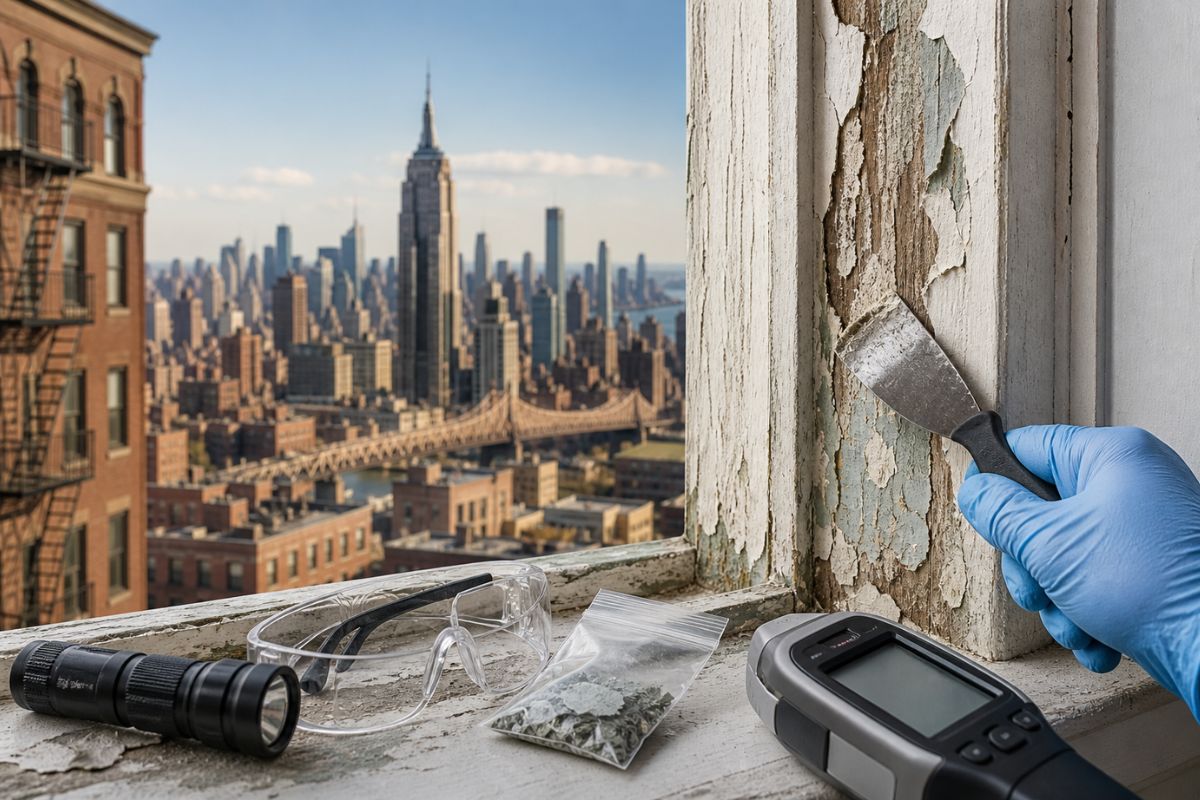
Yes, New York State requires licensed mold assessors and abatement contractors for any project over 10 square feet. The assessor and abatement contractor must be different licensed entities – the same company cannot do both for the same job. Reports from unlicensed inspectors won't hold up for insurance, HPD, or DOB compliance.
Need Eyes On It Right Now?
A licensed assessor on-site, 24/7 across NYC and Nassau.
Conclusion
Preventing mold after water damage is mostly about the first 48 hours.
Stop the source, document the damage, extract every drop of standing water, dry to a verifiable benchmark, and treat surfaces only after they're clean and dry.
Past that window, the math changes – porous materials usually need to come out, and what could've been a repair turns into remediation.
The hidden moisture is what gets people: wall cavities, subfloors, insulation, the spots that feel fine to the touch but read 25% on a meter.
Get a free quote now – South Bronx Restoration is licensed in New York State for mold assessment and abatement, with 24/7 emergency response across NYC and Nassau County, full insurance documentation, and crews that show up within hours.