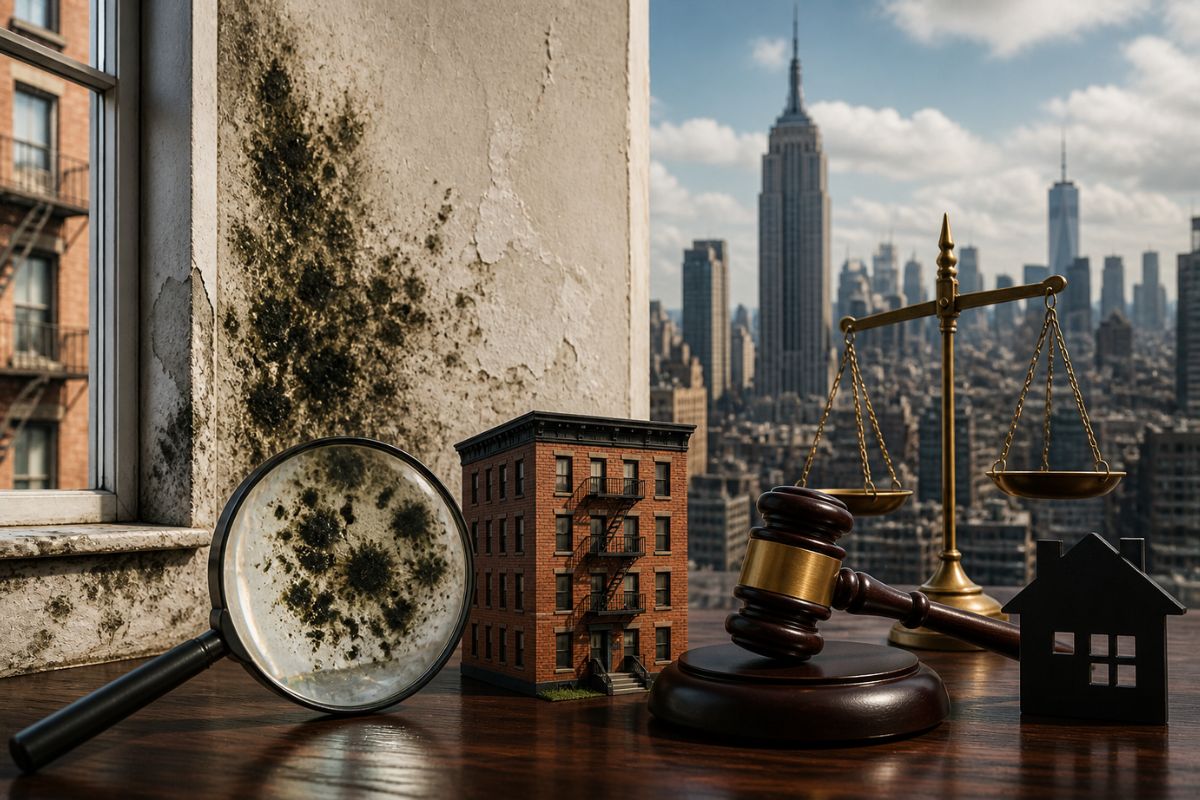
Mold lands in a NYC apartment and the clock starts ticking – for everyone.
Tenants get rights the moment they put it in writing. Owners get deadlines the moment HPD shows up. Licensed pros get pulled in the moment the job hits 10 square feet.
Three laws and two agencies decide how it all plays out.
We’ll walk through NYC mold laws in full – responsibilities, timelines, testing, penalties, and what each side needs to do.
Key Notes
Mold over 10 square feet in covered buildings requires separate NYS-licensed assessors and remediators.
Landlords own both the mold cleanup and fixing the moisture source behind it.
HPD violation classes set hard correction deadlines: 90, 30, or 21 days.
Penalties stack across HPD, DEP, and NYSDOL (climbing past $10,000 per violation).
The Legal Framework Governing NYC Mold Laws
NYC mold laws split cleanly along two lines:
state law tells you who can do mold work and how
city law tells building owners what conditions are unacceptable and when they have to act
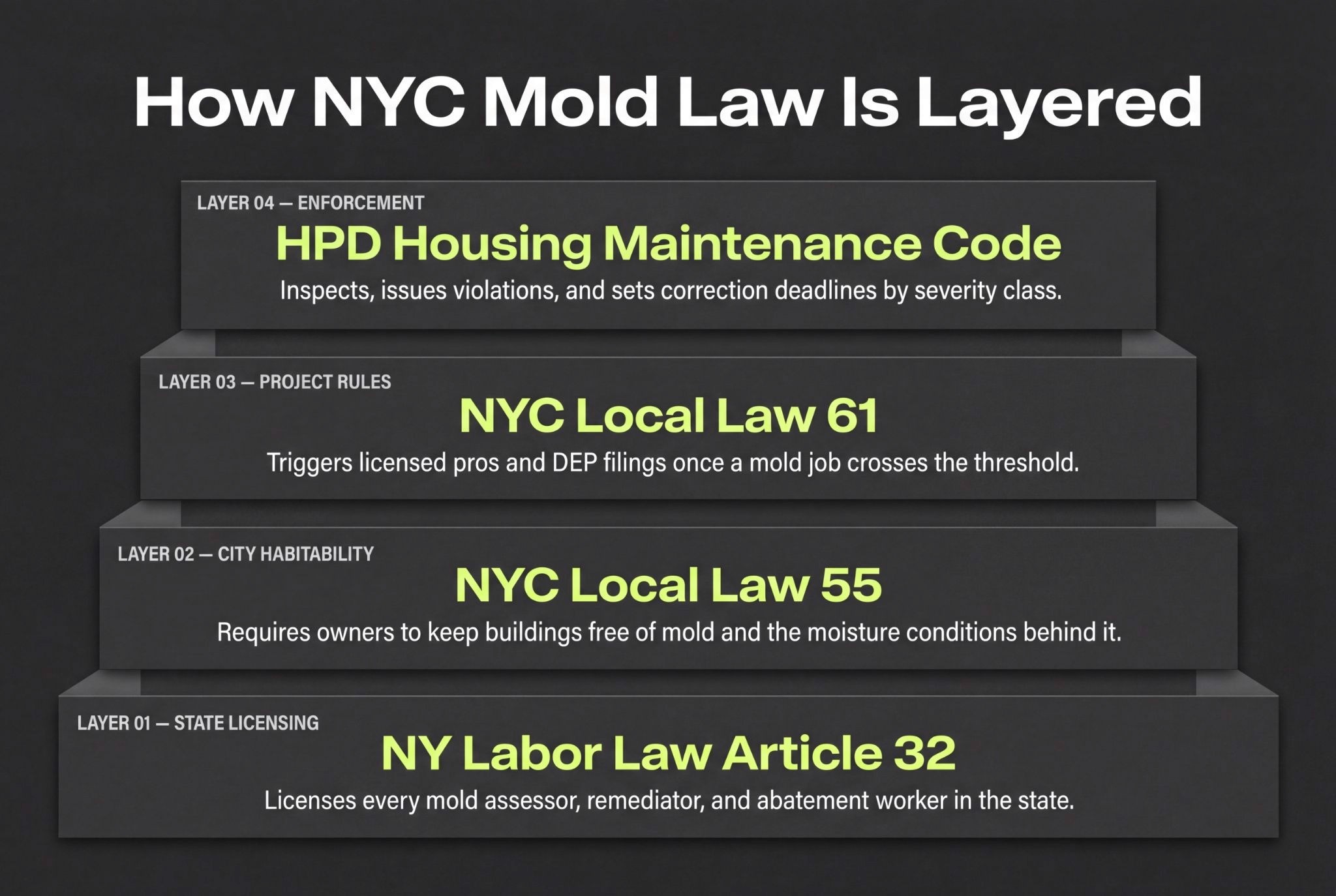
So when people ask about New York State mold laws vs. NYC rules, the short version is: state law sets the rails, NYC tightens them.
Local Law 55 is the part most property managers deal with day to day.
The 10 Sq Ft Threshold: When A "Mold Project" Triggers Licensed Pros
Once mold exceeds 10 square feet in a covered building, NYC mold laws stop being flexible. The work becomes a regulated "mold project" under Local Law 61 and Article 32.
And the rules get specific fast.
What Counts As A "Covered" Building?
A building is "covered" if it has 10 or more dwelling units, or 25,000+ square feet of non-residential floor area. Above the threshold, the owner can't have a super, handyman, or general contractor handle it.
Three Things Become Mandatory:
A NYS DOL-licensed mold assessor writes a formal remediation plan.
A separate NYS DOL-licensed mold remediation contractor performs the work (the same firm legally cannot do both – the state requires that separation to remove the conflict of interest).
DEP filings: The remediator files a Mold Remediation Work Plan & Notification Form at least 2 business days before starting, and the assessor files a Mold Post-Remediation Assessment Form & Certification within 7 days after clearance.
Smaller Jobs & Smaller Buildings
Below 10 square feet (or in smaller buildings) owners don't need licensed mold pros, but Local Law 55 still requires safe work practices and correction of the underlying moisture source.
What Skipping The Rules Costs
Skipping the threshold rules where they apply gets expensive.
DEP penalties start around $800 for a first offense and climb to $10,000 for serious or repeat violations (often stacked on top of HPD fines).
Who Is Legally Responsible For Mold In NYC?
In NYC rentals, the default position under NYC mold laws is straightforward: the landlord is responsible.
They have to remediate the mold and fix the moisture source – not one or the other.
Property Type | Who Handles Mold | Who Fixes The Underlying Cause |
Multi-family rental (most NYC apartments) | Landlord/owner | Landlord/owner |
Co-op or condo (in-unit issue) | Unit owner | Unit owner |
Co-op or condo (common element cause – roof, riser, façade) | Building/board | Building/board |
1–2 family owner-occupied | Owner | Owner |
A Few Realities:
Tenants never pay for required remediation in covered NYC rentals.
Local Law 55 is explicit on this.
Cause matters when responsibility is contested.
Roof leaks, plumbing failures, façade defects, basement flooding, or HVAC issues are squarely the owner's problem.
Pure tenant behavior (blocking vents, never running the bathroom fan, drying laundry indoors with no ventilation, ignoring a leak for months without reporting it) can shift or share responsibility but the owner usually still has to remediate.
They may pursue cost recovery; refusing to act isn't a real option.
Annual duties under NYC Local Law 55:
Owners must inspect every dwelling unit and common area each year for mold, leaks, and conditions conducive to mold.
They also have to give tenants the indoor allergen notice annually and at lease signing.
Skipping these is often what HPD finds first when violations stack up.
This Is The Heart Of Mold In Apartment Tenant Rights NY…
The tenant's right is to a habitable unit, and the law presumes the owner pays for the fix unless something credibly proves otherwise.
What The Landlord Must Do Once Mold Is Reported
Once a tenant reports mold, the owner has to inspect, stabilize the moisture source, remediate using safe work practices, and document every step.
Correction Timelines Tied To HPD Violation Classes:
Violation Class | Description | Correction Window |
Class A | Non-hazardous, minor | 90 days |
Class B | Hazardous (~10–29 sq ft) | 30 days |
Class C | Immediately hazardous (30+ sq ft, multiple rooms, severe) | 21 days; some conditions require action within 24 hours |
Outside HPD-Issued Deadlines, Courts Apply A "Reasonable Time" Standard
In practice, that means 24–48 hours to respond and somewhere between 5 and 30 days to correct, depending on severity.
Once HPD is involved, the clock is no longer informal.
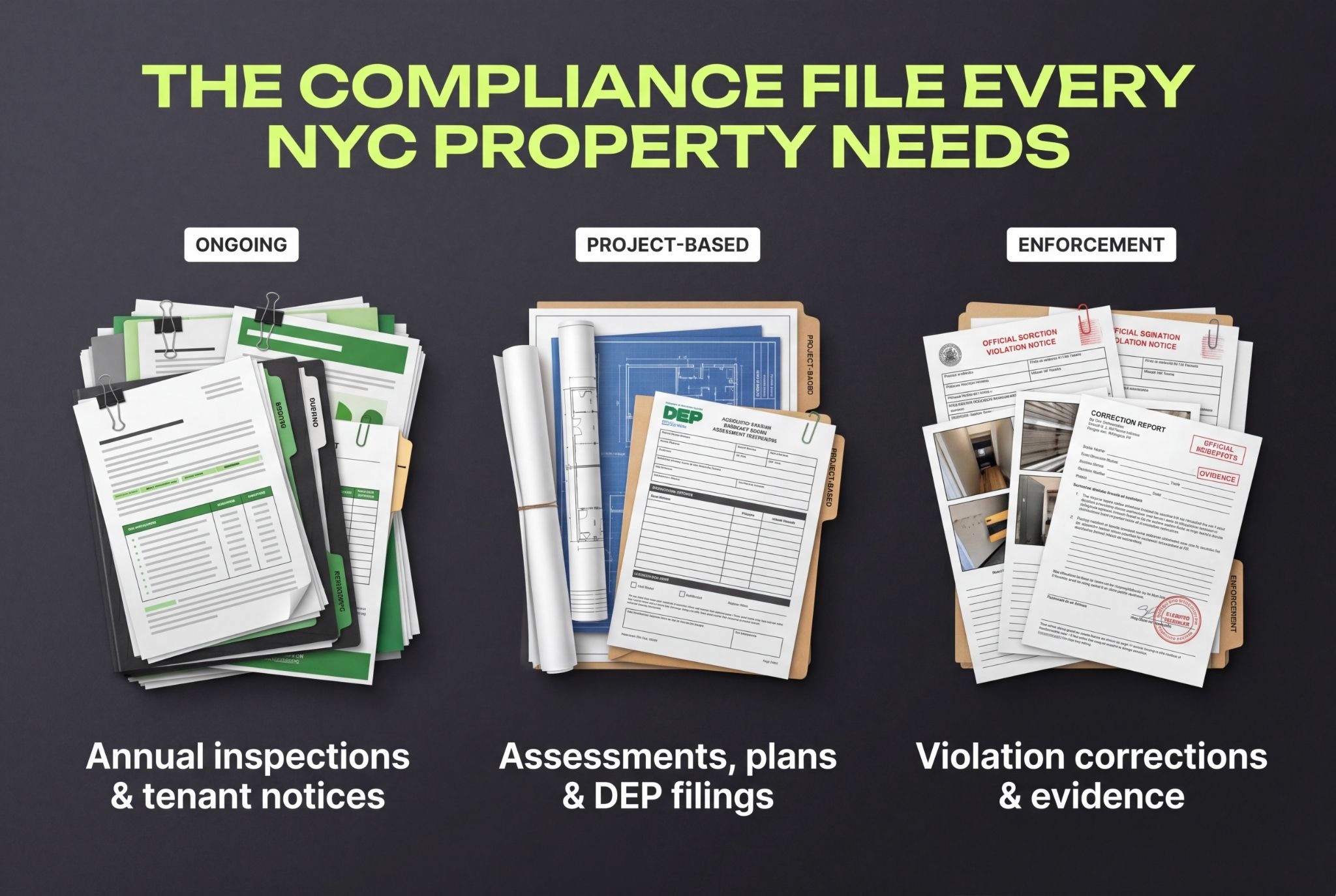
Documentation Owners Should Keep On File
Mold Testing: When It's Required & Who Can Do It
Mold testing is rarely legally required before remediation in NYC.
The NY Department of Labor and the NYC Health Department both take the same position: if you can see or smell mold, the legal duty is to remove it and fix the moisture.
Testing isn't a prerequisite, and there are no official "safe" mold-level standards to chase.
Where Mold Testing In NYC Is Useful Or Required:
Hidden mold suspected in walls, ceilings, or HVAC where evidence is needed before opening structures.
Litigation, insurance, or HPD disputes, where an independent licensed report carries weight.
Post-remediation clearance for any project above the 10 sq ft threshold – Article 32 §947 requires it.
Ongoing health complaints where objective data before and after remediation matters.
Who Can Test & Who Pays
Anyone performing mold testing in an NYC apartment as a paid service must hold a valid New York State Mold Assessor license. Unlicensed paid testing isn't allowed.
Tenants can hire their own licensed assessor for an independent report (useful for HPD escalation or court) but landlords generally aren't required to reimburse tenant-initiated testing.
Penalties, Enforcement & What Happens When Nobody Complies
NYC mold laws stack penalties from multiple agencies, which is why a single missed inspection can turn into a five-figure problem.
HPD Civil Penalties:
Mold violations carry daily penalties roughly in the $10–$125 range – with totals climbing to about $10,000 per violation depending on severity, duration, and prior history.
DEP Penalties For Covered Buildings:
$800 first offense
$2,400+ for repeat
Up to $10,000 for serious violations of licensing or filing rules (triggered by self-performing regulated mold work, hiring unlicensed contractors, or failing to file the required post-remediation certification)
NYSDOL Penalties Under Article 32:
Up to roughly $10,000 per violation + stop-work orders and license suspensions for unlicensed work.
HPD Emergency Repair Program:
Can perform the work itself and bill the owner.
Court Exposure:
Rent abatements, damages, HP action repair orders, constructive eviction outcomes, and toxic mold suits in serious cases.
For Property Managers…
The path through all of this is the same one it's always been:
annual inspections done and documented
tenant notices issued on schedule
complaints answered in days not weeks
licensed mold pros engaged the moment a job crosses the 10 sq ft threshold
NYC Mold Laws FAQs
How long does mold inspection take in an NYC apartment?
A standard mold inspection in an NYC apartment takes 1–2 hours for most units, depending on the size and how many areas show visible mold or moisture. A licensed assessor walks the unit, documents conditions, takes air or surface samples if needed, and follows up with a written report – usually within a few business days.
How much does mold remediation cost in NYC?
Mold remediation cost in NYC depends on the size of the affected area, the building type, and whether licensed pros are required under the 10 sq ft threshold. Small jobs in smaller buildings usually start at $800 and can run a couple of thousand dollars; larger regulated mold projects with assessor, remediator, and DEP filings typically run several thousand and up.
Can mold come back after remediation?
Mold can come back after remediation if the underlying moisture source isn't fixed. A leak, condensation issue, or ventilation problem left in place will let mold return within weeks. Proper remediation under Local Law 55 requires correcting the moisture cause, which is why post-remediation assessments check both the cleanup and the conditions behind it.
Is black mold in an NYC apartment treated differently under the law?
Black mold in an NYC apartment is treated the same as other mold under NYC mold laws – there's no separate legal category for it. HPD classifies violations by size and severity, not species. Any visible mold growth in a covered building can trigger a violation, and remediation must follow the same Local Law 55 and Article 32 standards regardless of color.
Need The Right Licenses On The Job?
Licensed assessment, clear report & a path to compliance – fast.
Conclusion
NYC mold laws reward the property teams who treat compliance as a workflow.
The framework is set: state law licenses the people who do the work, Local Law 55 sets the standards for habitability, Local Law 61 pulls licensed pros in once a job hits 10 square feet, and HPD enforces with violation classes that have real deadlines attached. Tenants have rights that activate the moment they put a complaint in writing.
If you're sizing up a mold issue or already holding an HPD notice, a licensed on-site assessment is the fastest way to know what you're actually dealing with. Get a free quote and we'll map the next move from there.