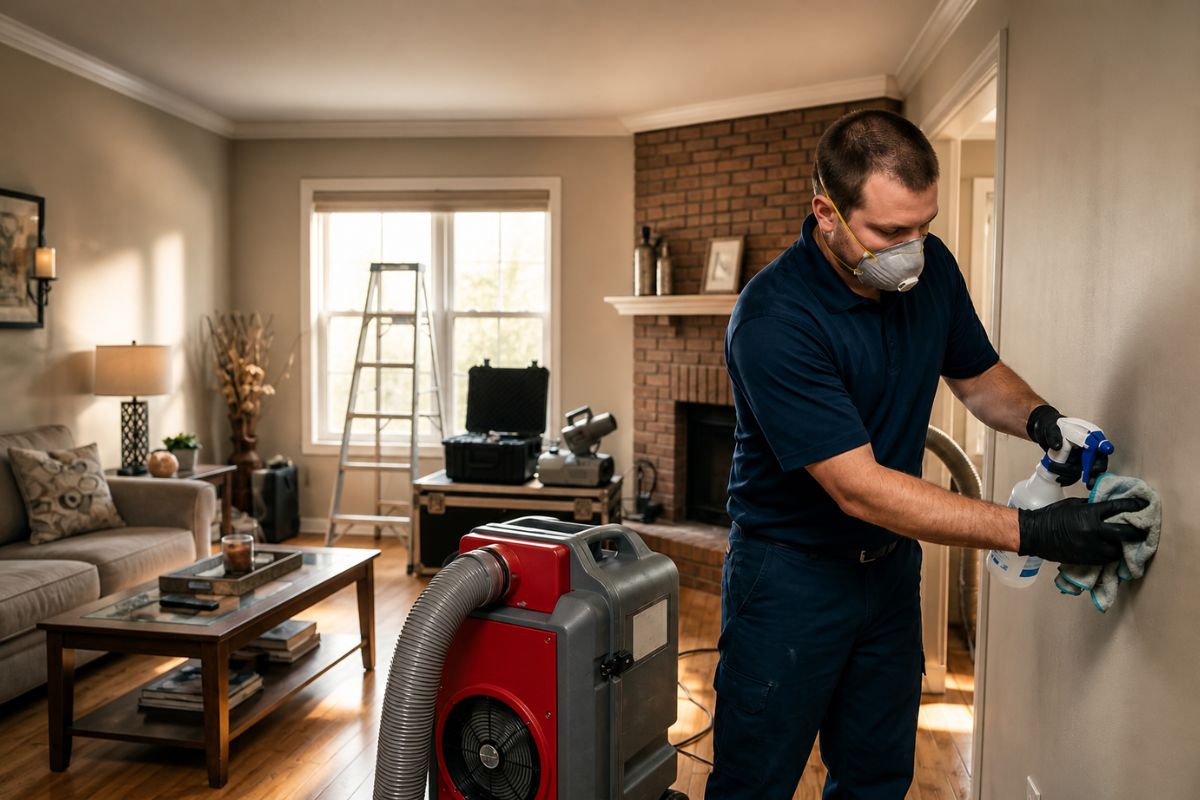
Smoke has a long memory.
It settles into drywall, soaks into ductwork, hides in insulation, and waits for the next humid week to remind everyone it's still there.
Getting odor out of an NYC property after a fire takes more than airing out the unit and slapping on fresh paint – and a lot of the standard fixes make things worse.
Here's what works.
Key Notes
Permanent odor removal follows a fixed seven-step sequence & skipping steps is why odor returns months later.
Light-to-moderate cases run $1,000–$4,000, while full reconstruction can push severe fires past $40,000.
Insurance typically covers smoke remediation when it's written into the approved scope as a separate line item.
Why Smoke Odor Lingers After A Fire & Why It's A Health Issue
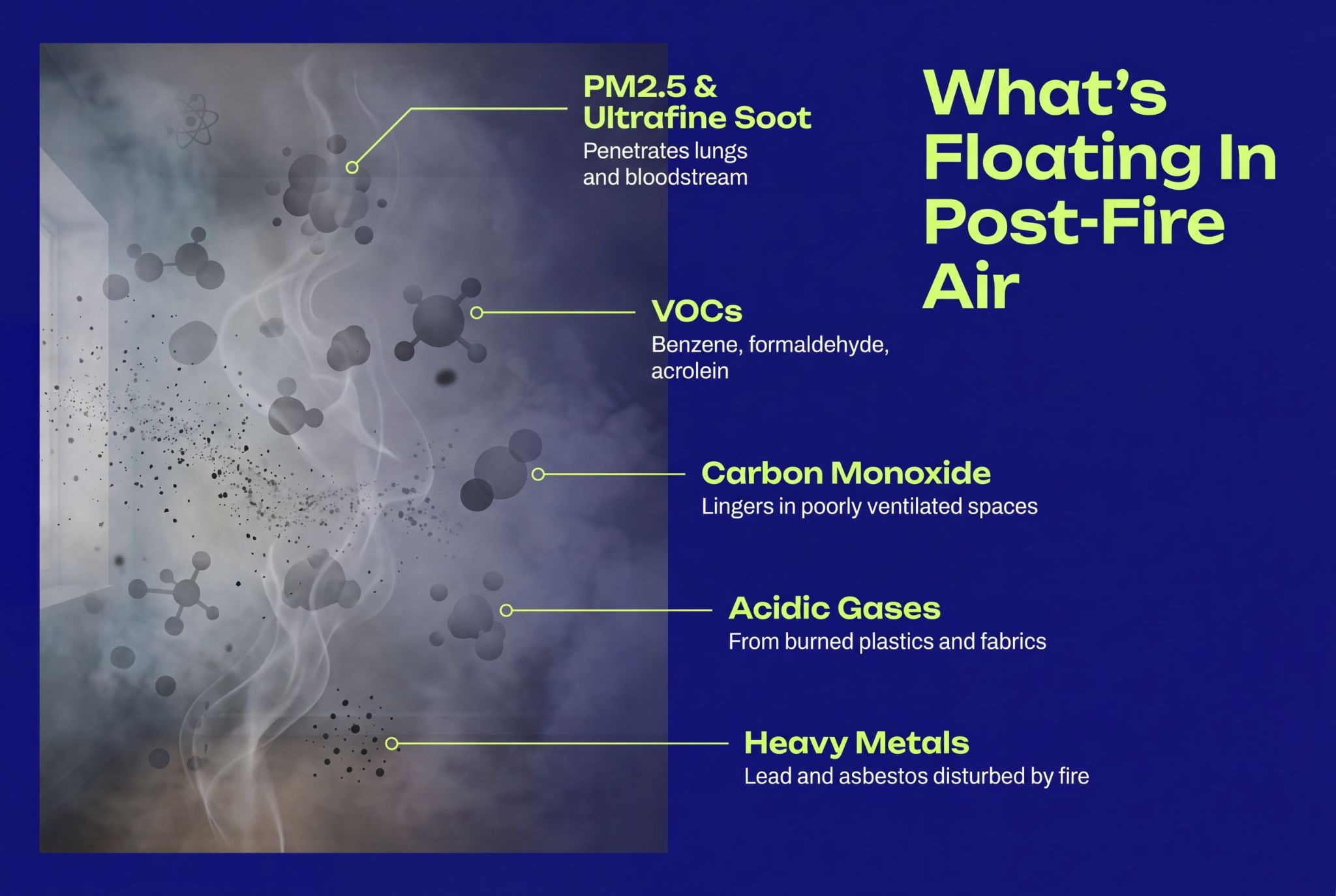
The smell is a chemical cocktail of fine particulate, gases, and residues actively re-emitting from materials that absorbed them during the fire.
Here's what's in the air of a smoke-impacted unit:
Where Smoke Hides In NYC Buildings
Smoke moves with warm air, which means it ends up in places that look completely untouched.
The reservoirs that hold odor longest are rarely the visibly burned areas (they're the hidden pathways smoke followed during the event):
Reservoir | Why It Holds Odor |
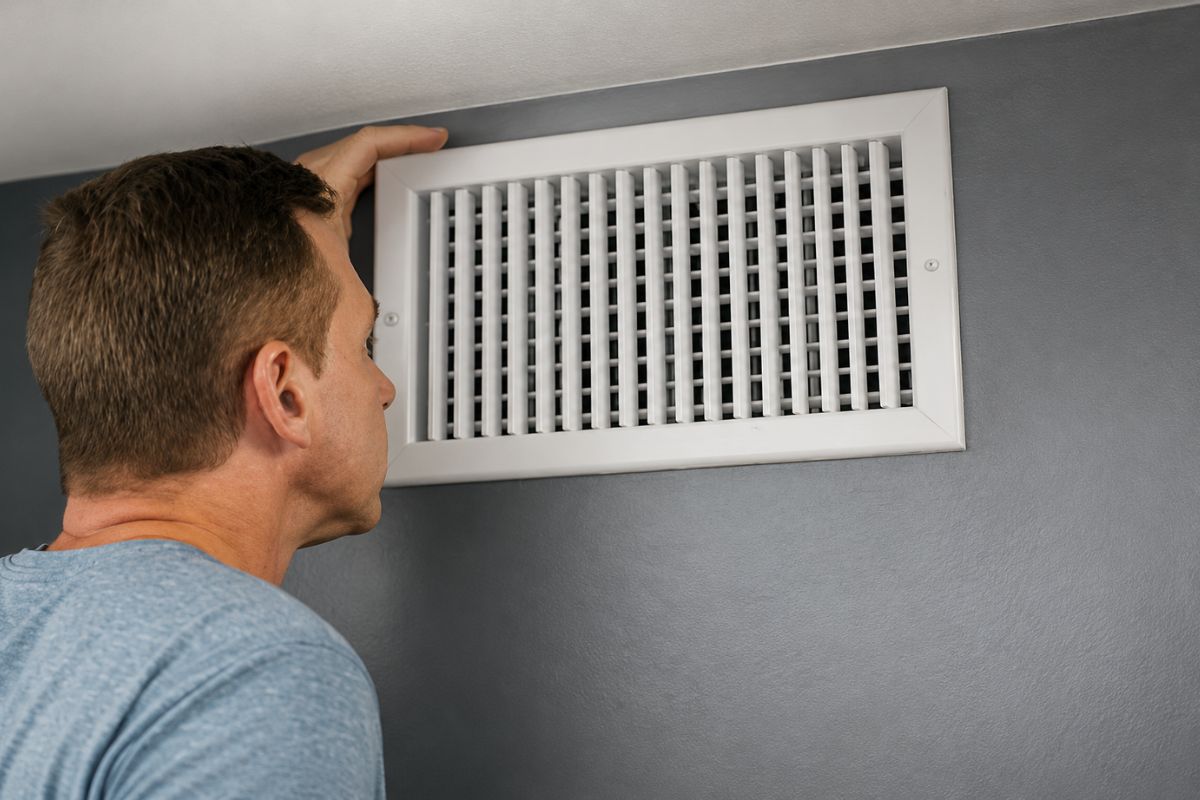
HVAC ducts, coils, air handlers | Fine soot coats every internal surface; system redistributes residue every time it runs |
Wall and ceiling cavities | Smoke pulls through outlets, fixtures, and penetrations; insulation acts like a sponge |
Soft contents | Carpets, upholstery, mattresses, drapes, clothing – porous and absorbent |
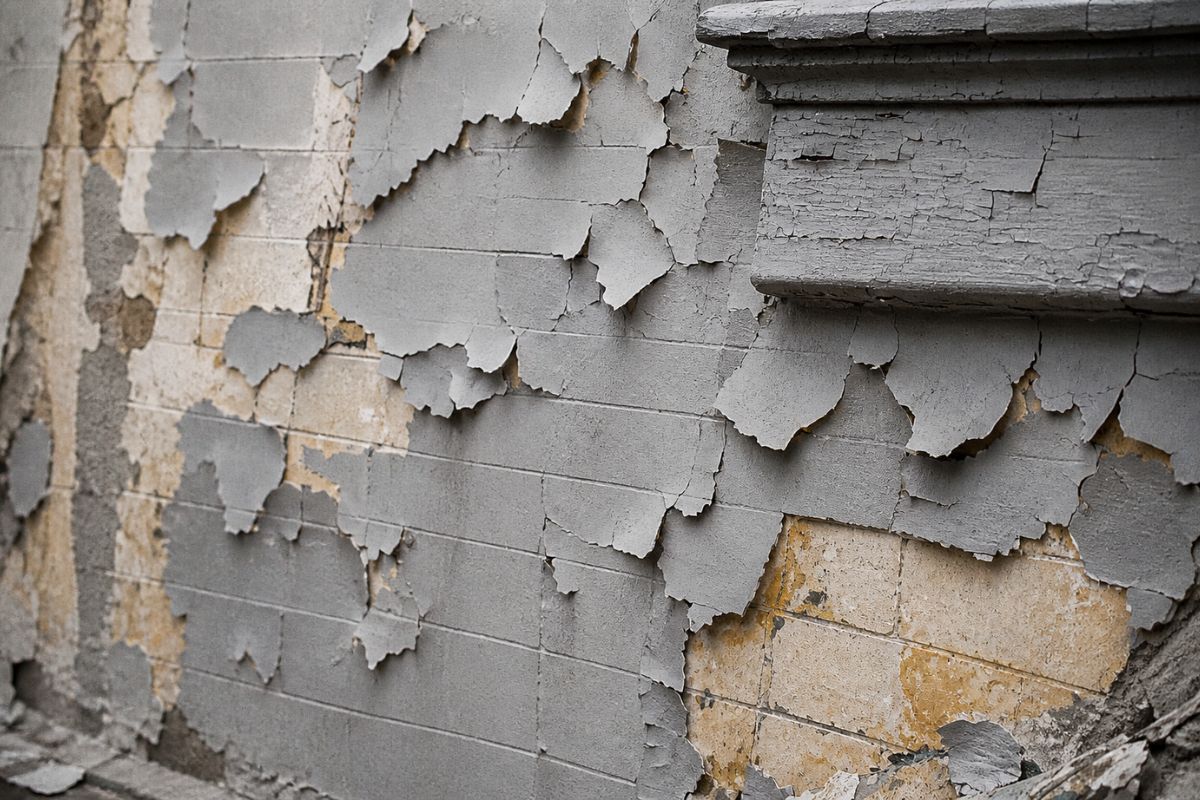
Porous finishes | Drywall, plaster, unfinished wood, cabinet interiors hold microscopic residues in pores |
Plumbing chases and shafts | Smoke migrates between units through gaps around pipes and structural penetrations |
NYC Construction Makes This Worse…
Prewar layering traps residue deeper. Plaster, lath, and decades of paint hold smoke far better than modern drywall.
Shared systems carry contamination between units. Smoke from one apartment can land in three others through HVAC and floor-plate penetrations.
Common shafts turn it into a building-level issue. Once smoke reaches shared shafts or hallways, the odor problem stops being a single-unit problem.
This is why honest assessments often look at neighboring units too (not just the one that burned).
Process Of Odor Removal After Fire In NYC
Permanent odor removal after fire in NYC follows a fixed sequence. Skipping or reordering steps is the single biggest reason odors come back three months later.
Here's what a complete remediation looks like:
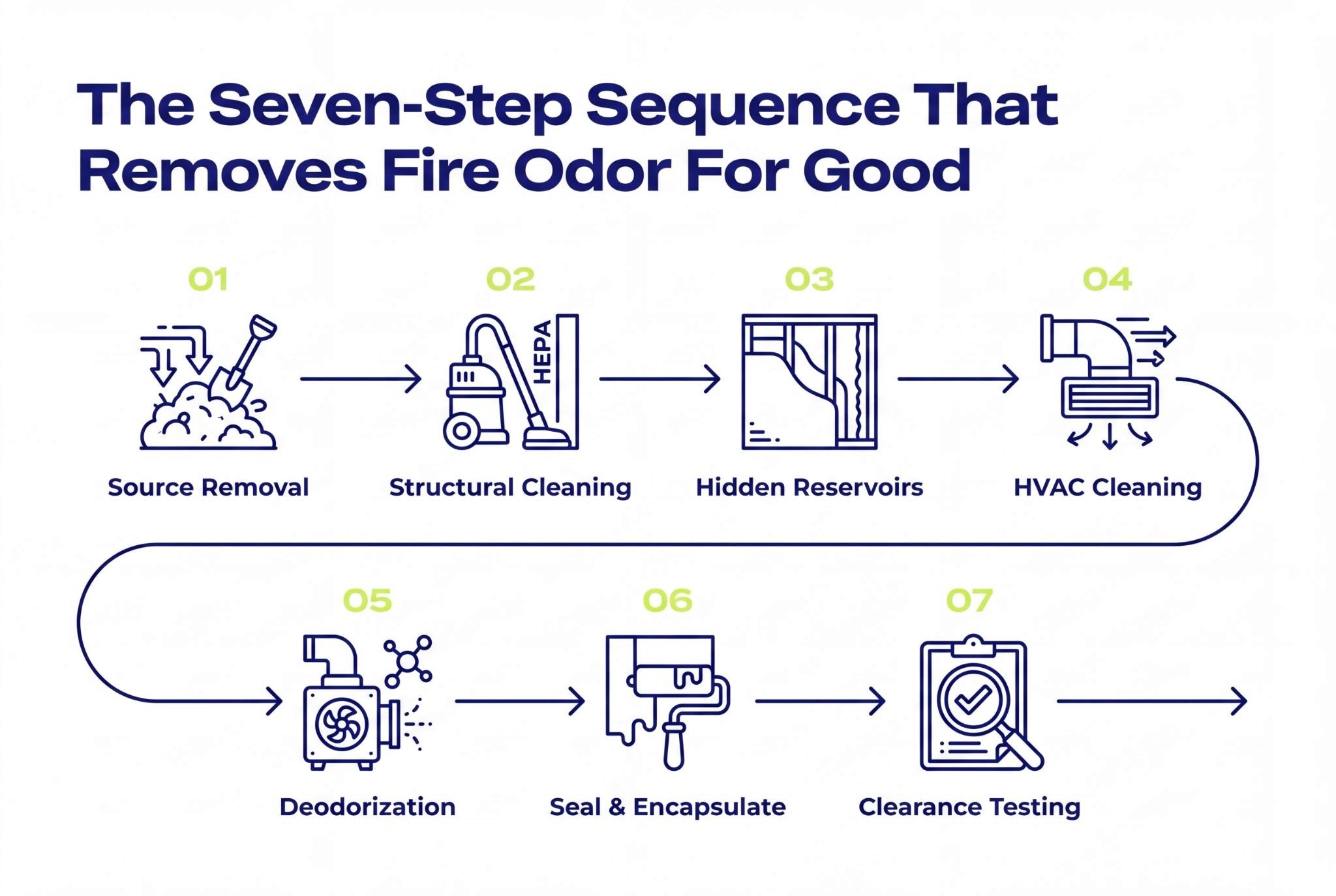
1. Source & Debris Removal
Charred materials, ash, and heavily saturated contents come out first. As long as those are sitting in the unit, every other step is fighting an active odor source.
2. Structural Cleaning In The Right Order
HEPA vacuum first to lift loose soot – never wipe or scrub before this, or you grind particulate deeper into paint and finishes.
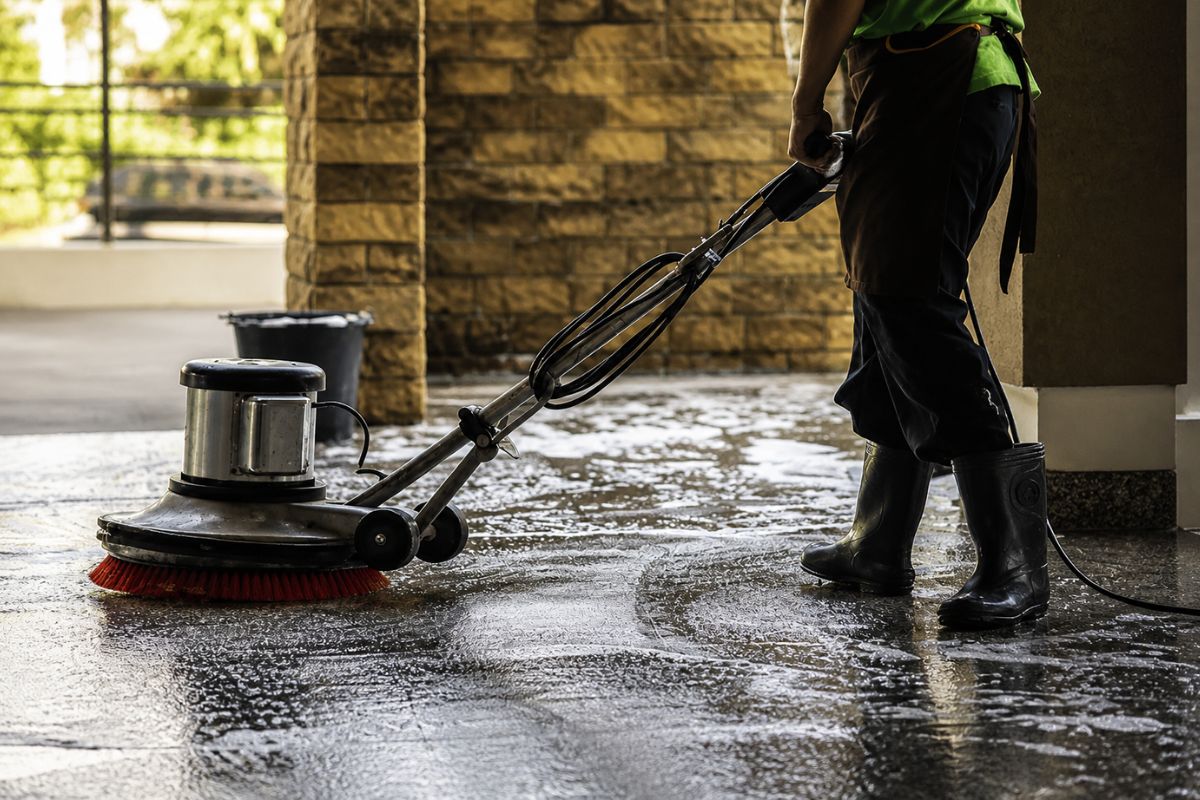
Then dry chem sponge to pull residue from walls and ceilings.
👉 Only then does targeted wet cleaning come in, using fire-specific degreasers and alkaline cleaners matched to the soot type (oily protein soot from kitchen fires needs different chemistry than dry soot from a wood fire).
3. Treat Hidden Reservoirs
Open wall and ceiling cavities where odor is strongest, replace contaminated insulation, and clean exposed framing.
If you can still smell smoke after a thorough surface clean, the source is behind the surface.
4. HVAC Cleaning & Filter Replacement
Mechanical duct cleaning with brushes, air whips, and negative-pressure vacuums.
Coils and air handlers cleaned.
Filters swapped to high-efficiency or HEPA-rated and changed repeatedly through the rest of the project.
Running central air before this step is a common, expensive mistake – it spreads contamination through the whole system.
5. Deodorization Technology
This is the step that absorbs and breaks down what's left in the air and on surfaces.
Main options:
HEPA + activated carbon air scrubbers: Runs throughout the project to capture airborne particulate and adsorb VOCs. Closest answer to "what absorbs fire smell?" – activated carbon is the workhorse for trapping odor molecules.
Hydroxyl generators: Produce reactive hydroxyl radicals that break down odor compounds. Safe for occupied spaces, gentler on materials, slower-acting.
Ozone treatment: Aggressive, fast, only used in fully unoccupied spaces. Can degrade rubber, plastics, and finishes if misused.
Thermal fogging: Vaporizes deodorizing agents into a fog that follows the same paths the original smoke traveled. Useful for prewar buildings with complex voids, but always an adjunct, never a standalone solution.
6. Sealing & Encapsulation
After cleaning, smoke-rated primers (typically shellac- or alkyd-based) lock in any trace residues in drywall, plaster, or wood.
Critical rule:
Clean first, seal second.
Sealing over un-cleaned soot guarantees bleed-through within a season.
7. Clearance Verification
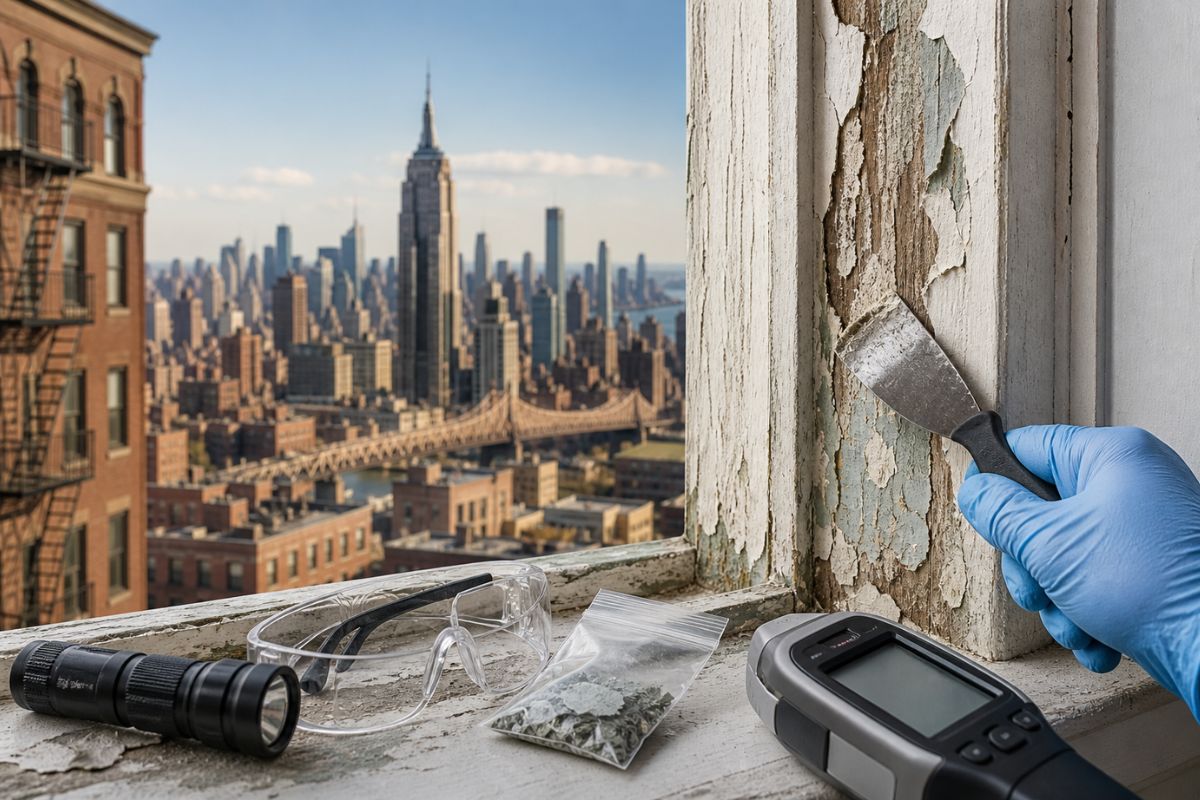
Walk-through under normal HVAC load, plus air and surface sampling sent to an independent lab.
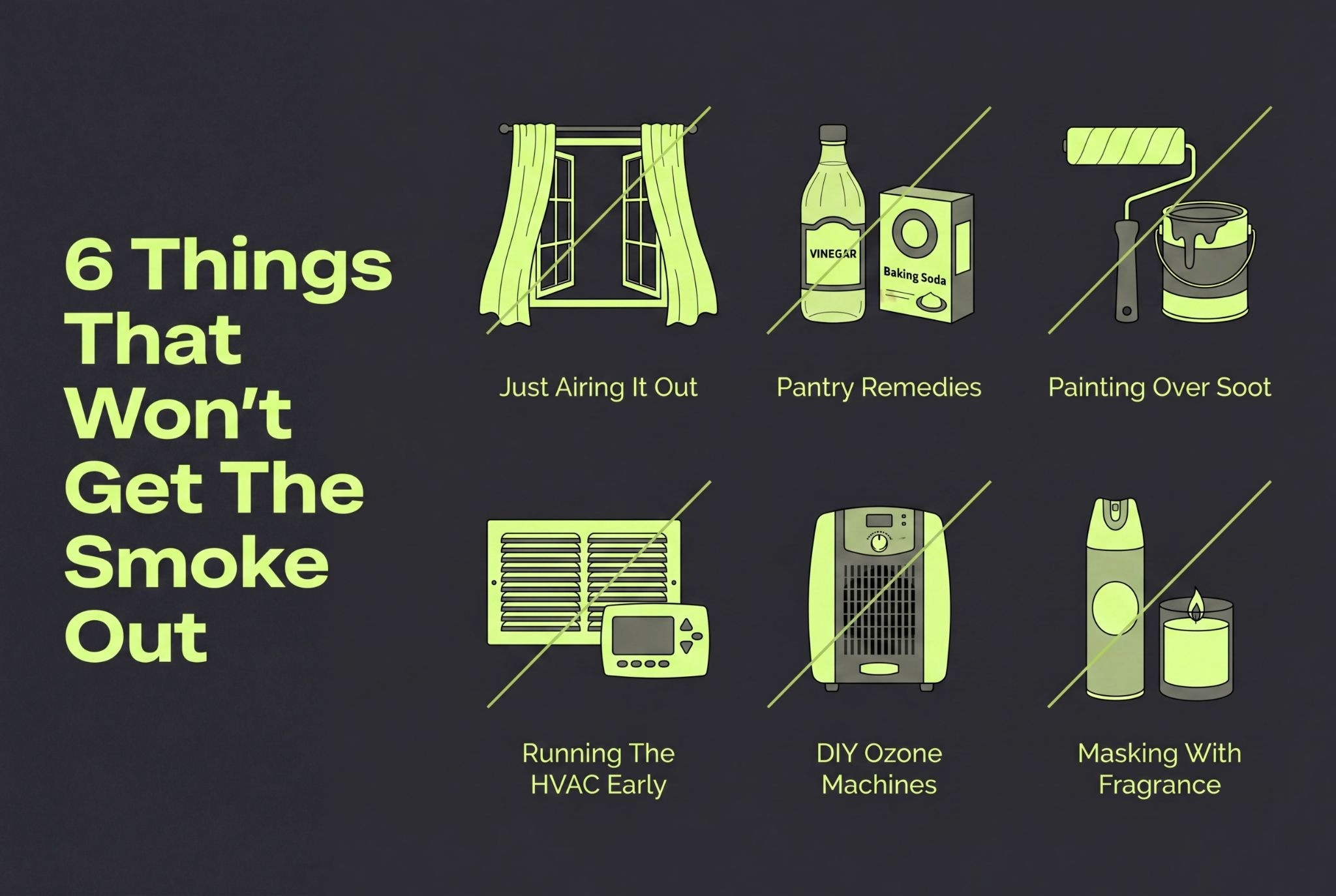
Odor Removal After Fire In NYC: What Doesn't Work?
Most DIY approaches to smoke odor either delay real remediation or actively drive contamination deeper, raising the eventual cost.
How Long Does It Take For Smoke Smell To Leave The House After A Fire?
Timelines depend on how far the smoke spread and what it soaked into.
Realistic ranges in NYC:
Severity | Description | Typical Duration |
Minor | Small kitchen flare-up, light residue, one room | 1–3 days, up to a week if HVAC or contents need work |
Moderate | Multiple rooms, smoke through unit, HVAC affected, some water damage | 1–3 weeks |
Severe | Structural fire, heavy contents loss, multi-unit impact | 4–8+ weeks, often longer |
NYC-Specific Factors Stretch These Ranges:
Co-op and condo approvals add days.
Building work-hour restrictions limit daily progress.
Pre-1978 buildings need lead and asbestos surveys before any meaningful demolition.
Tight elevator and stairwell access slows debris removal.
Humid summer weather drives off-gassing and can require extra deodorization cycles.
If Smoke Odor Returns Weeks After "Completion"
Especially when humidity rises or the heat kicks on, that's a strong signal that contamination wasn't fully addressed somewhere in the structure or the HVAC.
Cost Of Odor Removal After Fire In NYC
Pure odor removal after a fire in an NYC apartment typically lands between $1,000 and $4,000 for light-to-moderate cases.
Once reconstruction enters the scope, costs rise quickly.
Ballpark By Severity:
Light smoke odor cleanup, single room or small unit: $1,000–$4,000
Moderate damage, whole-unit impact with HVAC: $10,000–$25,000
Severe structural fire with rebuild: $40,000+ (frequently six figures in multi-unit buildings)
Service-Level Reference Points:
Deodorizing treatments: $200–$1,000
Thermal fogging: ~$200–$585 per treated area
Ozone treatment: $200–$800
HVAC duct cleaning: $150–$800
Reconstruction (drywall, insulation, paint, flooring): priced per square foot, often doubles or triples cleaning-only cost
Does Insurance Cover Odor Removal After Fire In NYC?
Smoke damage from a sudden, accidental, covered fire is typically a covered peril – including cleaning, deodorization, contents, and temporary housing under loss-of-use.
What To Do As Soon As The Fire Is Out:
Notify your carrier fast. Delays can give adjusters grounds to contest portions of the claim.
Document everything. Photos, video, written notes on visible damage and odor.
Get odor remediation in the approved scope in writing. Not assumed, not implied.
What To Watch For In Contractor Quotes:
Vague "odor removal package" language with no method, area, or square footage specified.
Quotes that don't separate assessment, cleaning, deodorization, HVAC, and reconstruction as line items.
Reputable firms break the scope out clearly so the insurer knows exactly what they're approving.
How To Verify The Odor Is Gone
Verification means measurement, not "smells fine to me."
A complete clearance protocol includes:
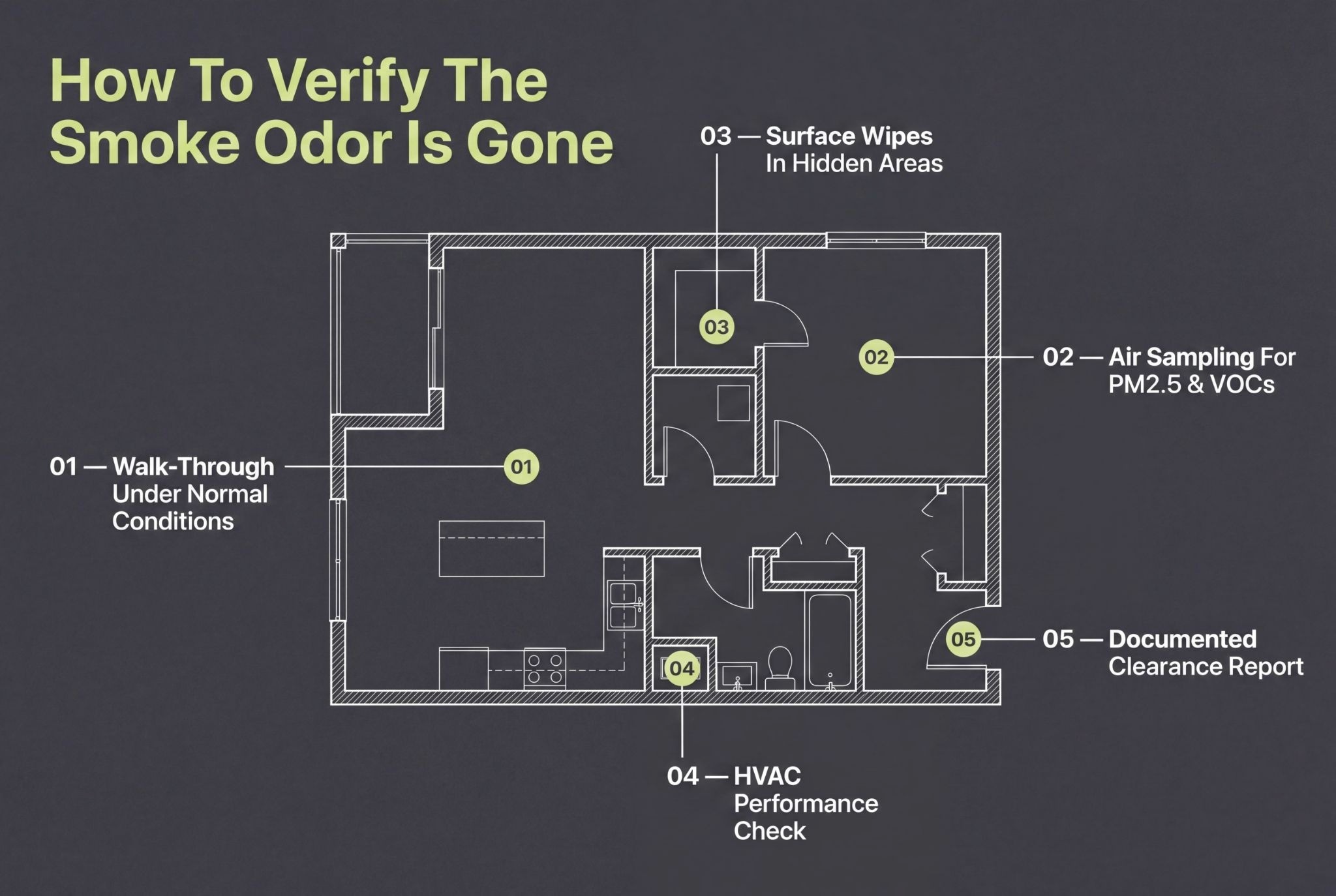
Independent clearance testing is best practice for any meaningful loss, especially in multi-unit buildings, hospitality properties, or units with vulnerable occupants.
Our Approach To Odor Removal After Fire In NYC
South Bronx Restoration handles fire odor removal and full restoration across NYC and Nassau County.
The Credentials That Matter For Fire Work:
HAZWOPER-trained crews
EPA-certified
Licensed in mold and lead testing and abatement (critical for pre-1978 buildings where fire damage triggers pre-demolition surveys)
GC and HIC licensed
REAC/NSpire credentialed
How We Work In NYC Buildings:
Coordinate DOB permits and FDNY compliance as part of the scope
Work in occupied multi-unit buildings without disrupting neighbors
Provide written clearance documentation for insurers, managing agents, and co-op or condo boards
24/7 emergency response – mobilization in hours, not days
Who We Work With:
Single units, portfolio properties, hotels reopening rooms, supportive housing, commercial buildings. If you're dealing with smoke odor after a fire, get in touch for a free assessment.
Odor Removal After Fire NYC FAQs
Can you smell smoke after the fire department leaves?
Yes, smoke odor often becomes more noticeable after firefighting water dries and the building cools, because residues that were active during the fire settle into porous materials and start re-emitting at room temperature. If the smell intensifies in the days after the fire is out, that's a sign contamination spread further than the visibly burned area and needs professional assessment.
How fast should fire damage cleanup in NYC start after the fire is out?
Fire damage cleanup in NYC should start within 24–48 hours of the fire being declared out, once FDNY has cleared the building. Acidic soot residues actively corrode metals, etch finishes, and bond chemically with surfaces over time – every day of delay makes remediation harder, more expensive, and more likely to be contested by insurers as preventable secondary damage.
Does smoke odor affect property value or resale in NYC?
Yes, lingering smoke odor can measurably reduce property value and complicate resale or re-leasing, especially in NYC co-ops and condos where boards may flag undisclosed fire history. Professional clearance documentation showing post-remediation air quality at background levels is the standard proof buyers, boards, and insurers want to see before a unit is considered fully restored.
Can emergency smoke odor removal in NYC be done overnight or after-hours?
Emergency smoke odor removal in NYC is regularly done overnight, on weekends, and during off-hours (particularly for hotels, occupied multi-unit buildings, and commercial properties that can't shut down for daytime work). Most building bylaws restrict construction-noise hours, so initial source removal and air-scrubbing setup often happens immediately, with louder demolition phased to permitted windows.
Need This Done Fast & Documented?
On-site assessment, clearance-ready scope & crews that mobilize in hours.
Conclusion
A successful odor removal after fire in NYC comes down to three things: starting fast (within 24–48 hours), running the full sequence in order, and verifying the result with documented air and surface testing.
Cutting corners on any of those is what turns a $4,000 cleanup into a $25,000 demolition six months later. NYC adds its own complications (prewar construction, shared HVAC, board approvals, DOB permits) that make the right contractor a bigger lever than most people realize.
For a free on-site assessment, clearance-ready documentation, and crews mobilized in hours rather than days, get in touch.