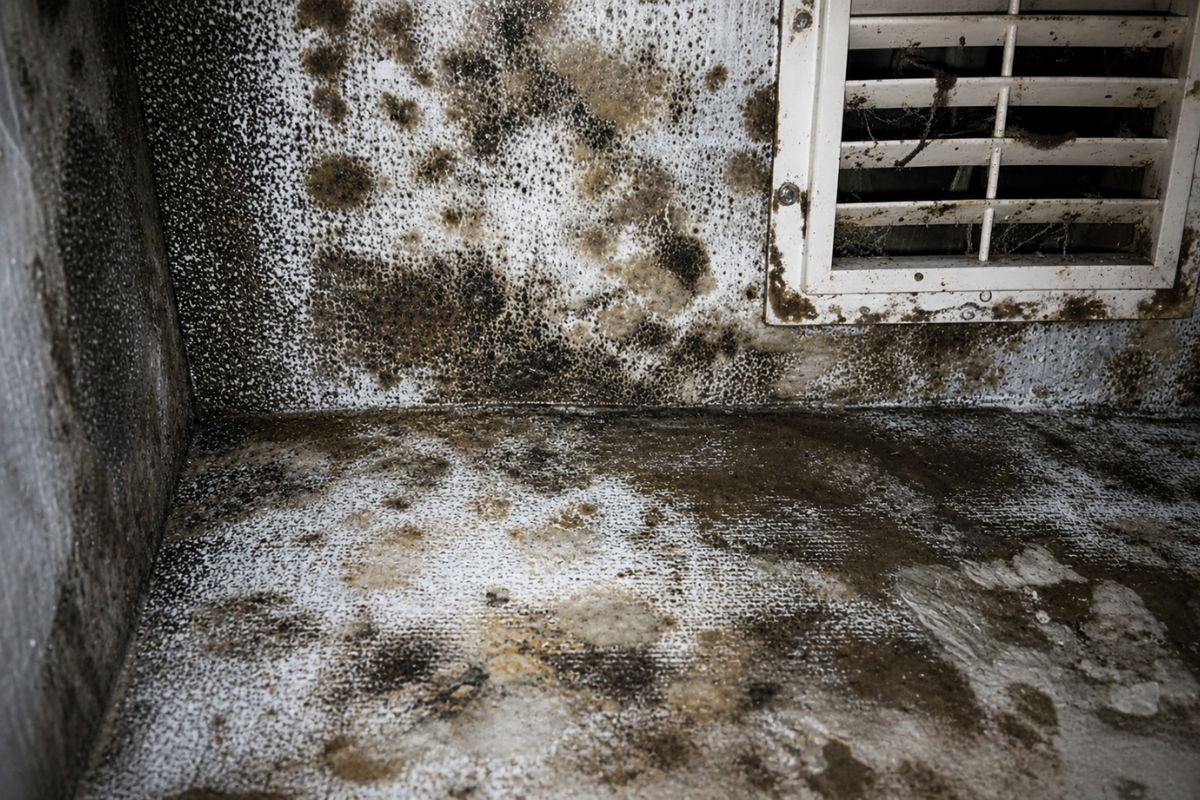
Mold in air ducts in NYC hides in plain sight.
You smell it before you see it – usually the moment the system kicks on, usually written off as "old building smell."
By the time the black speckles show up around the vents, it's been growing for months.
We’ll walk through the signs, the causes, the fix, the price tag, and who's on the hook for paying it.
Key Notes
Persistent musty smell when the HVAC kicks on is the earliest sign of duct mold.
Real remediation requires containment, HEPA cleaning, and a separately licensed assessor under NYS rules.
Insurance pays for sudden events, denies chronic moisture; NYC landlords carry most of the burden.
The Signs Of Mold In Air Ducts You Shouldn't Ignore
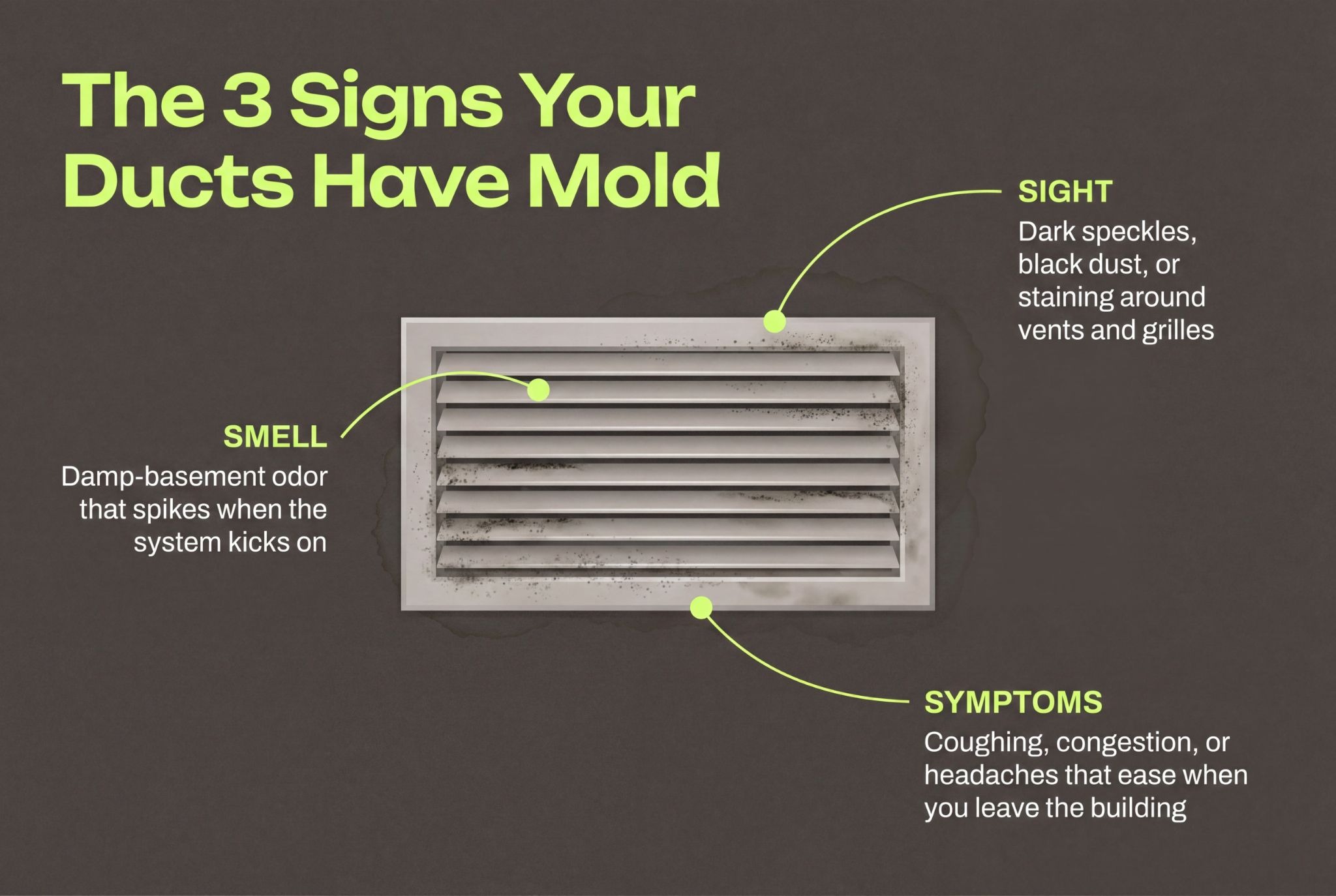
The most reliable early sign of mold in air ducts is a persistent musty smell that gets stronger when the HVAC turns on.
From there, the signs of mold in air ducts cluster into three groups:
what you smell
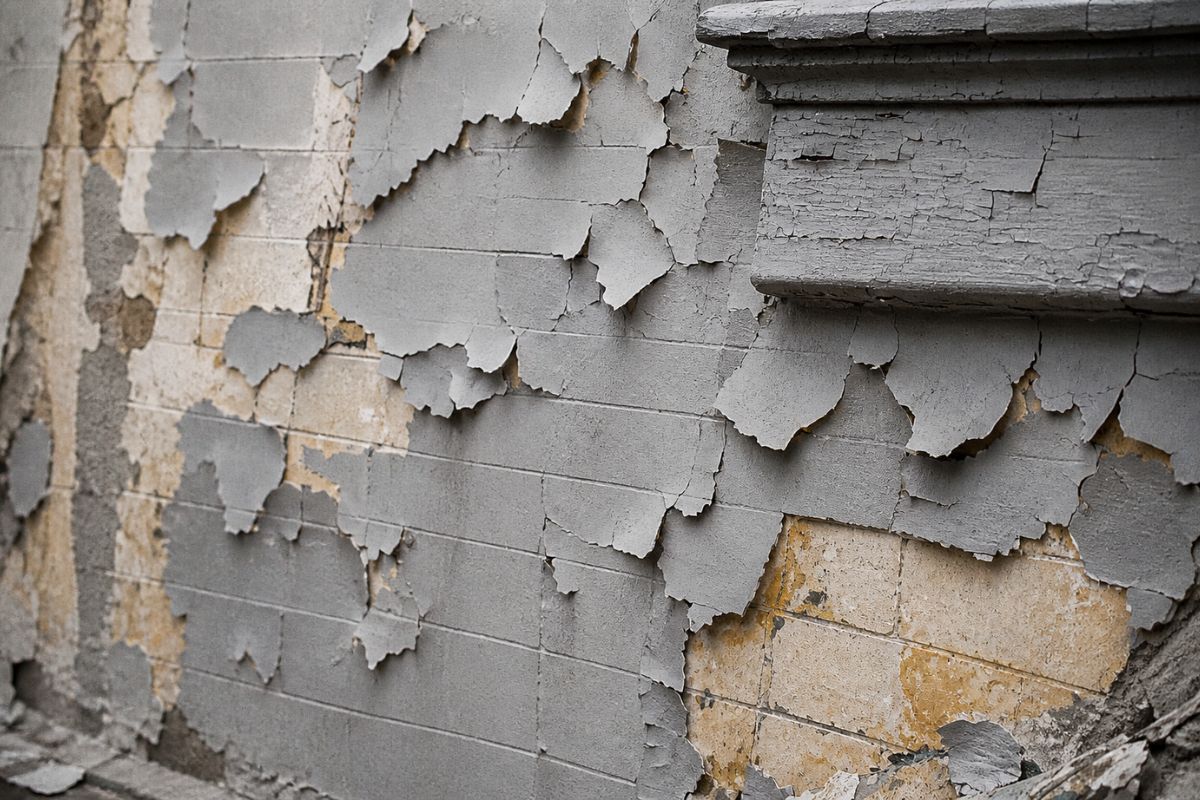
what you see
what occupants feel
Quick Test For Dust vs Mold:
Dust wipes away cleanly and returns gradually over weeks.
Mold smears or stains when wiped, comes back within days, and is usually paired with odor or moisture nearby. If it smells musty, smears when wiped, and keeps returning – assume mold until proven otherwise.
How Professionals Confirm Mold In Air Ducts In NYC
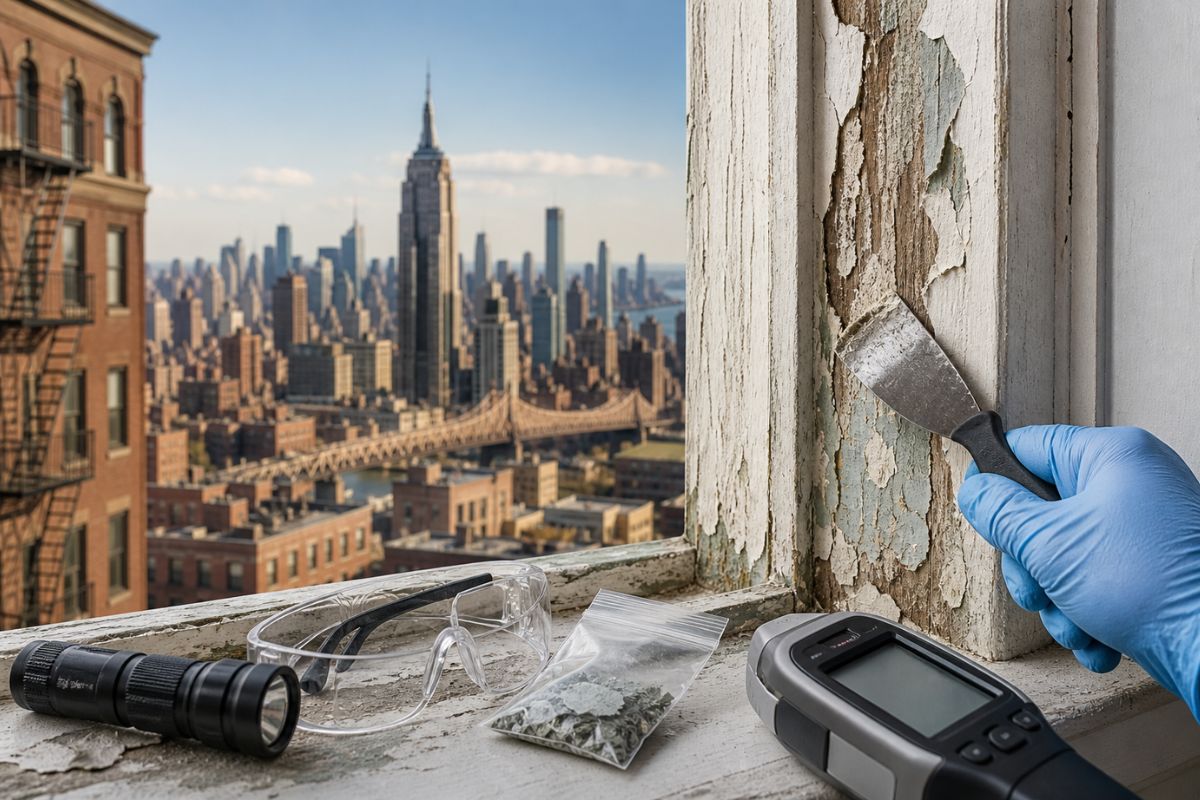
Confirmation of mold in air ducts starts with a visual inspection and only moves to lab testing when you need it.
What A Professional Inspection Involves:
HVAC shut down so the system doesn't spread spores during the inspection.
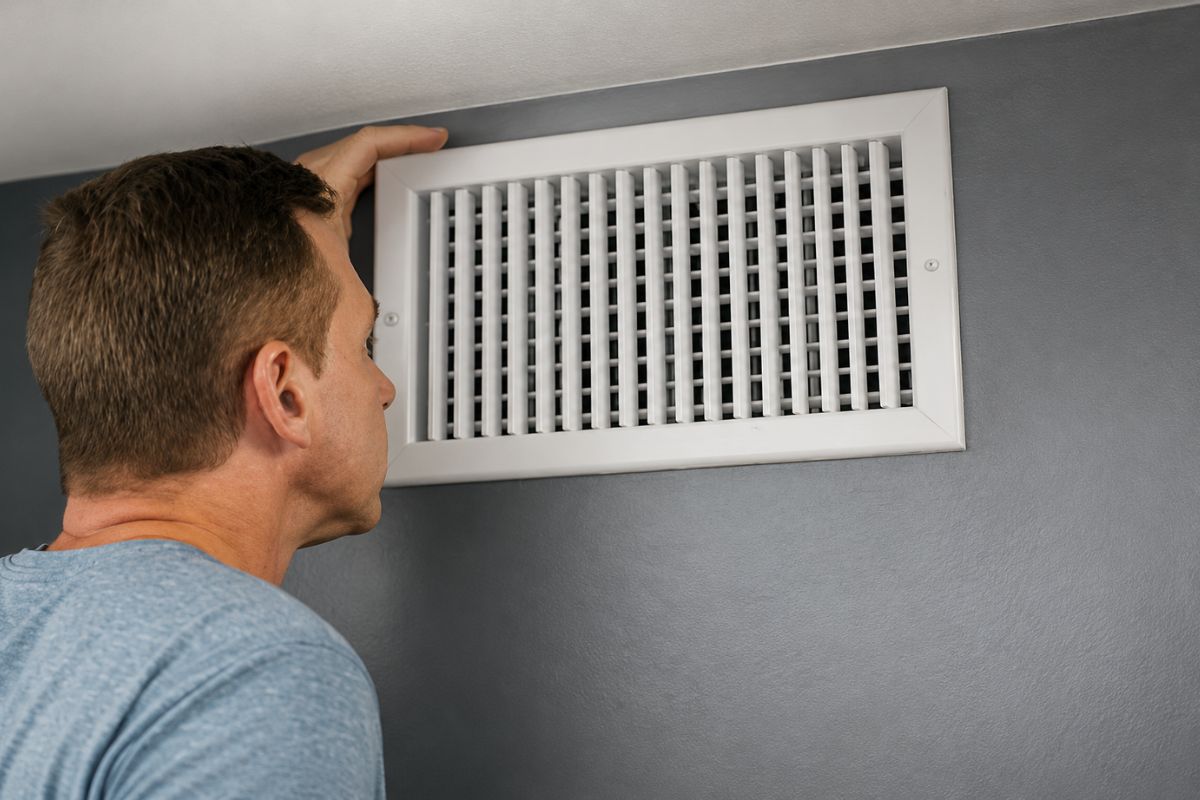
Access panels and vent covers opened to expose ducts, plenums, coils, and drain pans.
Borescope camera used to inspect inside duct runs that aren't otherwise visible.
Moisture meters and hygrometers used to map damp spots and high-humidity zones.
Timing depends on the system. An apartment-sized setup usually takes 1–2 hours. Commercial systems with multiple air handlers run closer to a half-day.
When Visual Inspection Is Enough vs When Testing Is Needed
Skip testing when there's clearly visible mold and an obvious moisture source. EPA guidance is clear: you don't need lab work to decide on cleanup. Spend the budget on remediation instead.
Add testing when there are musty odors or health complaints with no visible growth, when you need documentation for insurance or a co-op/condo board, or to verify that remediation worked (clearance testing).
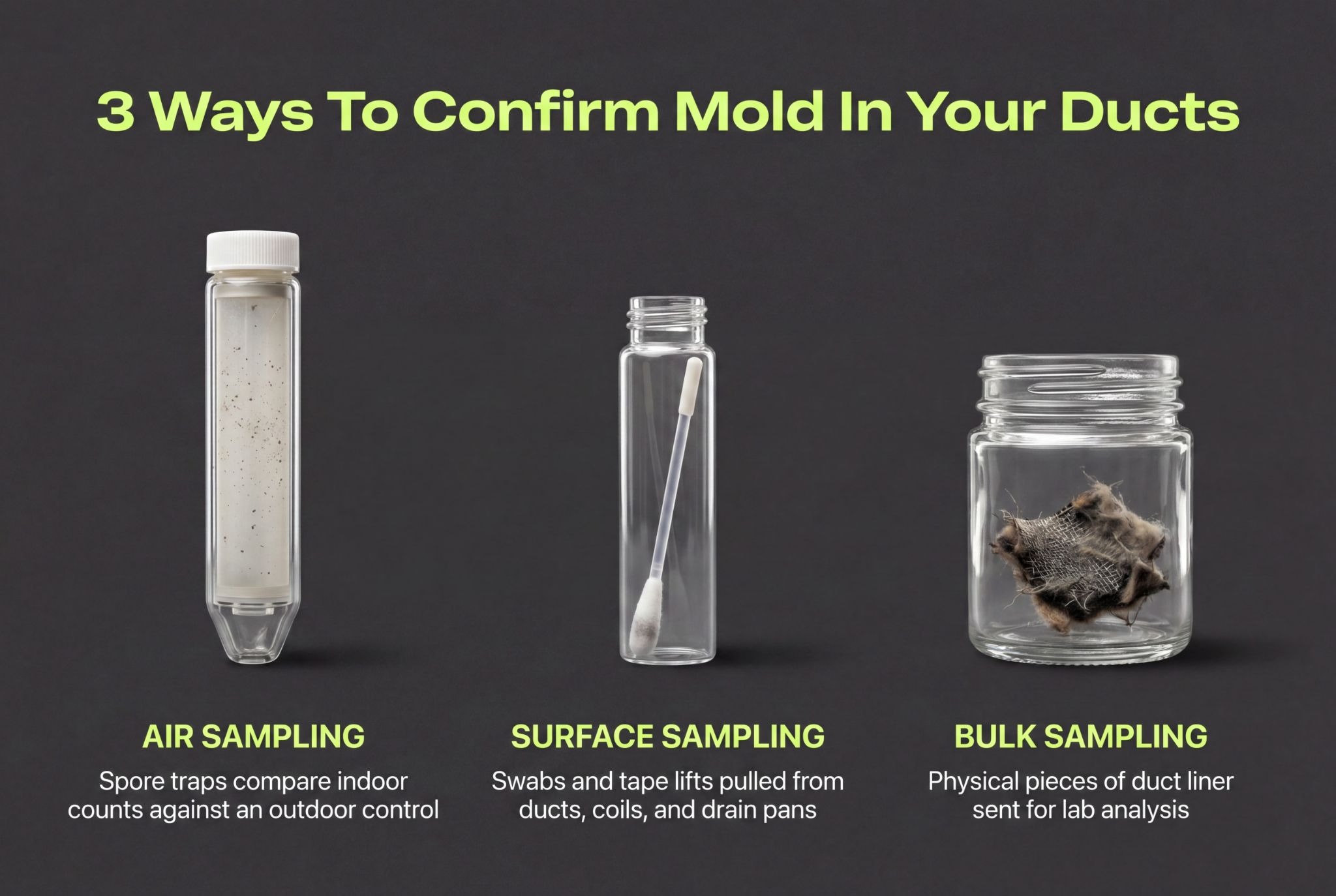
Sampling Methods Professionals Use
Why DIY Kits Don't Cut It
DIY mold test kits run around 40–60% accuracy and aren't accepted for insurance claims, legal disputes, or NYC compliance work. Professional inspection and lab testing typically runs $400–$800 and produces defensible documentation.
How To Fix Mold In Air Ducts In NYC: The Remediation Process
Here's the most important thing to understand about how to fix mold in air ducts: it isn't a duct cleaning with disinfectant on top.
Real remediation is a contained, regulated process, and skipping steps is how mold comes back six months later.
The 6-Step Process:
Confirm and shut down. Mold is verified, the HVAC is switched off so spores don't spread during work.
Containment. Plastic sheeting and negative air machines isolate the work area. PPE is mandatory.
HEPA mechanical cleaning. Vent covers come off and get cleaned separately. Inside the ducts, rotating brushes and HEPA-filtered vacuums physically dislodge and capture mold and debris.
EPA-registered antimicrobial treatment. After physical cleaning, surfaces get treated with antimicrobials approved for HVAC use.
Replace what can't be saved. Bare sheet-metal ducts can usually be cleaned. Fiberglass-lined ducts, flex ducts, and any wet or heavily contaminated insulation get removed and replaced – EPA guidance is explicit that moldy duct liner can't be effectively cleaned.
Fix the moisture source. Condensate drains, insulation, leaks, humidity control – whatever caused it gets corrected. Without this step, the mold is coming back.
Air Duct Cleaning NYC vs Mold Remediation (They're Different Services)
A standard air duct cleaning in NYC and mold remediation aren't the same job (and confusing the two is how owners end up paying twice).
What Standard Air Duct Cleaning Covers:
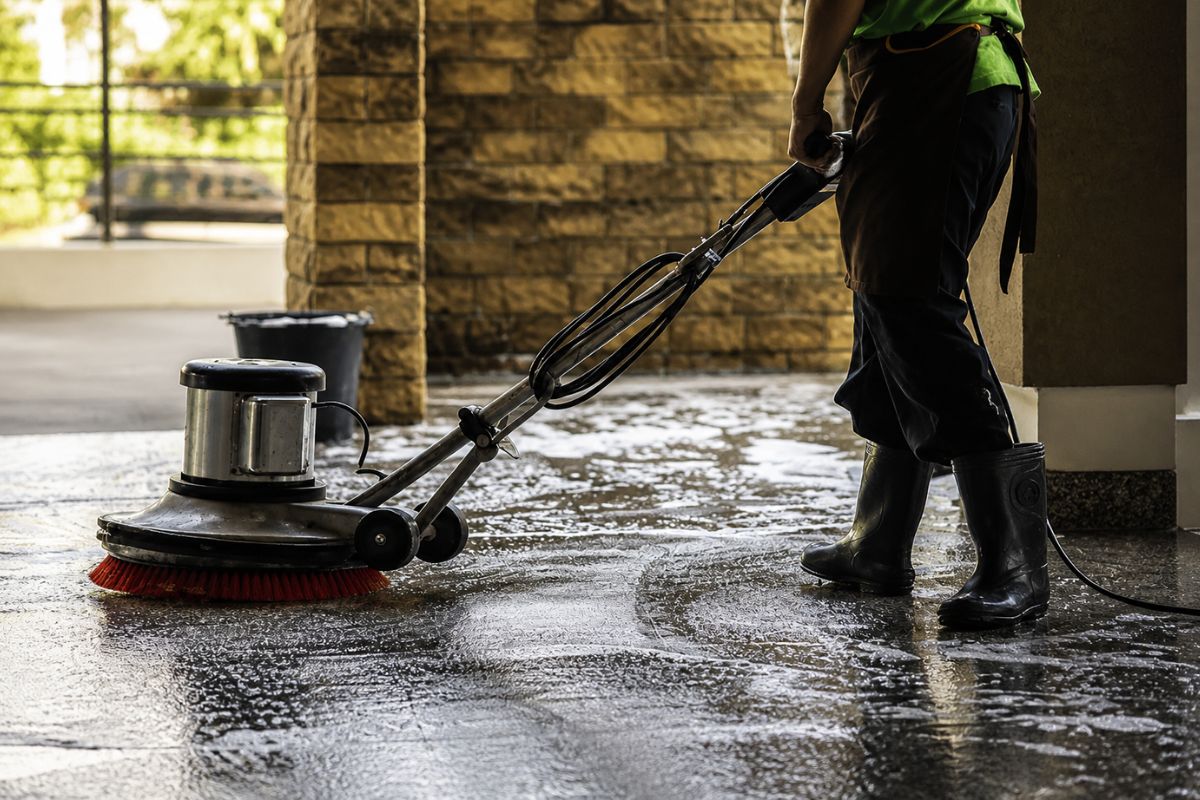
Dust and debris removal from duct interiors
No containment, no moisture diagnostics, no antimicrobial protocol
Typical price band of $300–$1,000
What Mold Remediation Involves:
A licensed, regulated process under New York State rules
Containment, HEPA cleaning, antimicrobial treatment, and replacement of contaminated materials
Correction of the underlying moisture source
NYS Licensing Rules To Know
For projects above New York State thresholds, the law requires a separately licensed mold assessor and a separately licensed mold remediator – two different parties.
How Long The Work Takes
Residential HVAC mold remediation: 1–3 days
Commercial work with multiple air handlers: longer, depending on system complexity and access
What It Costs To Get Rid Of Mold In Air Ducts In NYC
The cost to get rid of mold in air ducts in NYC depends on the size of the system, how bad the contamination is, and what has to be replaced.
Here's the realistic range:
Service | Typical NYC Price Band | What's Included |
Standard duct cleaning (no mold) | $300–$1,000 | Dust and debris removal only |
Residential HVAC mold remediation | $3,000–$10,000 | Containment, HEPA cleaning, antimicrobials, possible duct replacement |
Commercial / multi-system jobs | $10,000–$30,000+ | Multi-zone remediation, extensive containment, testing, reconstruction |
What Pushes The Number Up?
longer duct runs and multiple zones
fiberglass-lined or flex ducts that need replacement
hard-to-access mechanical rooms in older walk-ups
the moisture repairs that have to happen alongside the mold work
Inspection and clearance testing typically add several hundred dollars more.
Insurance & Who's Responsible For Mold In Air Ducts
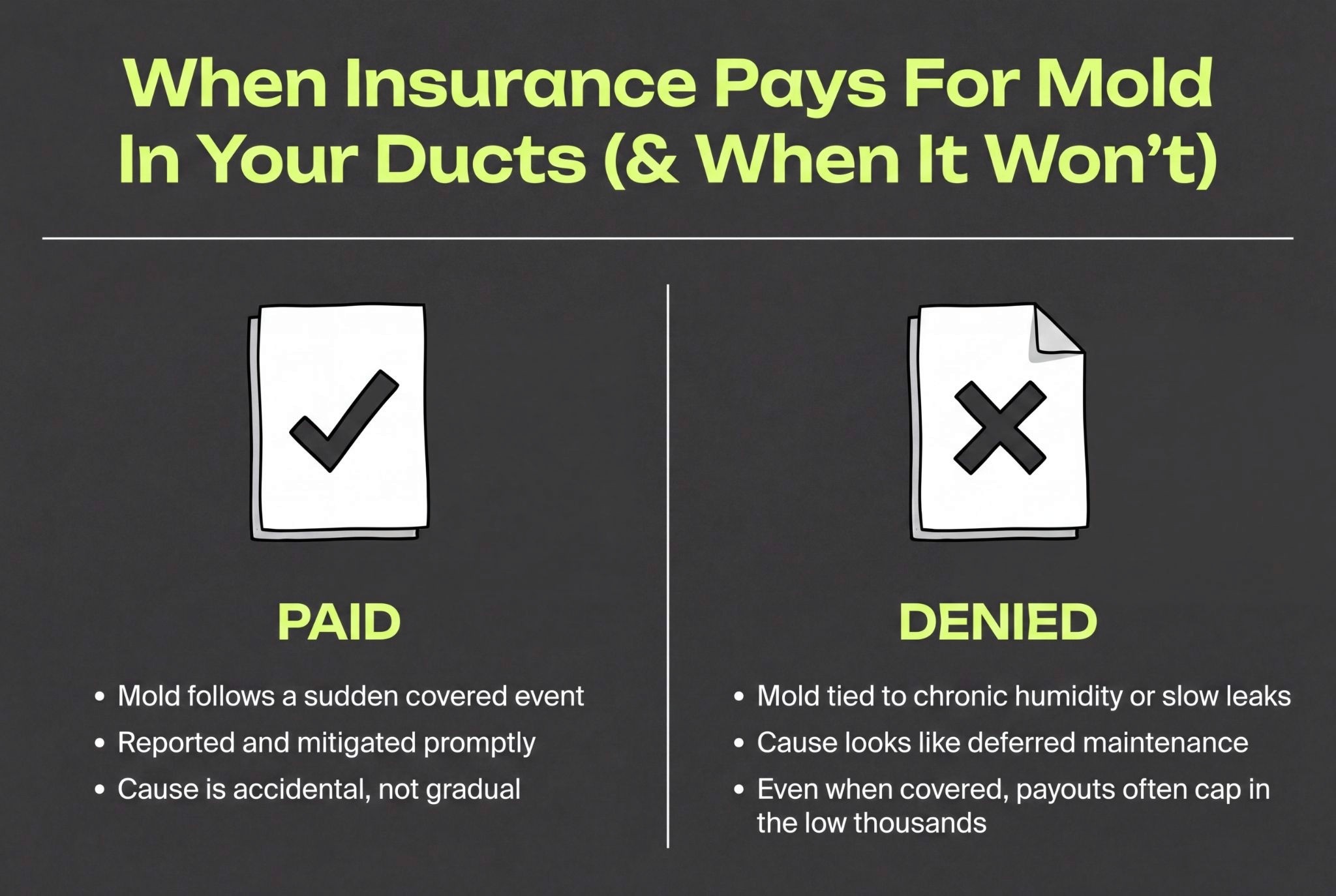
So… does homeowners insurance cover air duct cleaning?
Generally, no, routine cleaning is treated as maintenance.
For mold remediation specifically, coverage depends entirely on what caused the problem in the first place.
Landlord vs Tenant Responsibility In NYC Rentals
Under Local Law 55 and the warranty of habitability, landlords carry most of the responsibility when mold ties back to building systems – which includes HVAC and shared ducts.
Landlords must investigate and remediate mold from structural defects, plumbing failures, and shared HVAC systems.
Tenants are expected to ventilate properly and report problems early.
Shared responsibility can apply when a tenant fails to report a known leak for weeks.
How To Stop Mold Coming Back
Prevention is moisture control first, filtration and maintenance second, and periodic cleaning third.
In NYC's climate, skipping the first one means the others won't hold.
Humidity control. Keep indoor RH between 30–50%. Whole-home or integrated dehumidifiers are worth it in humid NYC summers.
HVAC maintenance. Annual professional service minimum – coil cleaning, condensate drain checks, drain pan inspection. Filter changes every 1–3 months, more often with pets or heavy occupancy.
Duct cleaning cadence. For NYC, most providers recommend every 2–3 years for high-occupancy spaces, properties with pets or allergy sufferers, and commercial buildings. Lower-use residential can stretch to 3–5 years.
Worth-it upgrades. UV-C lights at the evaporator coil, MERV 11–13 filters, and sealing and insulating ducts that run through unconditioned spaces.
For property managers. Build seasonal HVAC inspections into your maintenance calendar and give tenants a clear channel to report musty odors early – it's cheaper to investigate one complaint than remediate a building-wide problem six months later.
Mold In Air Ducts NYC FAQs
Can mold in air ducts make you sick even if you can't see it?
Yes, mold in air ducts can absolutely make you sick before you ever see it. The HVAC distributes spores and microbial VOCs into every connected room each cycle, so symptoms (coughing, congestion, headaches, worsening asthma) often show up well before any visible growth at the vents. If symptoms ease when you leave the building, the system is the likely culprit.
How long does HVAC mold remediation take in an NYC apartment?
HVAC mold remediation in an NYC apartment typically takes 1–3 days for a single residential system. Timing depends on duct length, contamination severity, and whether contaminated liner or flex duct has to be replaced. Larger systems or jobs requiring clearance testing can stretch longer, especially when access is tight in older walk-ups.
Can I run my AC if I think there's mold in the ducts?
Running your AC when you suspect mold in the ducts spreads spores through every room the system serves. Best practice is to shut the system down until a licensed assessor can inspect it. Keep windows open for ventilation and avoid the affected vents if possible while you arrange an inspection.
Does NYC require a licensed contractor for HVAC mold removal?
NYC requires licensed contractors for HVAC mold removal on projects above New York State Article 32 thresholds. The law requires a separately licensed mold assessor and a separately licensed mold remediator – two different parties. For larger residential, multifamily, and commercial jobs, unlicensed work can trigger violations and won't hold up for insurance or compliance documentation.
Think You Have Mold In Your Ducts?
A licensed NYC crew will inspect, scope, and price the fix.
Conclusion
Mold in air ducts in NYC follows a pattern: a musty smell when the system kicks on, dark speckling that returns days after cleaning, and occupants who feel worse at home than anywhere else.
The fix isn't a duct cleaning with disinfectant. It's a contained, licensed remediation that addresses the moisture source and replaces what can't be salvaged.
Costs sit between $3,000 and $10,000 for most residential systems, more for commercial. Insurance covers some events and denies others. NYC landlords carry most of the responsibility under Local Law 55. Skipping any of this just buys a recurring problem.
If you're seeing the signs and want a licensed assessor to scope the work and price it properly, get a free quote – no obligation.