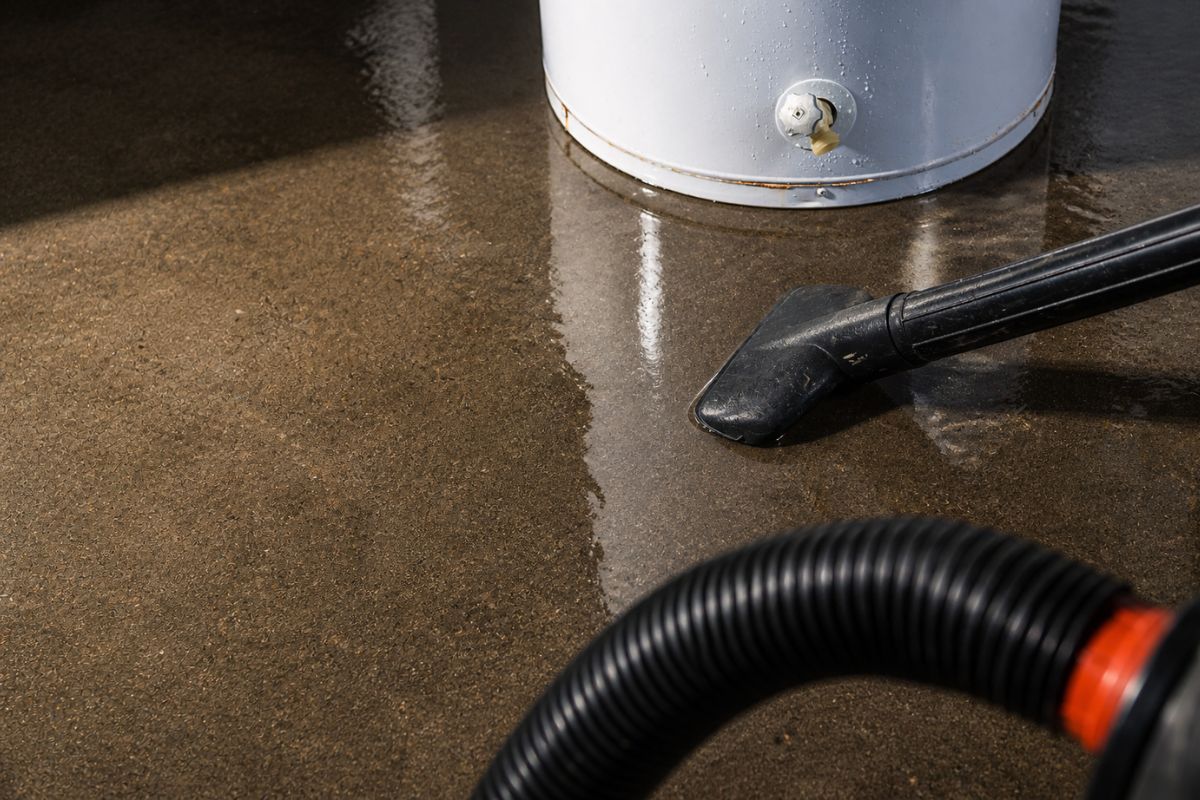
Water in the basement is one of those problems that gets expensive fast and quietly.
The first inch looks manageable. By day two there's a smell, by day three the drywall is soft, and by the end of the week you're getting quotes that start with a comma.
NYC pricing sits at the high end of national ranges for reasons worth understanding.
Here are the realistic cost ranges, drivers, and how to keep them down.
Key Notes
Cost ranges in NYC: $1,500–$3,000 for minor jobs ($6,000–$12,000+ for sewage events).
Cat 3 (sewage) water doubles or triples the bill versus clean-water flooding.
Mold starts colonizing within 24–48 hours, adding $1,000–$5,000+ in remediation.
Sewer backups need a water-backup endorsement to be covered by insurance.
NYC Basement Flood Cleanup Cost Ranges
Basement flood cleanup cost in NYC falls into three clear tiers based on severity.
Most jobs we see land in the moderate band, but the spread is wide because basements vary so much in size and finish.
Severity | Typical Scenario | NYC Cost Band (cleanup only) |
Minor | Clean water, small area, mostly concrete | $1,500–$3,000 |
Moderate | Cat 1–2 water, 30–70% of basement, some finishes affected | $3,000–$6,000 |
Severe / Sewage | Cat 3 water, full basement, extensive demolition | $6,000–$12,000+ |
Cost Per Sqft For Basement Flood Cleanup Breaks Down By Scope:
Basic extraction and drying: $3–$7 per sq ft
Full-scope NYC jobs (with demolition and rebuild): $23–$27 per sq ft
Sewage cleanup alone: $7–$14 per sq ft
Mold remediation add-on: $10–$20 per sq ft on top of standard repair costs
The wide spread comes down to how much demolition the job needs and which finishes have to be replaced. A clean-water job on a concrete floor stays at the low end. A sewage event in a finished basement stacks all four line items together.
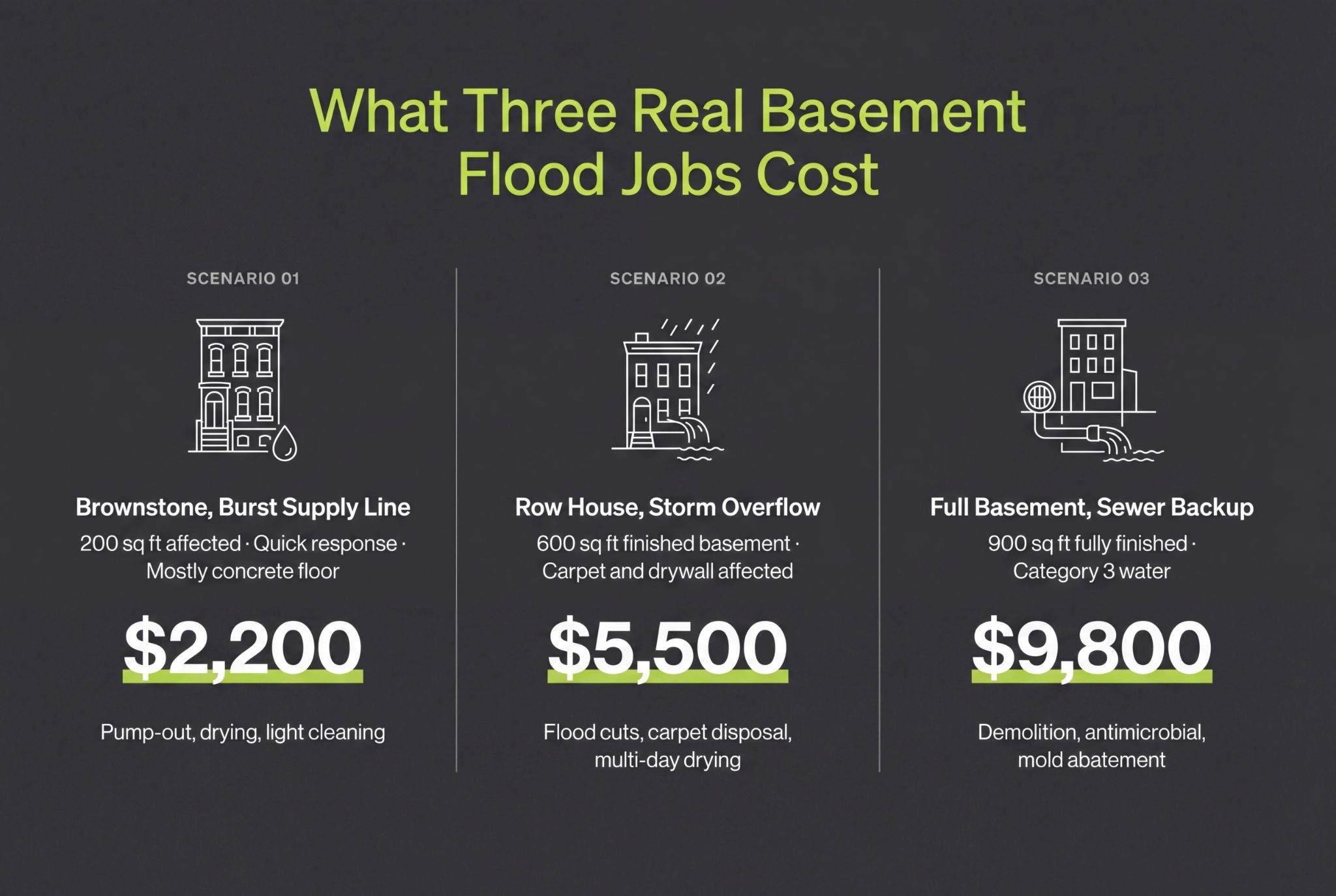
A Few Scenarios To Ground These Numbers:
What Drives Basement Flood Cleanup Cost?
Basement flood cleanup cost varies because no two floods are the same.
Five factors do most of the work in pushing a job from $2,000 to $12,000.
Water Category Does The Heaviest Lifting
Category 1 (clean water): Burst supply lines, rain that hasn't touched contaminants, appliance overflows from the source. Lowest risk, lowest cost.
Category 2 (gray water): Sump discharge, washing machine overflow, dishwasher leaks. Requires more aggressive disinfection and material removal.
Category 3 (black water): Sewage, street floodwater from combined sewer overflows, river or storm surge. Porous materials almost always come out, PPE and containment are required, and pricing roughly doubles.
About 60% of NYC uses a combined sewer system, which means heavy storms regularly push a mix of stormwater and sewage back into basements – turning what looks like a rain event into a Cat 3 job.
Square Footage & Finish Level
The same six inches of water produces wildly different bills depending on what's down there. Bare concrete is cheap to dry. Drywall, insulation, carpet, and built-ins all become line items.
Unfinished basement, minor seepage: $500–$2,500
Finished basement, moderate clean-water event: $2,500–$9,000
Finished basement, contaminated water: $5,000–$20,000+
The jump from unfinished to finished is where most homeowners get caught off guard.
Every layer of finish (flooring, baseboards, drywall, insulation behind it) is another material that has to come out and go back in.
Time On The Floor
Every hour water sits, the bill climbs.
The clock that matters most is the mold clock (and it starts the moment water hits the basement).
0–24 hours: Surfaces are absorbing water. Standard water mitigation territory.
24–48 hours: Mold begins colonizing drywall, wood, and insulation at a microscopic level.
48+ hours: Job shifts from water mitigation into full mold remediation – containment, HEPA filtration, more demolition.
Crossing that 48-hour window typically adds $1,000 to $5,000+ in remediation on top of standard cleanup. Acting on the first day or two can be the difference between a $3,000 job and a $12,000 one.
NYC-Specific Premium
Basement flood cleanup cost in NYC sits 15–30% above national averages, and the reasons are structural:
Older building stock with aging foundations and outdated waterproofing
Tight stairwells, narrow hallways, and limited curb space for equipment staging
Higher labor, insurance, and overhead costs
Code-driven requirements for licensed electrical and plumbing trades when basements are affected
Emergency Callout Premiums
After-hours, weekend, and citywide-storm response usually carries a surcharge.
During a major storm event, every restoration company in the city is at capacity, so emergency pricing reflects that.
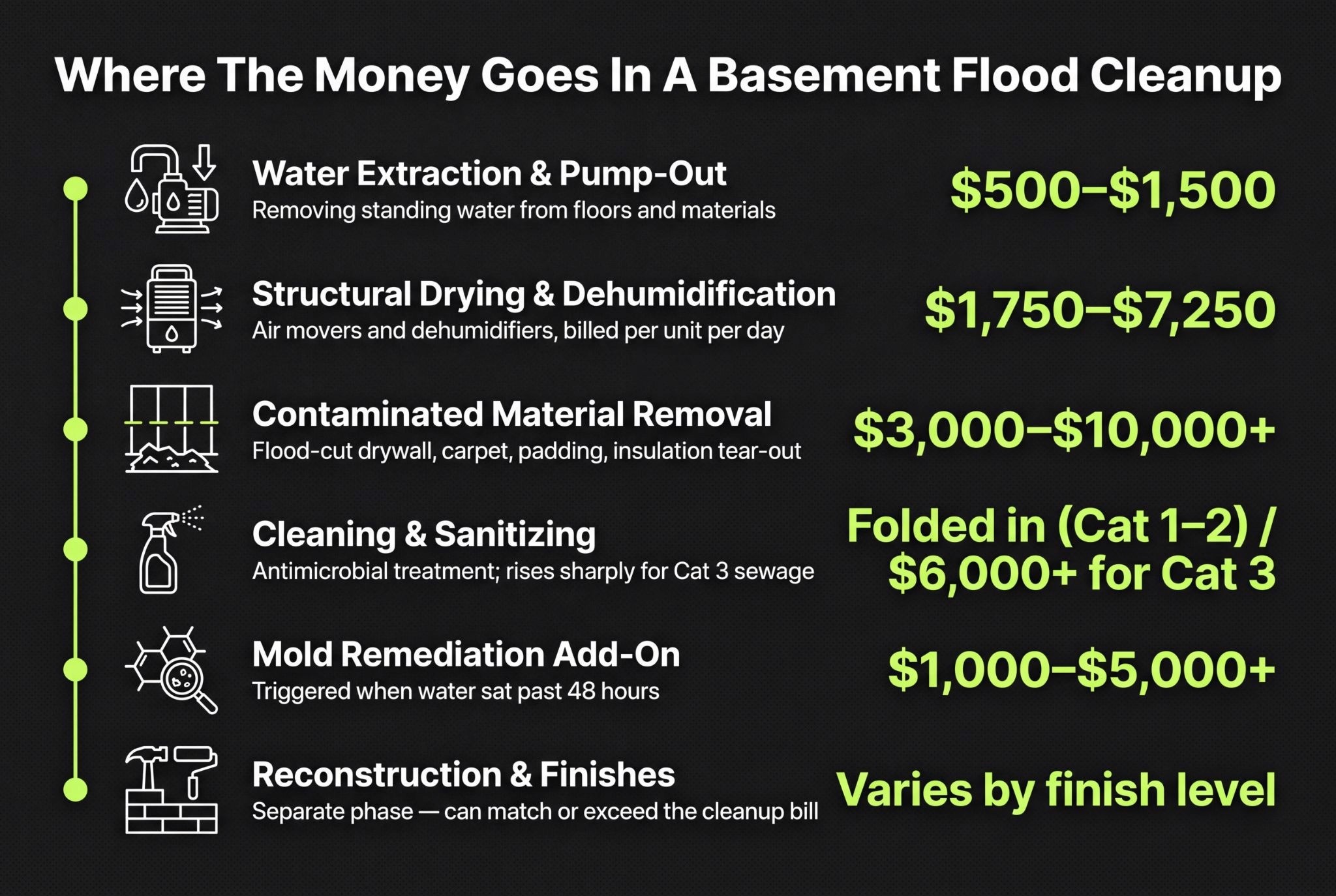
Line-Item Costs: What You're Paying For
Most NYC restoration quotes are built from minimum service charges, per-square-foot rates, and itemized line items for specialized tasks. Here's roughly what each phase costs.
How Long Does Basement Flood Cleanup Take?
Basement flood cleanup runs about a week from extraction to dry. Full restoration with rebuild stretches several weeks to a few months.
Here's how the phases break down:
Water extraction: Hours to 1 day for small floods; 1–3 days for deep water or limited access.
Drying and dehumidification: Around 5–7 days of continuous equipment for typical jobs. Severe basements with multiple rooms can run longer.
Demolition and material removal: 1–3 days for limited tear-out; up to 5 days for extensive contamination work.
Restoration and rebuild: 2–4 weeks for simple repairs (drywall, flooring, trim). Major reconstruction with structural or foundation work can take 30 to 90+ days, especially when permits and trade scheduling are involved.
The cleanup and drying phase is what insurers care about most (and it's the phase where speed matters financially).
The rebuild phase moves at the pace of materials, trades, and design choices.
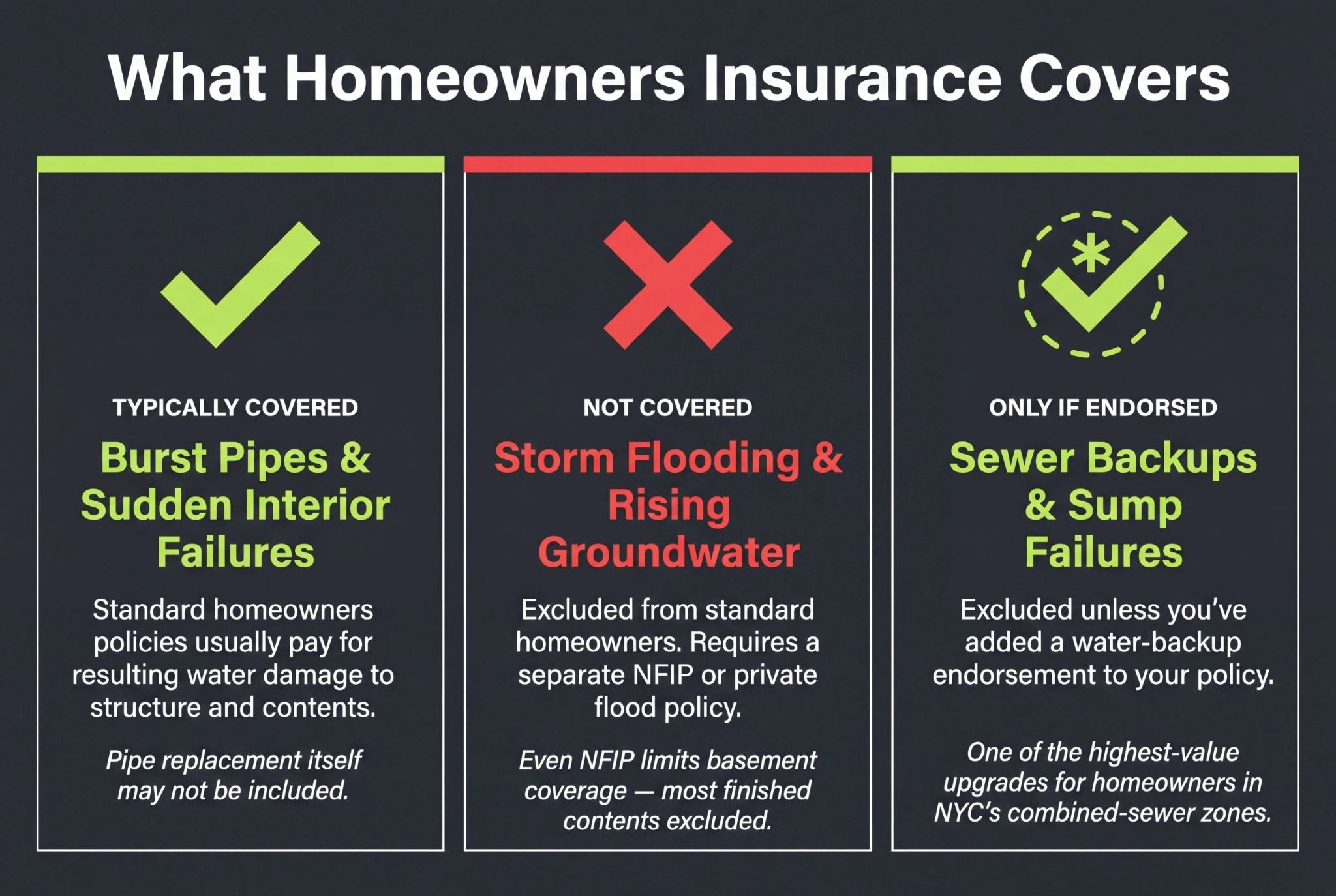
Will Homeowners Insurance Cover A Flooded Basement?
Whether homeowners insurance will cover a flooded basement depends almost entirely on where the water came from.
Standard policies care about one thing: was the event sudden and accidental, or external and gradual?
To File A Successful Claim, You'll Need:
Wide and close-up photos of the damage, taken before tear-out
Clear documentation of the water source
An itemized inventory of damaged contents with values where possible
Written contractor estimates and final invoices
A timeline of when you discovered the damage and what you did about it
A reputable restoration company should provide moisture readings, scope of work, before-and-after photos, and standardized estimates that match what adjusters expect.
How To Keep Basement Flood Cleanup Cost Down
Basement flood cleanup cost is largely set by how fast you act and how well your basement is prepared before water shows up.
What To Do In The First Hour
Shut off power to the basement before going down. Anything beyond an inch of water near outlets or panels is a hard stop until it's safe.
Call a licensed restoration pro within hours. Past 48 hours, mold and hidden saturation start adding line items.
Document everything before any tear-out – photos, video, water source.
Don't try to dry porous materials with box fans. Soaked carpet, drywall, and insulation need professional extraction and dehumidification, not airflow.
Basement Flood Cleanup Cost FAQs
Who do I call first when my basement floods in NYC?
Call a licensed restoration company first – before your insurance company. Restoration crews can extract water within hours, which limits damage and gives you the documentation insurers need anyway. Calling insurance first often delays mitigation and costs you more in the long run.
How much does emergency basement water removal cost in NYC?
Emergency basement water removal in NYC typically runs $500 to $1,500 for shallow clean water, and gets folded into a $2,000 to $5,000+ package for deeper or contaminated water. After-hours and storm-event callouts usually carry a premium because crews are at capacity citywide.
Can a flooded basement be saved, or does everything need to be replaced?
A flooded basement can usually be saved if professionals get on it within 24 to 48 hours. Concrete, framing, and most hard surfaces can be dried and treated. Carpet pad, soaked drywall below the waterline, and saturated insulation almost always come out – that's not a save-or-replace question, it's industry standard.
Is it safe to stay in my house while the basement is being cleaned?
Staying in the house during basement cleanup is usually fine for clean-water (Cat 1) jobs. For sewage or Cat 3 events, most pros recommend staying elsewhere during active demolition and disinfection – airborne contaminants and HEPA containment work make the space unsuitable for occupancy until cleared.
Need A Quote You Can Plan Around?
We’ll assess the damage on-site and price it straight – no surprises later.
Conclusion
Basement flood cleanup cost in NYC sits between $1,500–$12,000+ and where your specific job lands comes down to four things: what kind of water you're dealing with, how much of the basement got hit, what's finished down there, and how fast someone shows up.
Sewage and time on the floor are the two biggest budget-killers – the first because of disinfection protocols, the second because mold starts the clock at 24 to 48 hours. Insurance covers some of it, depending on where the water came from.
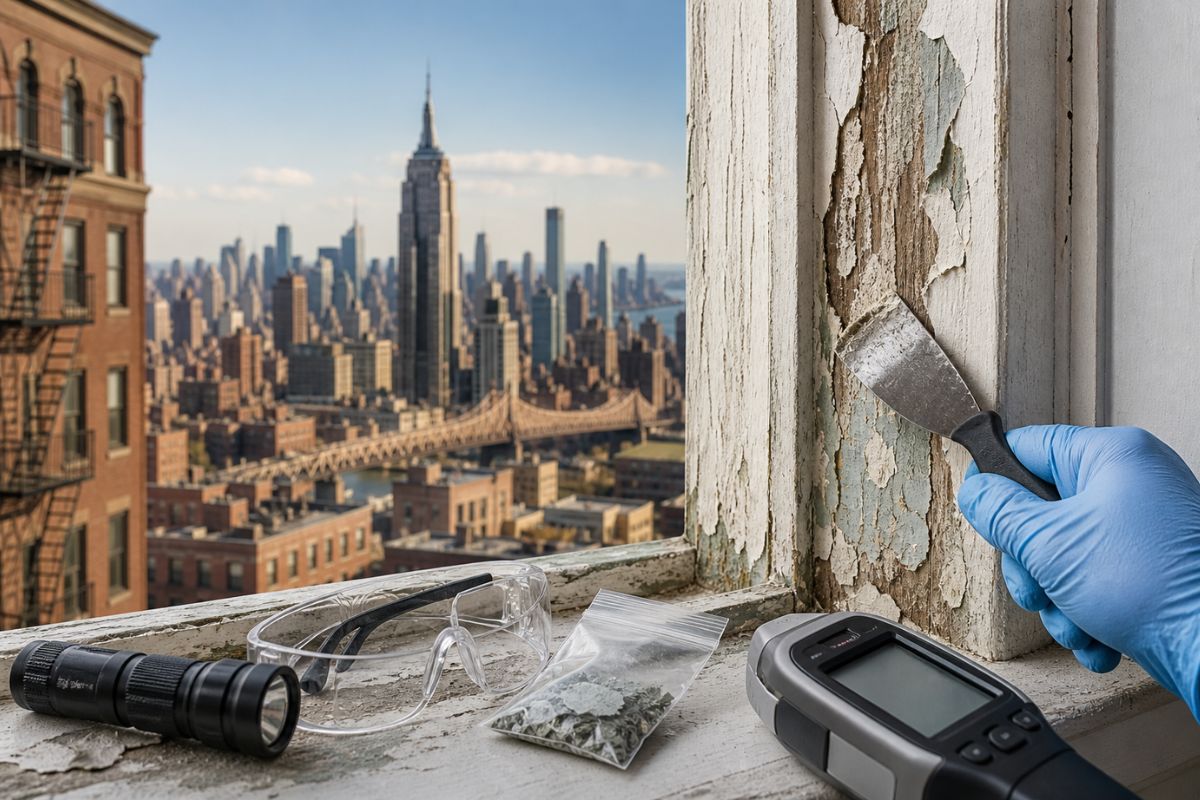
If you're trying to turn the ranges above into a real number for your basement, get a licensed crew on-site to walk it. We handle flood cleanup, mold and lead testing, and full restoration across NYC and Nassau County – quote is free, response is fast.