The August 9, 2025 deadline under Local Law 31 has come and gone.
For owners of pre-1960 NYC residential buildings, that single date changed the game – buildings without complete XRF records on file are now flagged as out of compliance by default, and HPD has shifted firmly into audit mode.
Class C violations, daily fines, and tax liens are all in play.
We’ll break down what NYC lead paint laws now require, what compliance looks like, and where the real costs and risks sit.
Key Notes
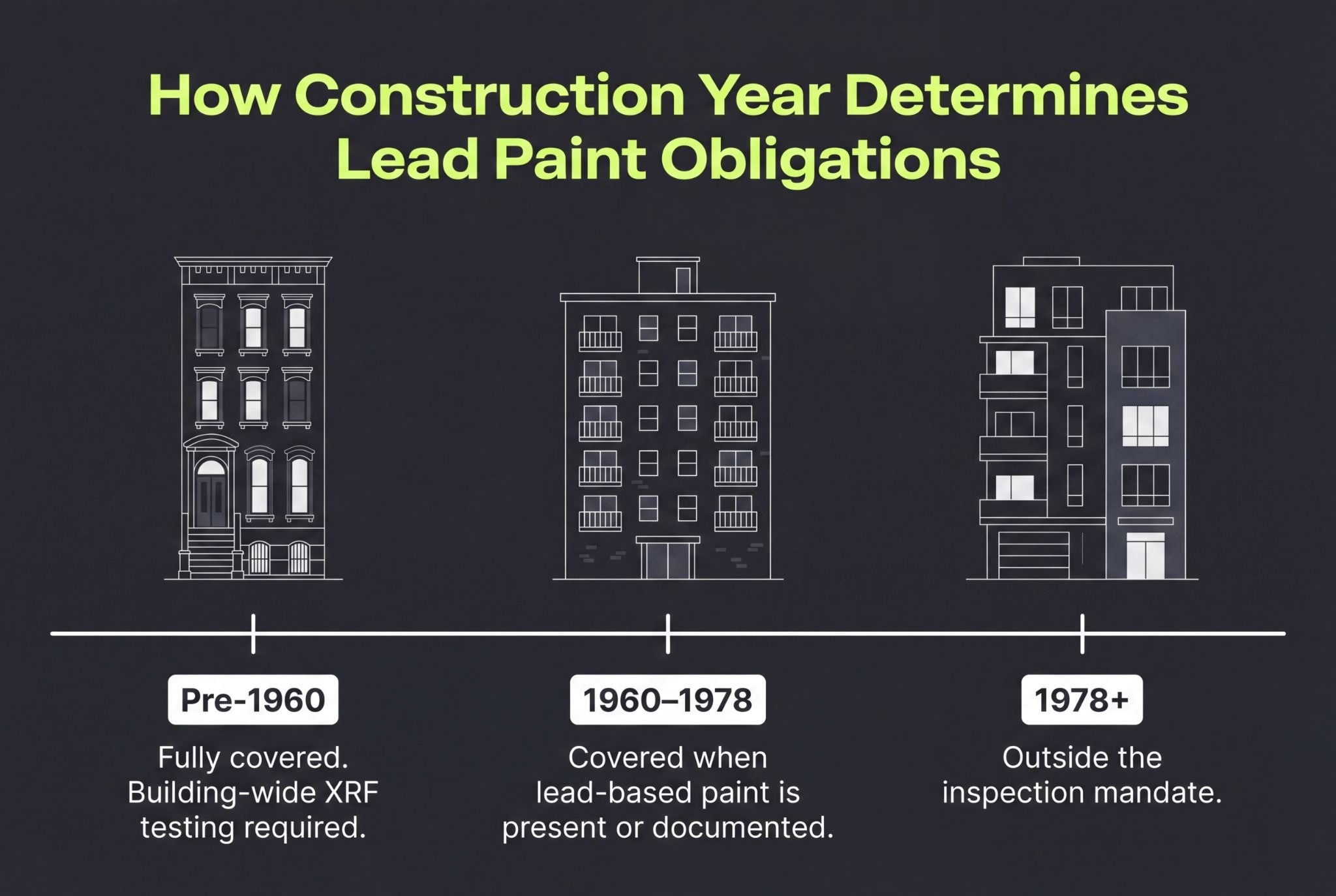
Local Law 31 covers all pre-1960 NYC residential buildings and certain 1960–1978 properties with documented lead.
Only EPA-certified, independent inspectors using XRF can perform testing that satisfies HPD compliance.
Class C violations run $1,000–$5,000 each, with daily fines and tax liens for uncorrected hazards.
Which Buildings Are Covered Under Local Law 31
Local Law 31 covers residential buildings, full stop. Commercial properties and post-1978 housing fall outside its scope.
A Common Point Of Confusion:
Child occupancy doesn't determine whether LL31 applies.
The law is building-based. But if a child under 6 lives in a covered unit that hasn't been tested yet, the inspection clock shrinks to one year from move-in, and Local Law 1 obligations layer on top.
NYC Lead Paint Laws: What Property Owners Are Legally Required To Do
Local Law 31 sits on top of Local Law 1 of 2004, so compliance has two layers:
a front-loaded testing requirement
plus ongoing inspection and hazard-correction duties that recur every year
Testing Requirements
Hire an EPA-certified, independent lead inspector or risk assessor. They cannot be tied to your abatement contractor – HPD treats that as a conflict.
XRF-test every painted surface in every dwelling unit and residential common area, against the 0.5 mg/cm² threshold set by Local Law 66.
Older XRF reports generally need to be dated 2021 or later to count.
Recurring Duties Under Local Law 1
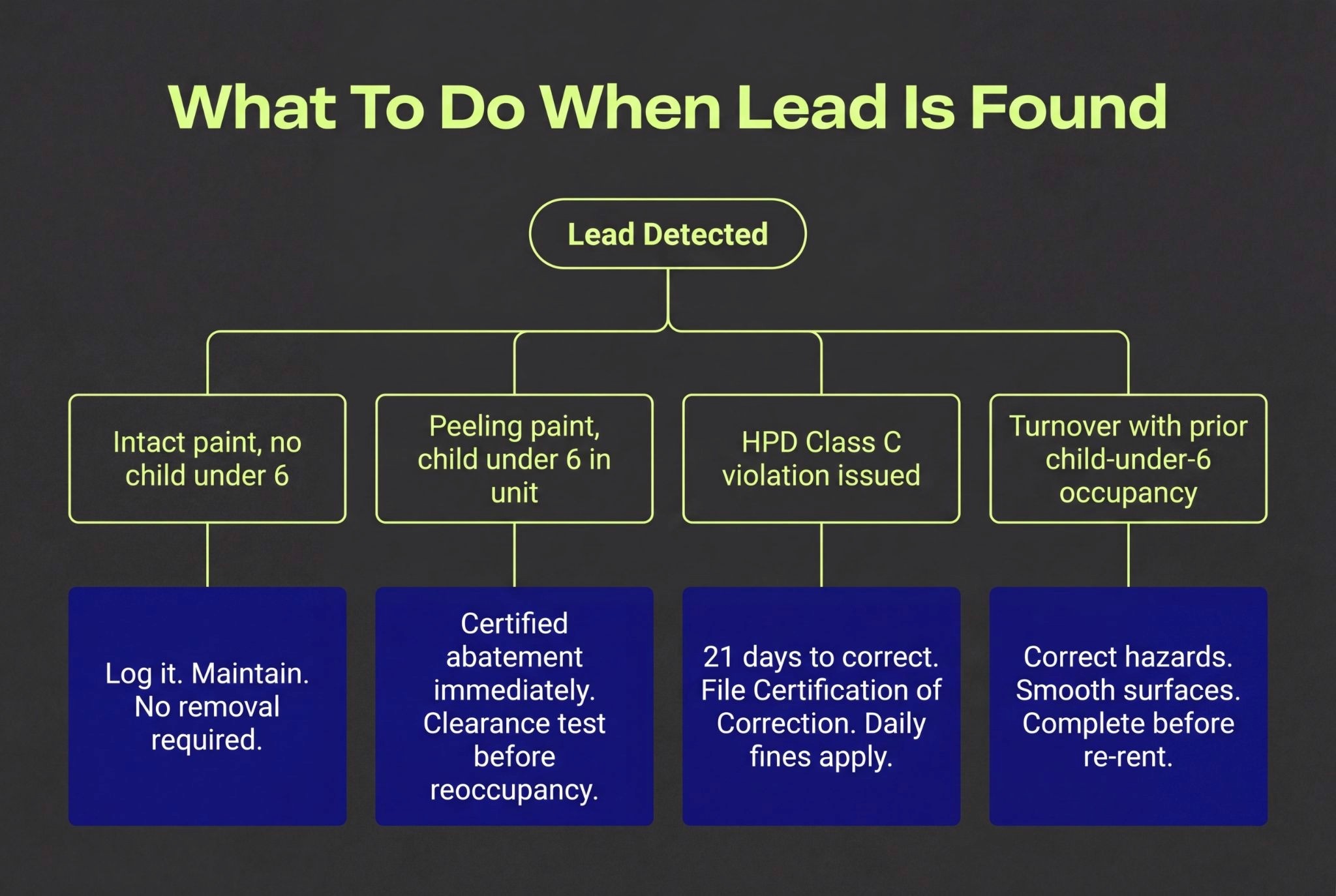
Annual visual inspections in every unit where a child under 6 resides.
Turnover work before re-renting: correct peeling paint, address friction and impact surfaces, and make floors and window sills smooth and cleanable.
Prompt hazard correction when violations are issued – typically 21 days for Class C interior hazards.
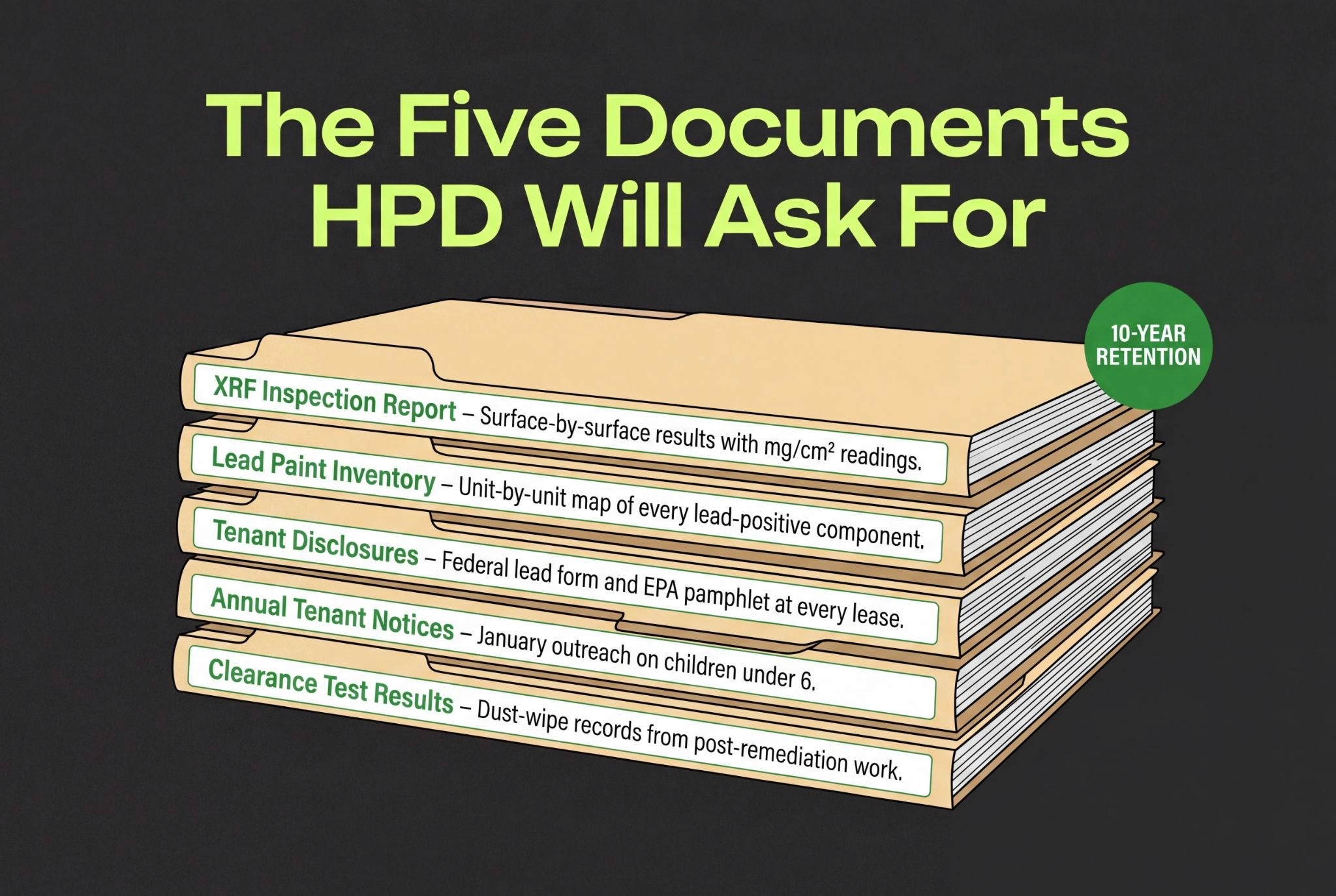
The 10-year recordkeeping piece catches a lot of owners off guard. HPD can ask for documents going back a decade, and gaps in the file generate violations even when the physical work was done correctly.
How Does Lead Paint Testing Work In NYC?
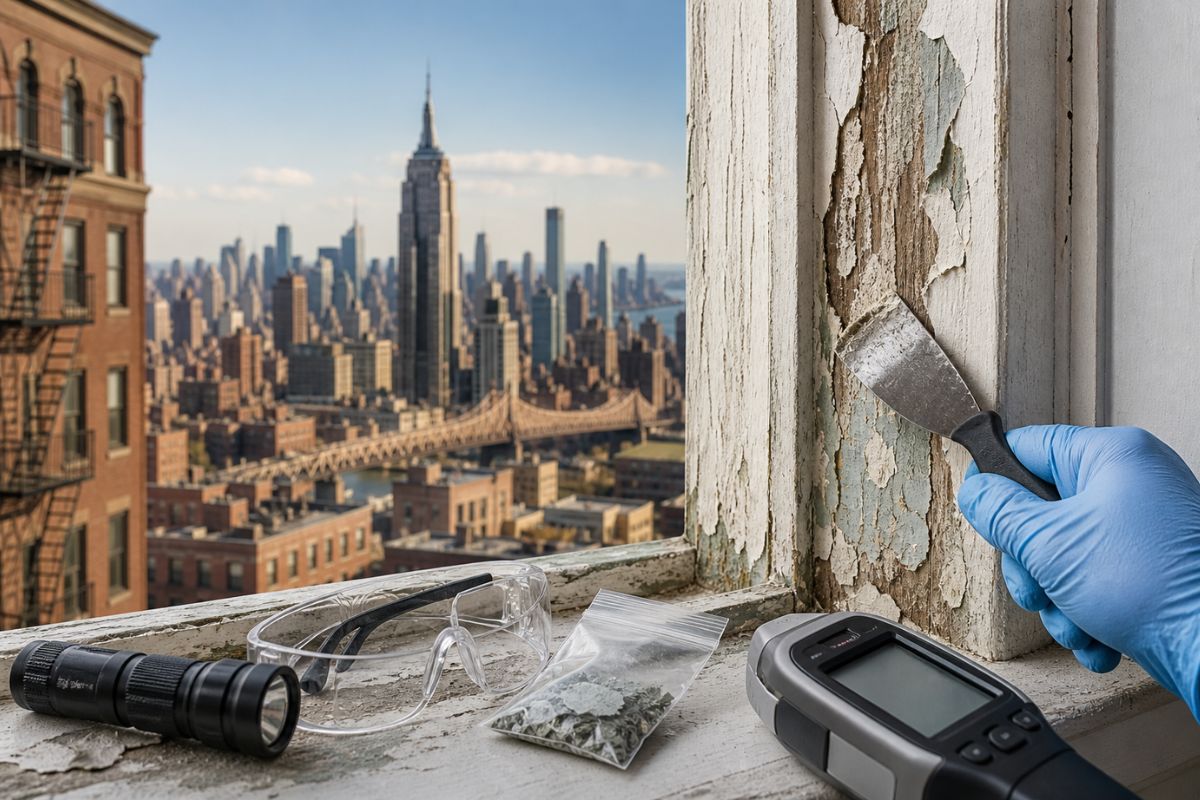
XRF testing is the central method under Local Law 31, and it's the standard for one reason: it works through paint layers without destroying the surface.
An EPA-certified inspector runs a handheld analyzer across every painted component in the unit, reading lead content in mg/cm² in real time.
That includes:
Walls and ceilings
Doors and door frames
Window sashes and sills
Baseboards and trim
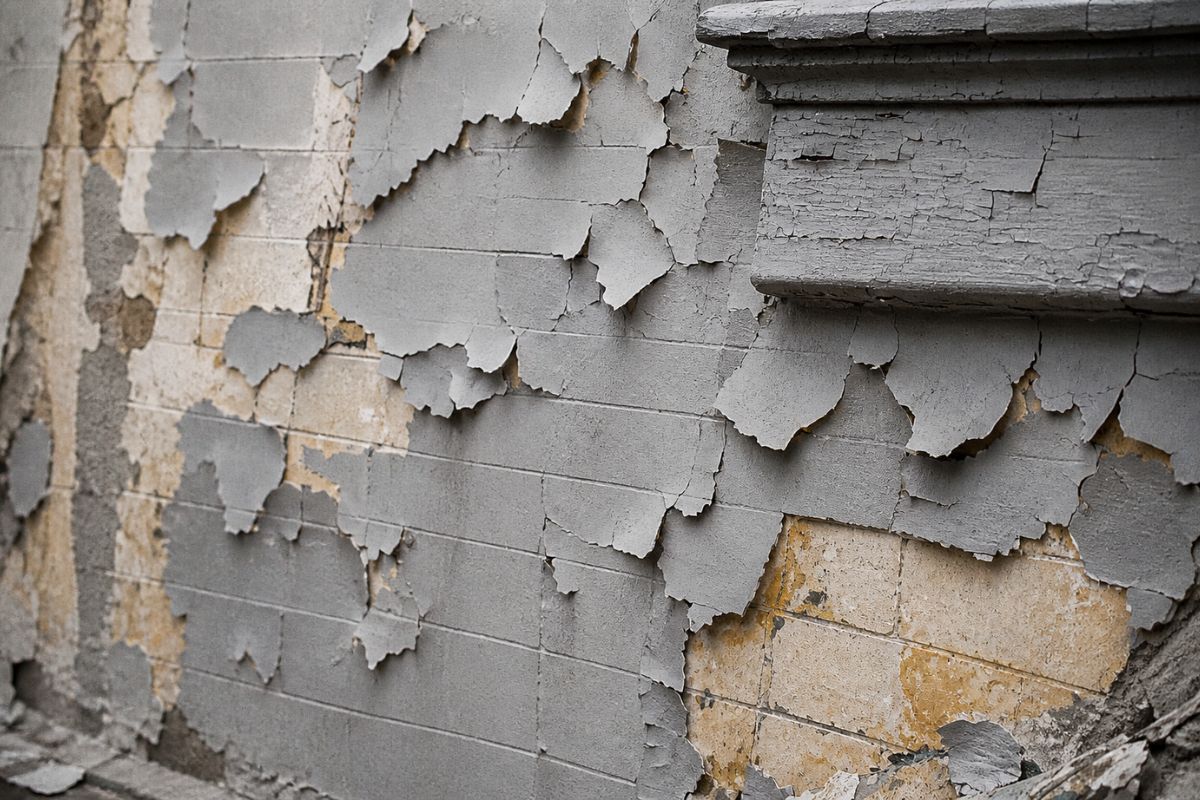
Older buildings often have 10+ layers of paint, and XRF picks up lead in the underlying coats that visual inspections and surface scrapings miss entirely.
Three Different Tests Show Up In Nyc Compliance Work, And They Do Different Jobs:
Test Type | What It Does | When It's Required |
XRF testing | Identifies where lead-based paint is present | LL31 building-wide compliance, lead-free exemption applications, new child under 6 in untested unit |
Visual inspection | Catches when paint is deteriorating | Annual Local Law 1 inspections in units with children under 6, turnover prep |
Dust-wipe clearance | Confirms dust is safe after work | Post-abatement, after major paint disturbance |
What A Compliant XRF Report Must Include
A compliant XRF inspection report needs five core elements to hold up under HPD audit:
Property identification: Building address, borough, and LL31 coverage status (e.g., pre-1960 multiple dwelling).
Inspector credentials: Name, firm, EPA certification numbers, and a written independence statement confirming no tie to any abatement contractor on the property.
Instrument data: Make and model of the XRF analyzer, plus calibration and quality-control records.
Scope of inspection: Which units, which common areas, and any inaccessible spots that couldn't be tested.
Surface-by-surface results: A clear table with unit number, room, component, mg/cm² reading, and a positive/negative call on each surface.
Ask for these specifics before the inspector starts work.
Chasing missing report content after the fact is a slow, expensive process (and an incomplete report is one of the most common reasons HPD challenges LL31 compliance during audits).
What Are The NYC Lead Paint Laws When Lead Is Found?
Local Law 31 tells you where the lead-based paint is. Local Law 1 governs what happens next, and the response depends on condition and occupancy.
Lead Abatement vs Remediation: The Difference Matters
These two words get used interchangeably, and they shouldn't be.
The distinction drives both cost and what HPD will accept:
Lead Abatement: Permanent Hazard Elimination
Lead abatement in NYC means permanently eliminating the hazard, with work designed to last 20+ years.
It's the heavier intervention, and it's required in specific situations:
You want a lead-free or lead-safe designation from HPD.
You're hitting federally assisted rehab funding thresholds.
Interim controls have repeatedly failed on the same surface.
Common Abatement Methods Include:
Chemical or mechanical paint removal under full containment
Replacing entire window and door units
Structural enclosure with new drywall or paneling
Component replacement for trim, baseboards, and cabinets
Remediation: Hazard Reduction & Control
Remediation (or "interim controls") reduces exposure rather than eliminating the lead itself.
Most day-to-day NYC compliance work lives here, and it's fully acceptable under Local Law 1 as long as hazards are corrected on time and the owner commits to ongoing monitoring.
Standard Remediation Methods Include:
Wet scraping deteriorated paint and repainting with durable coatings
Encapsulation using approved sealant systems
Non-structural enclosure to block access to lead-painted surfaces
Aggressive HEPA vacuuming and wet cleaning to remove dust
The Practical Difference:
Abatement gets rid of the lead. Remediation manages it.
Both can satisfy NYC requirements when done correctly – the right choice depends on the building's risk profile and your long-term strategy for the asset.
How To Choose:
High-risk combinations (child under 6, peeling paint, deteriorated friction surfaces) push toward abatement-level work.
Localized, intact lead paint can usually be managed with remediation plus solid maintenance.
Buildings being repositioned long-term or facing high liability exposure often benefit from abatement now to avoid recurring interim control costs.
Costs & Timelines For NYC Lead Paint Compliance
XRF Lead Paint Testing In NYC
Standard apartment: $300–$700
Larger units (3+ bedrooms): $800–$1,200+
Bulk and portfolio discounts are common for landlords testing multiple units at once
Inspection itself: 1–3 hours per apartment; report turnaround typically 3–5 business days
Abatement & Remediation
Professional lead paint removal: $8–$17 per square foot, with interior walls/ceilings on the lower end and exterior wood trim toward the higher end
Targeted abatement (specific rooms or surfaces, like windows and doors only): $1,500–$6,000
Whole-unit abatement on a 1,200–2,000 sq ft apartment or home: $9,600–$30,000+
Clearance inspections after abatement: $200–$350 per project
Remediation/interim controls run lower per square foot, but tenant relocation costs can change the math
Timelines
Small abatement project (a few rooms): A few days to a week
Multi-unit building compliance, end to end: Several months once you factor in scheduling, reports, remediation, and clearance
Enforcement, Violations & Penalties Under Local Law 31
HPD is the primary enforcement agency for Local Law 31 NYC compliance.
DOHMH gets involved on elevated blood lead cases and runs investigations that often loop HPD back in.
DOB shows up when lead issues intersect with construction permits or unsafe work practices.
The Violations Break Into A Few Categories:
Failure to test: XRF inspections never done, done late, or done by a non-certified inspector
Documentation failures: Testing was done but the records can't be produced on demand – this catches more owners than people expect
Class C (immediately hazardous): Peeling lead-based paint in a unit with a child under 6, exposed friction surfaces generating dust
Class B (hazardous): Lower-severity hazards and certain recordkeeping or notice failures
On The Financial Side:
Class C civil penalties typically run $1,000–$5,000 per violation, with daily fines accruing for uncorrected hazards.
HPD can also arrange emergency repairs and bill the owner – unpaid balances become tax liens.
And missing LL31 records become evidence in tenant lawsuits, particularly child lead-poisoning cases where Local Law 1 and 31 violations support negligence claims.
Inspections Get Triggered By:
311 complaints
DOHMH investigations
HPD audit programs
Unpermitted renovation work
And – increasingly post-deadline – the simple fact that a building has no XRF records on file
Building A Long-Term Local Law 31 Compliance System
Owners who treated Local Law 31 lead paint compliance as a one-time project are the ones getting hit with audits right now. The owners staying clean built systems.
Here's what those systems look like:
Centralize The File
One digital folder per building containing:
XRF reports
Lead inventory
Annual tenant notices
Inspection logs
Contractor scopes
Clearance results
Naming convention: building-unit-date-doctype.
When HPD asks for records, you should be five clicks away from producing them.
Maintain A Living Lead Inventory
Every unit, every common area, every component flagged positive – and updated every time abatement, encapsulation, or replacement happens.
Without this, you're rebuilding history from scattered PDFs every time someone asks a question.
Lock In An Annual Compliance Calendar
January notices to tenants.
Follow-up inspections in units with children under 6.
Annual Local Law 1 visual checks.
Periodic internal audits to catch documentation gaps before HPD does.
Use The Same Trusted Partners Across The Portfolio
EPA-certified inspectors for XRF and clearance.
Certified abatement contractors for hazard correction.
The consistency matters because reports start to look the same, audits go faster, and you avoid the variable quality you get from chasing the cheapest bid every cycle.
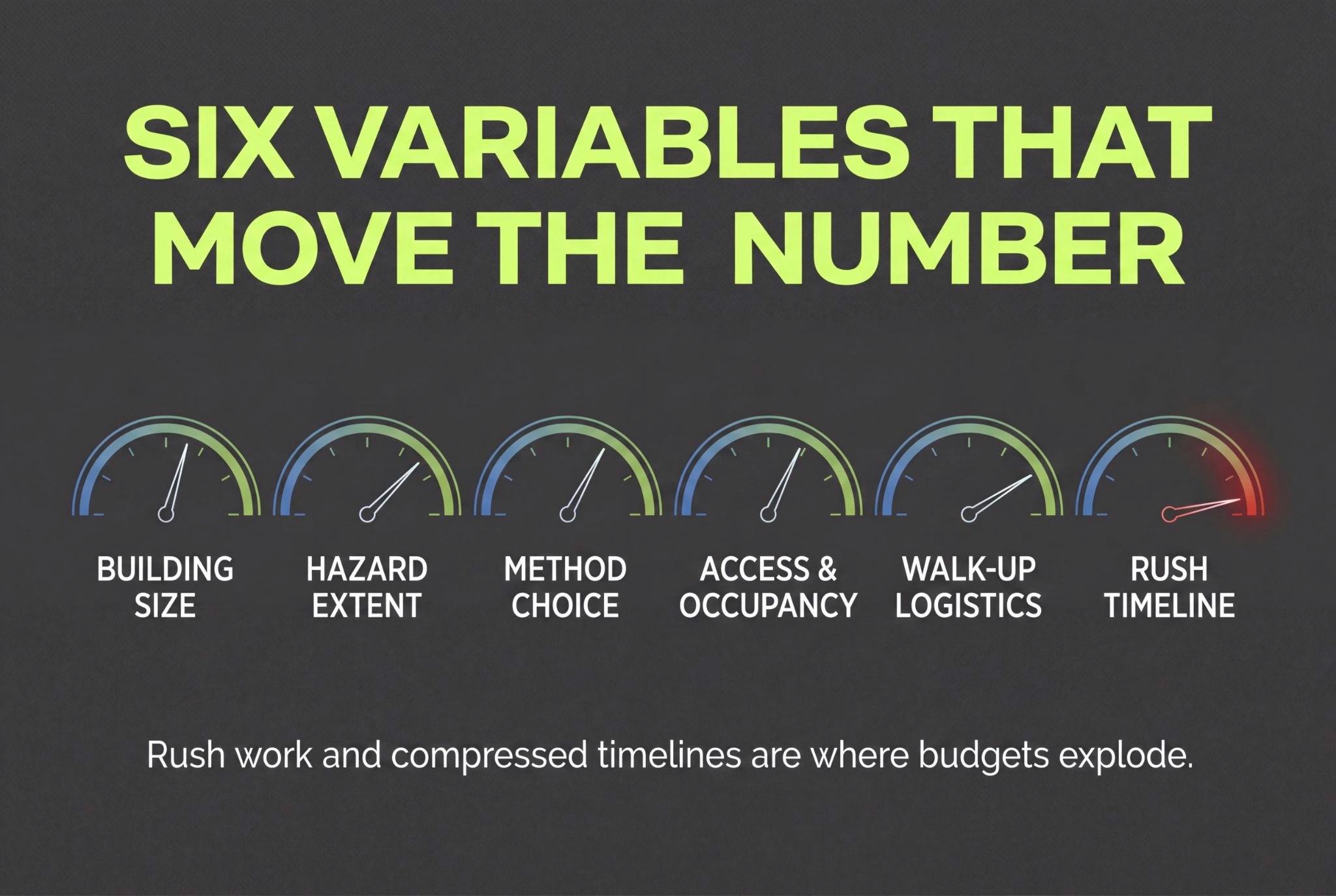
Get Ahead Of The Recurring Cost Drivers
Old wood windows and doors are the single biggest source of recurring lead dust in pre-war NYC housing. Replacing them costs more upfront than another round of stabilization, but it cuts annual hazard costs and inspection time substantially.
Train supers and maintenance staff in lead-safe work practices so routine repairs don't generate new violations.
NYC Lead Paint Laws FAQs
How long does a lead inspection take in NYC?
A standard lead paint inspection in NYC takes 1–3 hours for a single apartment, depending on size and component count. Multi-unit buildings typically run a full day or more. Most providers turn around the written XRF report in 3–5 business days, with same-day rush options available at higher cost.
How much does a lead paint inspector cost in NYC?
A certified lead paint inspector in NYC typically charges $300–$700 for a standard apartment and $800–$1,200+ for larger units or homes. Bulk pricing is common for portfolio testing across multiple apartments. Rates depend on unit size, number of components, borough, and whether dust-wipe sampling is bundled in.
Can I use a home lead test kit instead of hiring a certified inspector?
A home lead test kit will not satisfy NYC lead paint laws or Local Law 31. HPD only accepts XRF testing performed by an EPA-certified lead inspector or risk assessor who's independent from your abatement contractor. DIY kits are useful for personal awareness, but they have no legal standing in NYC compliance.
Does Local Law 31 apply to commercial buildings?
Local Law 31 does not apply to standalone commercial buildings – it's a residential housing law targeting dwelling units and residential common areas. Mixed-use properties are partially covered: residential apartments above retail and shared residential common areas require XRF testing, but the commercial portions sit outside the mandate.
Need Testing, Abatement, Or Both?
We're licensed for the full job – one team, full Local Law 31 compliance.
Conclusion
NYC lead paint laws now run on a build-once-maintain-forever model.
Local Law 31 forced every covered owner to map their lead-positive surfaces, and Local Law 1 keeps the ongoing duties (annual notices, visual inspections, turnover work, hazard correction) running in the background year after year.
The owners staying clean are the ones treating compliance as an operating system: a centralized file, a living lead inventory, trusted EPA-certified partners, and an annual calendar that catches problems before HPD does.
If you're sitting on uncertainty about your building's testing status, gaps in your documentation, or a violation that needs to move fast, our licensed team can audit on-site and tell you exactly what compliance looks like for your situation. Get a free quote now.