That smell hitting you every time the AC kicks on?
It's telling you something specific.
HVAC systems produce a fairly small set of bad smells, and each one points to a different problem – some you can fix this afternoon, a couple mean shut the unit off and step outside.
Here’s how to identify what you're smelling, what's behind it, and what it costs to fix in NYC.
Key Notes
Musty smells signal moisture and mold, while rotten egg or burning plastic mean evacuate immediately.
Timing and location of the smell narrow the cause faster than any other diagnostic step.
Most NYC HVAC odor fixes run $75–$1,500 (with mold remediation reaching several thousand).
Match The HVAC Smell To The Likely Cause
The fastest way to figure out why your HVAC smells bad is to identify the specific odor first, because each smell points to a fairly narrow set of causes and a clear risk level.
Here's the breakdown:
Smell | Likely Cause | Risk Level |
Musty / moldy | Moisture and mold on coils, drain pans, or duct interiors | Schedule service |
Dirty socks / gym bag | "Dirty sock syndrome" – mold and bacteria on the evaporator coil | Schedule service |
Dusty / burning dust (first 20–30 min of heat) | Dust burning off the heat exchanger after a long off-season | Usually normal |
Strong burning, melting plastic, hot electrical | Overheating motor, failing wiring, burning insulation | Shut down – call a pro |
Rotten egg / sulfur | Natural gas leak from furnace or gas line | Evacuate – call gas company |
Sweet, solvent, or chemical | Refrigerant leak or off-gassing chemicals in returns | Shut down – call a pro. |
Persistent stale, dirty, dusty air | Clogged filter, dirty blower, or dusty ducts | Address soon |
Why Does My AC Smell Musty?
A musty AC smell almost always means moisture is sitting somewhere it shouldn't – usually a clogged condensate drain, a slow-draining pan, or humid air condensing inside ductwork.
Air freshener won't fix it.
Drying out the source and cleaning the affected components will.
What Are The Signs Of AC Mold?
musty or "dirty socks" smell that hits hardest when the system first kicks on
odors that worsen in humid weather
dark or fuzzy spots near supply registers
condensation around the indoor unit
allergy-like symptoms (coughing, sinus pressure, headaches) that improve when occupants leave the building
Diagnose The Smell By Timing & Location
You can narrow most HVAC odor problems with two questions: when does it smell, and where is it strongest?
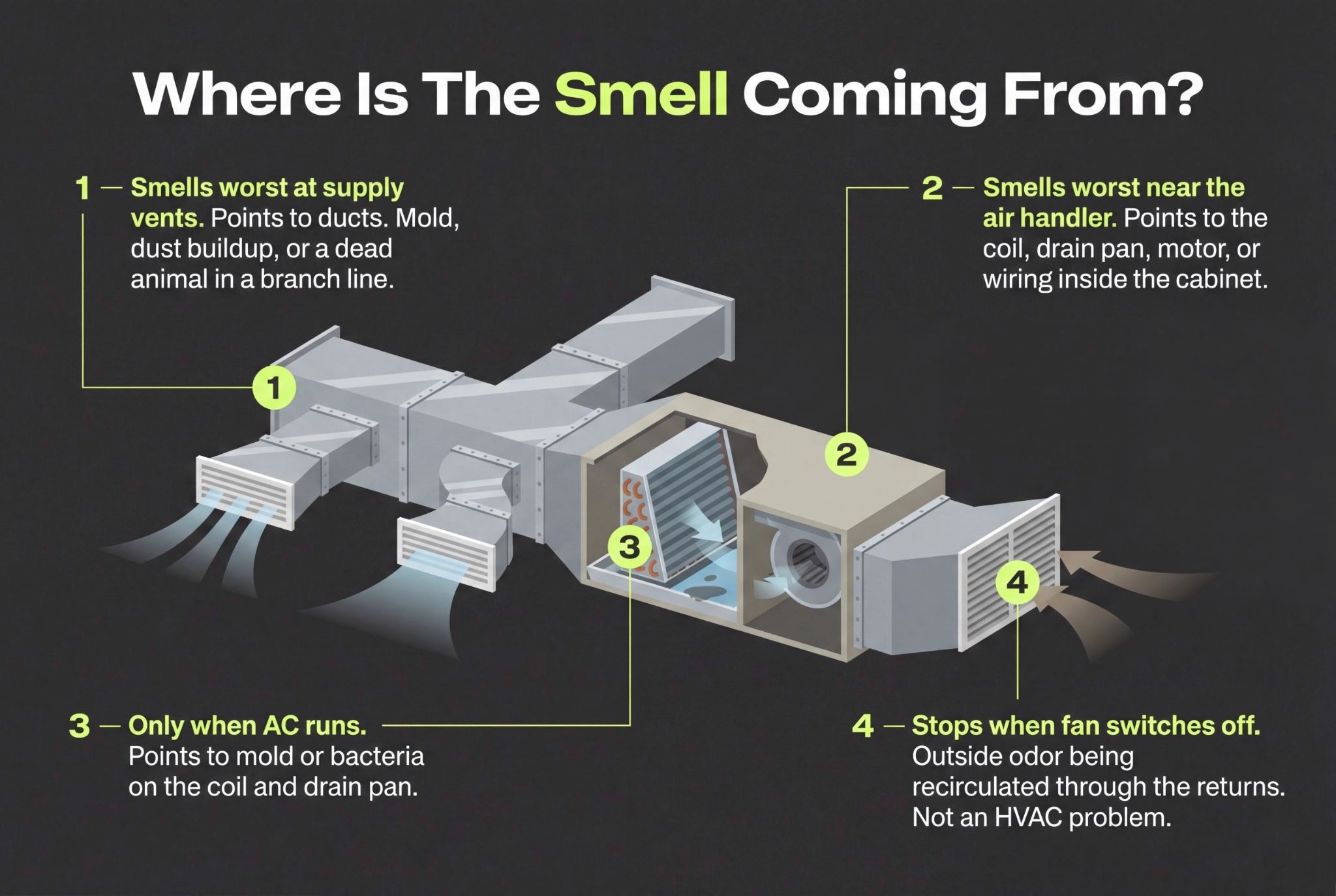
A Simple But Underrated Tip:
Walk the building and note which rooms or vents are worst. That information saves a technician 30 minutes of diagnosis.
How To Remove Bad Smells From HVAC Systems
How you remove a bad smell from an HVAC system depends entirely on what's causing it.
Some odors clear up after a filter change. Others need licensed remediation. Mixing those up costs you money.
What You Can Safely Handle Yourself
If there are no danger smells (gas, strong burning, sweet/chemical), these steps clear most mild odors:
Replace the air filter. Turn the system off at the thermostat, note the airflow arrow direction before pulling the old one, and install the new one with arrows pointing toward the blower. A clogged or damp filter is the most common cause of musty and dusty smells.
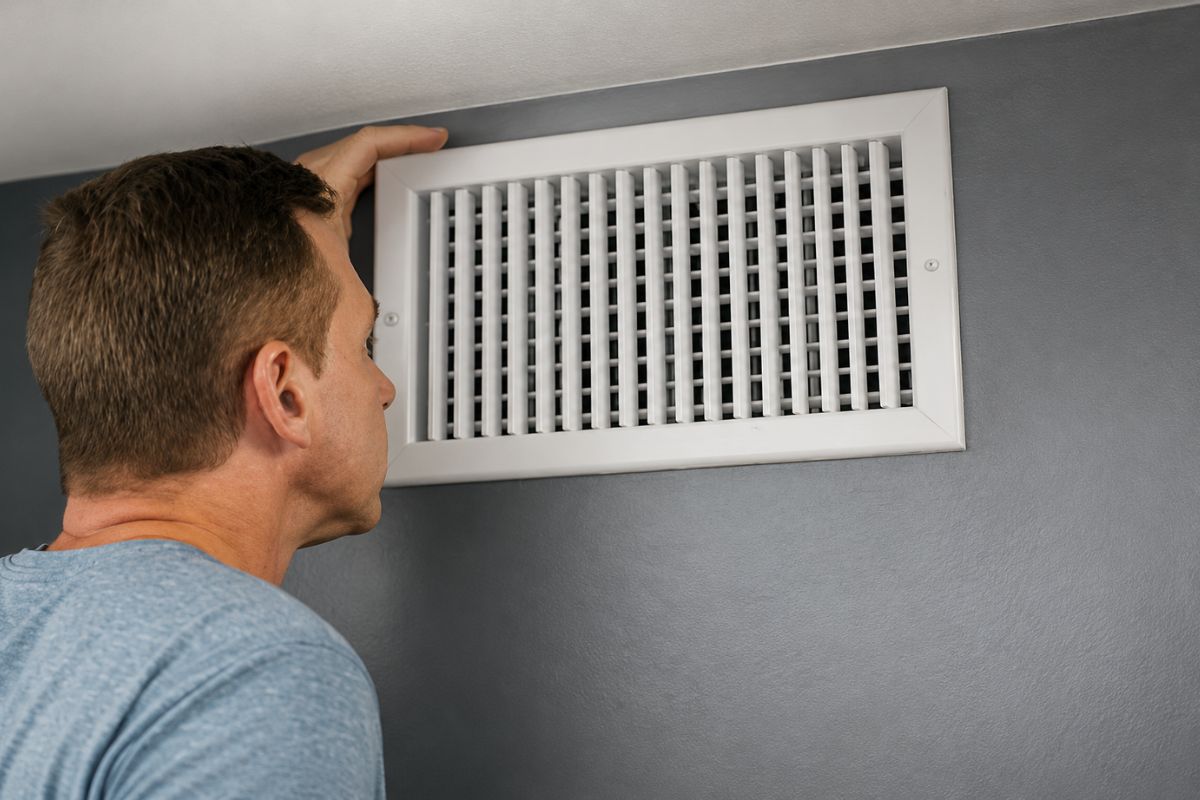
Clean vents and grilles. Vacuum supply and return grilles, then wipe with mild dish soap or a diluted white vinegar solution. Dry thoroughly.
Clear standing water from accessible drain pans. A wet/dry vac at the drain line outlet can pull out small clogs. Treat the line with HVAC-specific pan tablets or a mild vinegar solution to keep slime down.
Run the fan on dry days to help dry out damp components (but only if you have no burning or electrical smells).
Use a dehumidifier in damp basements or mechanical rooms to keep indoor humidity in the 30–50% range.
What To Skip
Bleach, strong solvents, and disinfectant sprays blown into vents are a bad idea. They corrode metal components and put irritating chemicals into the airstream.
Air fresheners in vents only mask odors and add VOCs without fixing the source.
Forget about DIY duct cleaning beyond what your hand and a vacuum can reach – proper duct work needs negative-pressure equipment and rotary brushes that homeowners don't have.
When To Call A Licensed Pro
Any rotten egg, strong burning, melting plastic, or sweet/chemical smell – immediately
Visible mold inside ducts or the air handler
Persistent musty or dirty-sock smell that returns after filter changes and basic cleaning
Suspected dead animal in the ductwork
Anything involving refrigerant or electrical components
NYC Cost Ranges & The $5,000 Rule
HVAC odor fixes in NYC typically run between $75 for a basic drain line cleaning and several thousand dollars for full mold remediation.
Here's what to expect:
Service | Typical NYC Range |
Filter replacement (DIY purchase) | $10–$40 |
Drain line cleaning | $75–$200 |
Coil cleaning | $200–$500 |
Whole-home duct cleaning | $350–$1,000 |
Refrigerant leak repair | $250–$1,500 |
HVAC-related mold remediation | $3,000–$10,000+ |
Service call (before parts/labor) | $100–$250 |
What Is The $5,000 Rule For AC?
The $5,000 rule for AC is a quick sanity check on whether to repair or replace your system.
Multiply the repair quote by the age of your system in years.
If the result is under 5,000, repair generally makes sense.
If it's over 5,000, that money is usually better spent on a new system.
How To Prevent HVAC Smells From Coming Back
Most HVAC odor problems are preventable with four habits, and they cost a fraction of any of the repairs in the table above.
Change Filters On Schedule
Every 30 days for basic fiberglass filters, every 90 days for pleated, and every 20–60 days if you have pets, allergies, or live in a high-dust environment. Check monthly.
Keep Indoor Humidity Between 30–50%
Use dehumidifiers in damp spaces. Make sure ducts are sealed and insulated so humid air isn't condensing on cold metal. Don't block return or supply vents with furniture – that creates low-flow cold spots where moisture lingers.
Schedule Professional Maintenance Twice A Year
Once before cooling season, once before heating.
Good maintenance includes filter checks, coil and drain inspection, and a look inside cabinets and accessible duct runs for early dust buildup, leaks, or mold.
Catching a small condensate leak in May costs nothing. Finding it as a mold remediation project in August costs thousands.
HVAC Smells Bad FAQs
Can a bad-smelling HVAC make you sick?
A bad-smelling HVAC can make you sick, especially when mold or bacteria are circulating through the ducts. Common symptoms include coughing, sinus pressure, headaches, fatigue, and worsened asthma – and they often improve when you leave the building. Gas, refrigerant, and burning smells carry more immediate health and fire risks and need professional attention right away.
How long does HVAC mold remediation take?
HVAC mold remediation in NYC typically takes 1–3 days for a residential system and longer for commercial or multi-unit buildings, depending on how far the contamination has spread into ducts and insulation. The timeline includes inspection, containment, cleaning of affected components, addressing the moisture source, and final clearance.
Does duct cleaning get rid of HVAC smells?
Duct cleaning gets rid of HVAC smells when the source is genuinely inside the ductwork – accumulated dust, mold along duct interiors, or organic debris. It won't help if the odor is coming from the coil, drain pan, or a refrigerant leak. A proper diagnosis before booking duct cleaning saves money and gets the smell handled the first time.
Why does my HVAC smell worse after it rains?
Your HVAC smells worse after it rains because higher outdoor humidity increases condensation on coils and inside ducts, which reactivates dormant mold and bacteria. If the smell consistently spikes during humid weather, the underlying issue is moisture buildup in the system – usually a drain line, coil, or duct insulation problem that needs professional cleaning and a fix at the source.
Not Sure What Your HVAC Is Telling You?
We'll diagnose it on-site, handle the fix, and keep it documented.
Conclusion
When your HVAC smells bad, the smell itself is the diagnostic.
Musty points to moisture and mold. Dirty socks points to a colonized coil. Rotten egg means stop and step outside. Burning plastic means the same.
The harmless ones (seasonal dust burn-off, a stale filter) clear up with basic maintenance. The serious ones need a licensed crew who can find the moisture source, document the work, and fix the underlying problem.
If your HVAC smells bad and you want a real diagnosis with a clear scope and proper documentation, get a free quote and we'll take a look.