Three out of four NYC buildings went up before 1960.
That single fact does most of the heavy lifting when you're trying to figure out whether lead is sitting in your walls, on your window sashes, or under that fresh coat of paint the previous owner rolled on in 2018.
Age, deterioration patterns, and certified testing each tell you something different.
We’ll cover all three, plus what NYC law expects of you in 2026.
Key Notes
NYC presumes lead paint in pre-1960 buildings (about 76% of the city's housing stock).
XRF testing by an EPA-certified inspector is the only legally valid confirmation method.
Local Law 31 required full XRF testing of covered buildings by August 9, 2025.
Owners carry the legal duty to test and remediate – tenants pay nothing.
Building Age Is Your Single Biggest Signal
Construction date does more work than any other factor when answering how do you know if you have lead paint.
NYC banned lead-based residential paint in 1960 – eighteen years before the federal ban in 1978 – so the city's housing stock splits into clear risk tiers based on when it was built.
Here's how the probability breaks down by era:
Construction Era | Estimated Likelihood of Lead Paint | NYC Status |
Pre-1940 | ~87% | Legally presumed lead-positive |
1940–1959 | ~69% | Legally presumed lead-positive |
1960–1978 | ~24% | Covered if lead is known or suspected |
Post-1978 | Minimal | Generally not covered |
So Do All Homes Built Before 1978 Have Lead Paint?
No. Even in the highest-risk era, it's most, not all. By the 1960–1978 window, only about a quarter of homes are estimated to contain lead-based paint.
But NYC takes the precautionary route: any residential building constructed before 1960 is legally presumed to contain lead paint until testing proves otherwise.
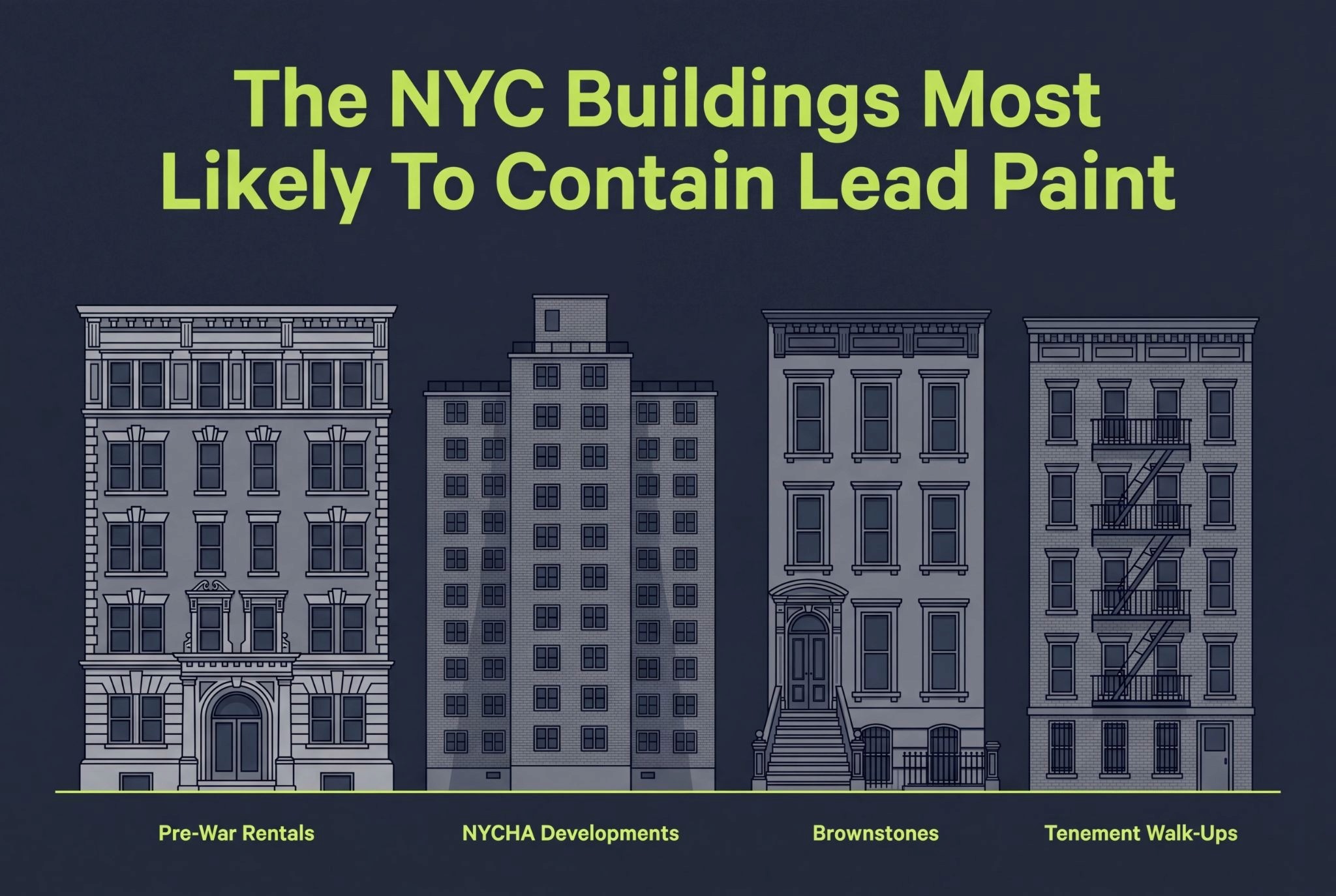
Geographically:
The Bronx carries the highest concentration of lead paint violations in the city – about 73 violations per 1,000 residential units + nearly half of all citywide court cases against building owners.
Northern Manhattan (Washington Heights, Harlem) and parts of central Brooklyn also see elevated rates, largely because those neighborhoods have a high share of pre-1960 rental stock.
Why Renovation History Doesn't Clear Your Building
A common assumption: "The unit was renovated in 2015, so we're fine."
👉 That's wrong, and it's an important piece of how to know if your house has lead paint in NYC.
Fresh Paint Doesn't Equal Lead-Free
Painting over lead paint doesn't remove it.
Old layers stay underneath the new ones, ready to re-emerge the moment something fails:
A chip in the top coat
A crack from settling or moisture
A window scrape from daily use
Wear on a high-traffic baseboard or door frame
Cosmetic Renovation Can Make Things Worse
Renovation done without lead-safe work practices can actively create a hazard.
In a pre-1960 unit, common renovation tasks can turn quiet, intact lead paint into a major dust event in a few hours:
Sanding old trim
Drilling for shelves, mounts, or baby gates
Replacing windows or doors
Cutting into walls for electrical or plumbing work
Building Records Aren't Proof
Alteration filings, age stamps, and renovation permits are useful for estimating risk, but they're not proof of "no lead."
NYC's lead laws specifically presume lead in pre-1960 buildings for a reason: historical records don't reliably document whether lead paint was used or fully abated.
The only paperwork that counts as evidence:
A documented XRF inspection report from an EPA-certified inspector
Certified abatement clearance with dust-wipe verification
Anything else is an educated guess.
How To Spot Lead Paint: Visual Signs That Should Put You On Alert
Visual signs of lead paint in a home tell you when paint is old and starting to fail. They cannot tell you what's in the paint (that's what testing is for).
But in older NYC buildings, certain patterns are strong enough indicators that the city treats them as hazards regardless of confirmed lead status.
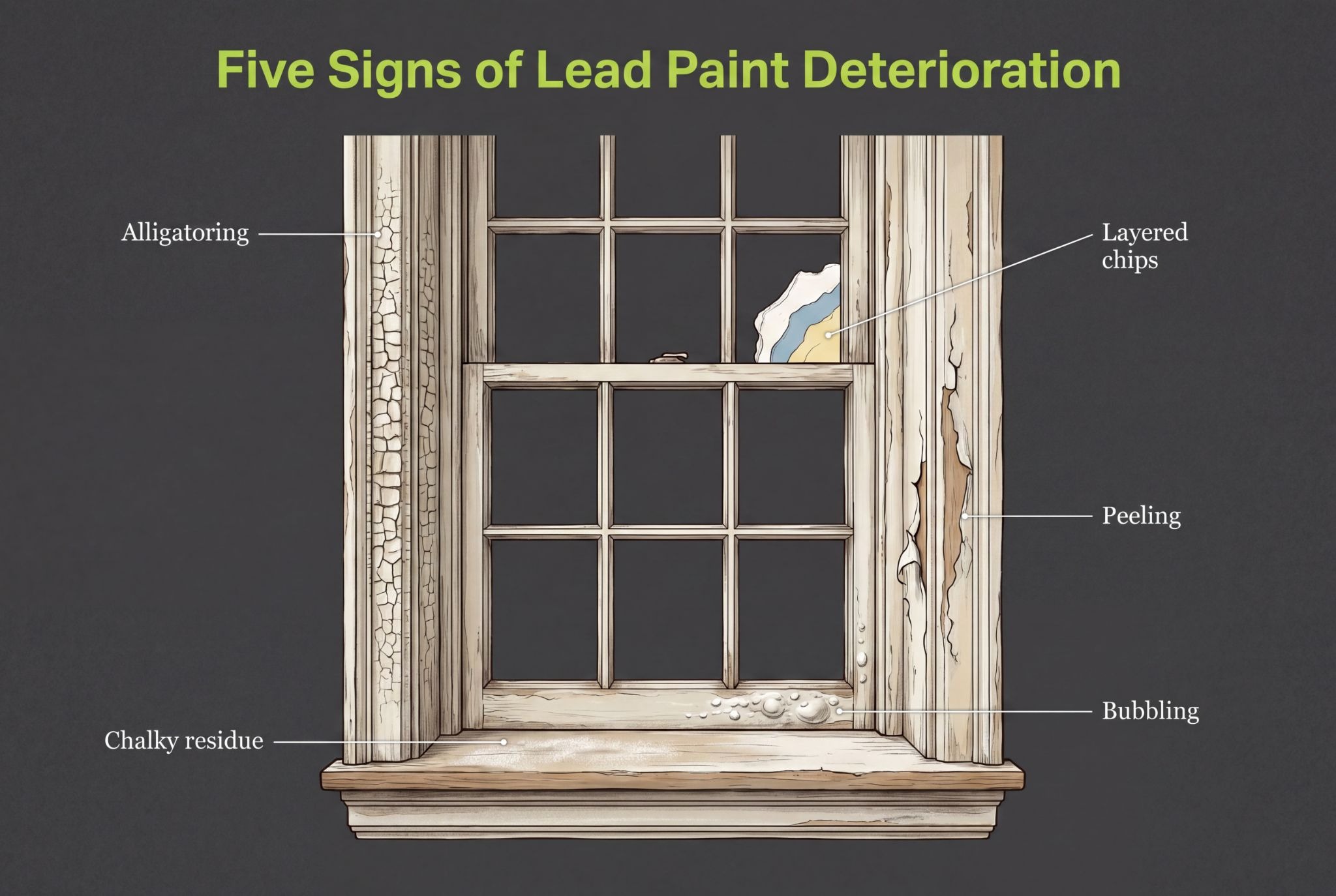
The Reason Lead Paint Ages This Way Comes Down To Chemistry
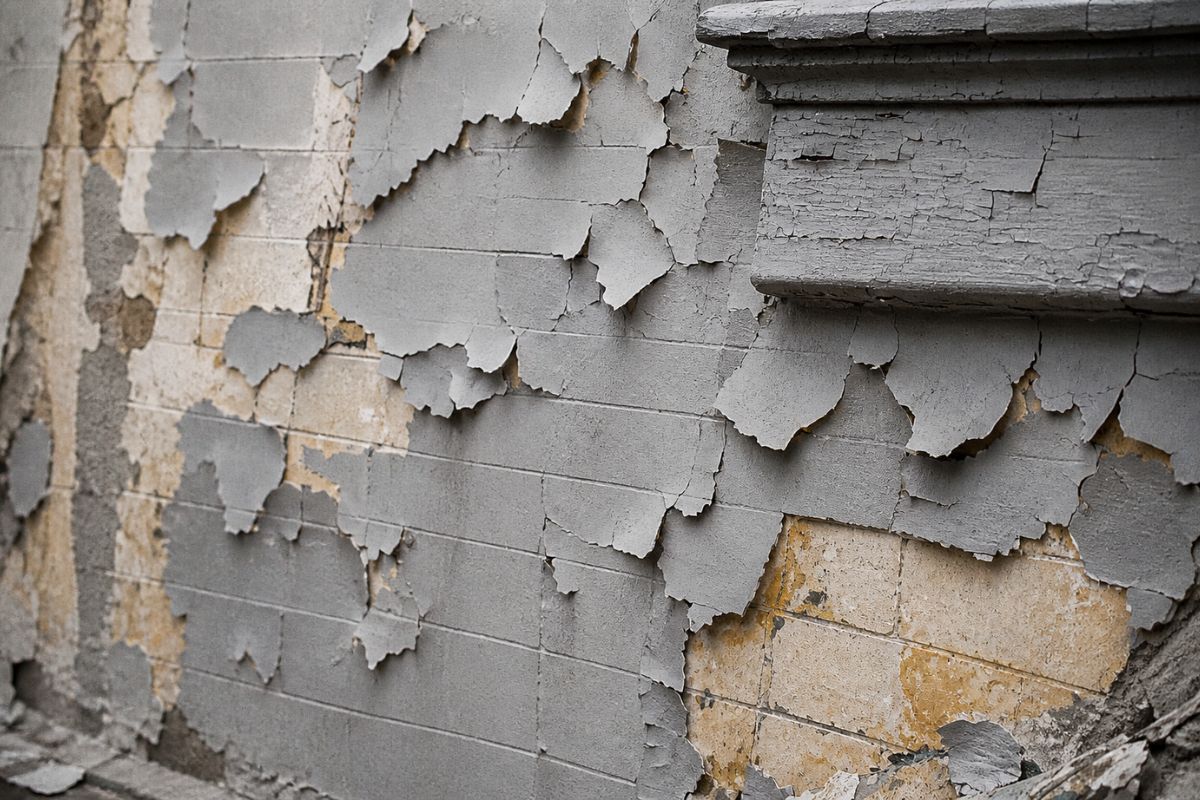
Lead-based paints were typically oil-based and become rigid and brittle over decades, so they crack and chip dramatically. Modern latex and acrylic paints stay flexible and tend to fail in thinner, more uniform sheets.
High-Risk Surfaces To Check First:
Window sashes and sills
Door frames and thresholds
Stair railings
Baseboards
Painted floors in older apartments
These are the places where lead paint is both most likely to exist and most likely to generate dust through friction or impact.
A Few Things People Commonly Mistake For Lead Paint:
Paint color (lead paint comes in every color – color tells you nothing)
Peeling in newer buildings, which is almost always moisture damage
Chalky exterior paint on modern construction, which is just sun and weathering
Cracking on post-1978 surfaces, which can come from poor prep or oil-based paints without lead
How Do You Know If Your House Has Lead Paint: Testing Methods
If age and visual cues raise the probability, testing is what gives you the answer.
There are three real options:
1. DIY Swab Kits
Drugstore swab kits use rhodizonate or sulfide-based color-change chemistry. Rub the swab on a freshly exposed paint surface, and it changes color if lead is present.
How They Work:
Cost: About $10–$30 for a multi-pack
Best use: Quick spot-checks on a single suspect surface
Result: Visible color change within seconds to minutes
Where They Fall Short:
Miss buried lead hiding under newer paint layers
Give false negatives on dirty, dusty, or wet surfaces
Not accepted for any NYC compliance purpose
The rule of thumb most inspectors use:
A positive swab means treat that surface as lead. A negative swab proves nothing.
2. Professional XRF Testing
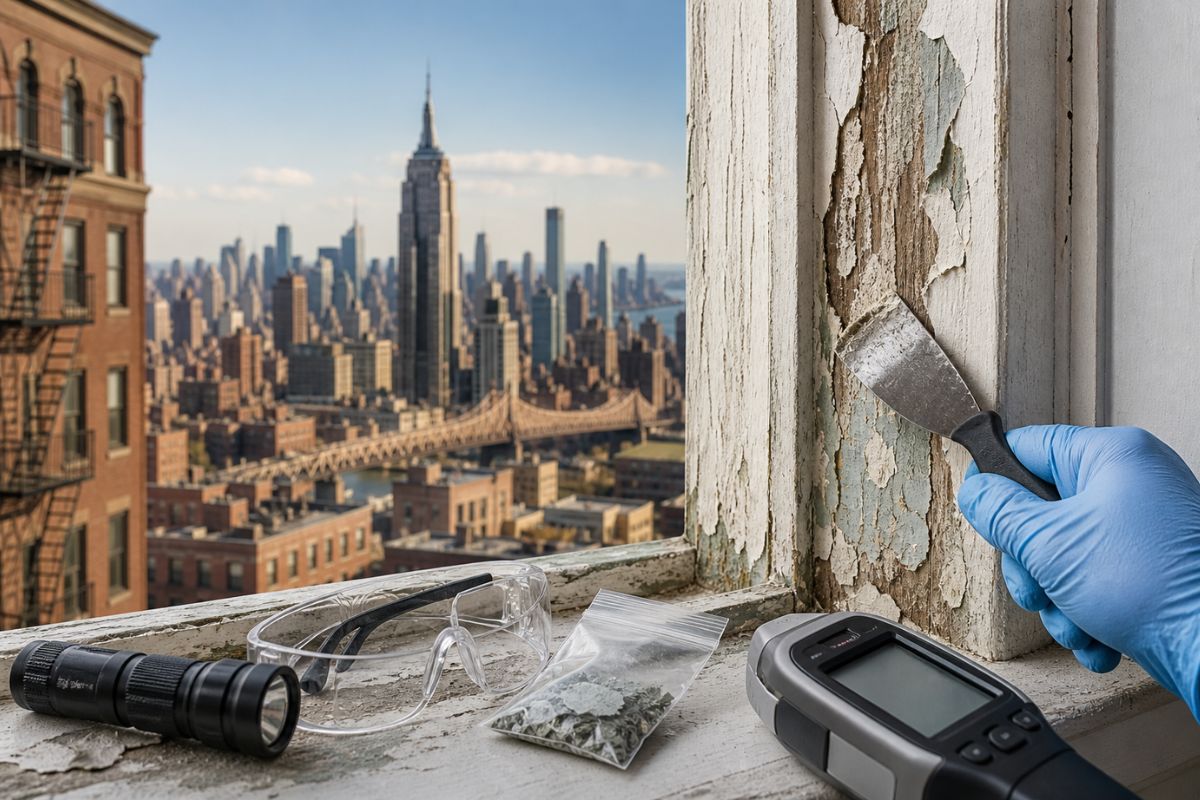
XRF (X-ray fluorescence) is the standard for figuring out how do you know if your house has lead paint to a legally defensible degree.
How It Works:
A handheld analyzer emits low-energy X-rays into the painted surface and measures the fluorescent signal that comes back from any lead atoms present.
It reads through every paint layer at once and doesn't damage the surface.
What You Get:
Result in milligrams per square centimeter (mg/cm²)
NYC's lead-paint threshold: 0.5 mg/cm² or higher
Required under Local Law 31 for covered buildings
Must be performed by an EPA-certified inspector
Timeline:
A typical 1–3 bedroom apartment takes 1–2 hours on site. Most NYC firms deliver a written report within 24–72 hours.
3. Lab Paint Chip Analysis
For borderline XRF readings, legal disputes, or specific surfaces where precision matters, a paint chip can be sent to an accredited lab for analysis in parts per million (ppm).
When It's Used:
Resolving inconclusive XRF readings
Building legal evidence for compliance disputes
Confirming lead status on a specific high-priority surface
It's the reference method – slightly more accurate than XRF, but slower and requires damaging the surface to take the sample.
Cost & Access In NYC (2026)
Service | Typical Cost |
Visual lead assessment (no XRF) | $200–$400 |
XRF inspection, single residential unit | $300–$700 |
Dust wipe testing (add-on) | $150–$400 |
Full inspection package with report | $400–$800 |
NYC and NY State periodically offer free or subsidized lead testing through LeadFreeNYC, NYC Health, and partner nonprofits – typically aimed at families with young children, low-income households, or homes with elevated blood lead test results.
What NYC Law Requires In 2026
NYC's lead enforcement environment in 2026 is the strictest it's ever been, and the legal duty sits squarely on the property owner.
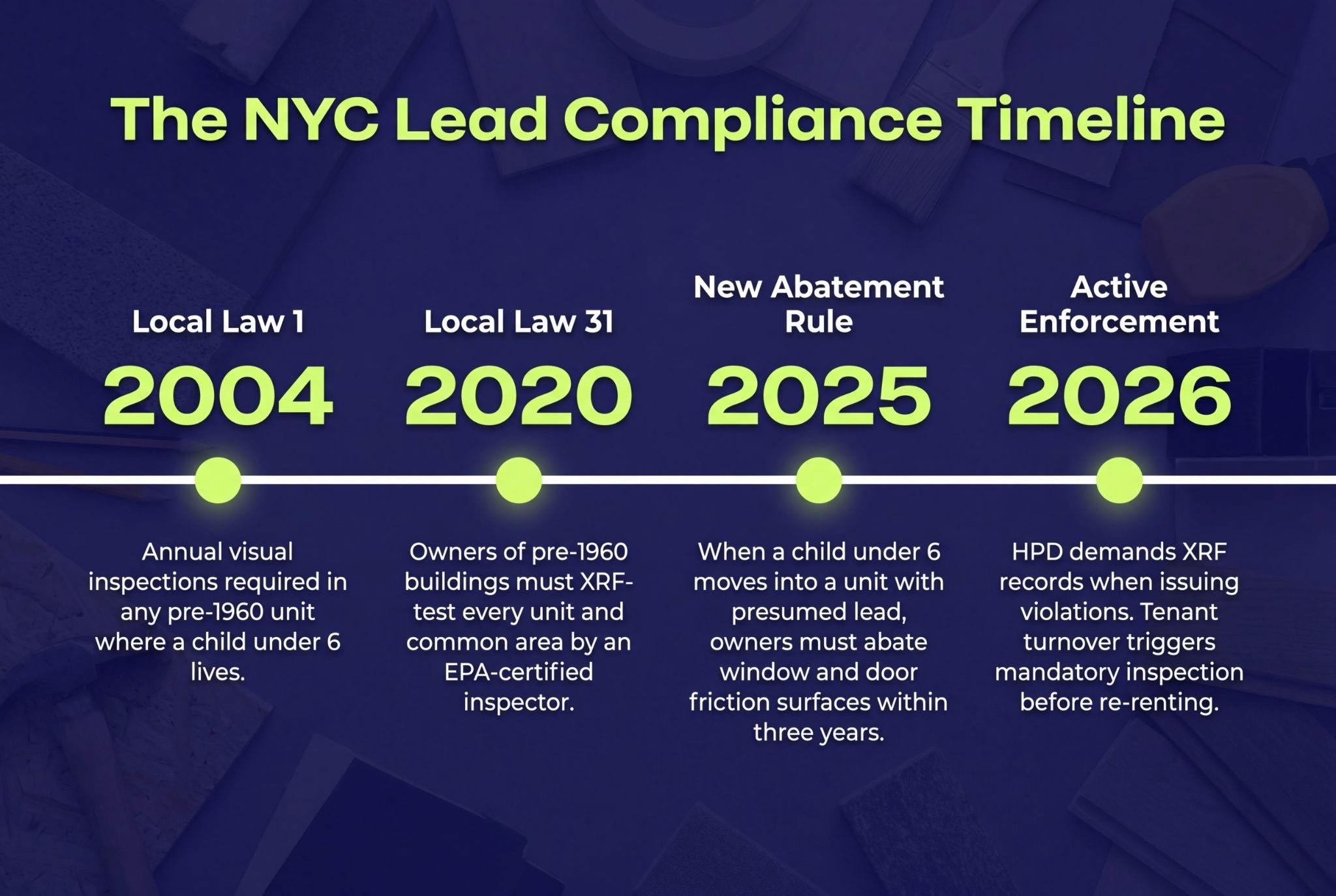
A Few Practical Points:
Owners pay – for testing, remediation, documentation, all of it. Tenants don't fund any of this and can request the unit's XRF report at any time.
HPD can demand XRF records when issuing lead violations. Missing or outdated records trigger penalties on top of the underlying violation.
Tenant complaints to 311 about peeling paint or suspected hazards launch official inspections, and HPD/DOHMH also run proactive targeting of high-risk buildings.
Penalties accrue daily until violations are corrected. Repeat or ignored violations can land owners on problem-building lists and create real financing and sale complications.
What To Do If Lead Paint Is Confirmed?
A positive result isn't a crisis if it's handled right. The wrong response, though, is what creates dust events and elevated blood lead levels in kids.
Do Immediately:
Keep children and pregnant people away from peeling or damaged areas
Stop any sanding, scraping, drilling, or renovation near lead-positive surfaces
Pick up visible chips with damp paper towels and dispose in sealed bags
Wet-clean nearby floors and sills (no dry sweeping, no regular vacuum)
Tenants: document with photos, notify the landlord in writing, call 311 if there's no response
Never do:
Dry sand, power-sand, or wire-brush lead-painted surfaces
Use heat guns or open-flame paint removal – both vaporize lead into inhalable particles
Treat a fresh coat of paint as a permanent fix, especially on windows and doors
Remediation Options
There are three approved approaches in NYC, each suited to different situations:
Encapsulation: A specialized liquid coating that bonds to and seals existing lead paint. A medium-term control suited to walls and intact surfaces.
Enclosure: Drywall, paneling, or vinyl cladding installed over lead-painted surfaces. The lead stays underneath but is physically isolated from occupants.
Removal or replacement: Chemical strippers, contained scraping, or full component replacement (new windows, doors, trim). Most permanent, most disruptive, most expensive.
Always Hire Certified
NYC requires EPA-certified lead abatement firms for full abatement work, and EPA RRP-certified contractors for any renovation in pre-1978 housing.
Clearance dust testing must be performed by an independent certified inspector – never the same firm doing the work.
How Do You Know If Your House Has Lead Paint FAQs
How much does a lead paint inspection cost in NYC?
A lead paint inspection in NYC typically costs $300–$700 for a single residential unit using XRF testing, with full inspection packages including dust wipes and a written report running $400–$800. Larger brownstones or multi-unit buildings cost more. Some NYC families qualify for free testing through LeadFreeNYC and partner programs.
How long does a lead inspection take?
A lead inspection of a typical 1–3 bedroom NYC apartment takes 1–2 hours on site, with the written report delivered within 24–72 hours. Larger multi-family buildings or full brownstones can take several hours to a full day depending on the number of units and surfaces tested.
Can I do a lead paint inspection myself with a test kit?
You can use a DIY test kit for preliminary spot-checks, but it won't satisfy any NYC compliance requirement. Drugstore swab kits often miss lead buried under newer paint layers and aren't accepted by HPD or under Local Law 31. Only an EPA-certified inspector using XRF can produce legally valid results.
Is a lead paint inspection required when buying a home in NYC?
A lead paint inspection isn't strictly required to buy a home in NYC, but federal law mandates that sellers and landlords disclose any known lead-based paint and provide an EPA lead pamphlet before closing. For pre-1960 properties, an inspection is strongly recommended for due diligence – and lenders often request one.
Wondering What's Behind Your Walls?
We’ll walk your property, identify the risks & map out exactly what's needed.
Conclusion
Figuring out how do you know if your house has lead paint comes down to four signals working together.
Construction date sets the baseline probability – pre-1960 buildings carry the heaviest risk, and NYC law treats them as lead-positive until testing says otherwise. Visual deterioration patterns like alligatoring, layered chips, and chalky residue tell you when a known-or-suspected surface has crossed into hazard territory.
XRF testing by an EPA-certified inspector is what turns suspicion into documented fact. And Local Law 31 sets the timeline you're working against in 2026.
If your property falls into the high-risk category and hasn't been formally tested, an on-site inspection is the fastest way to find out where you stand. Our licensed team handles the testing, abatement, and the documentation that comes with both – so you walk away with answers and a clear path to compliance. Get your free quote now.