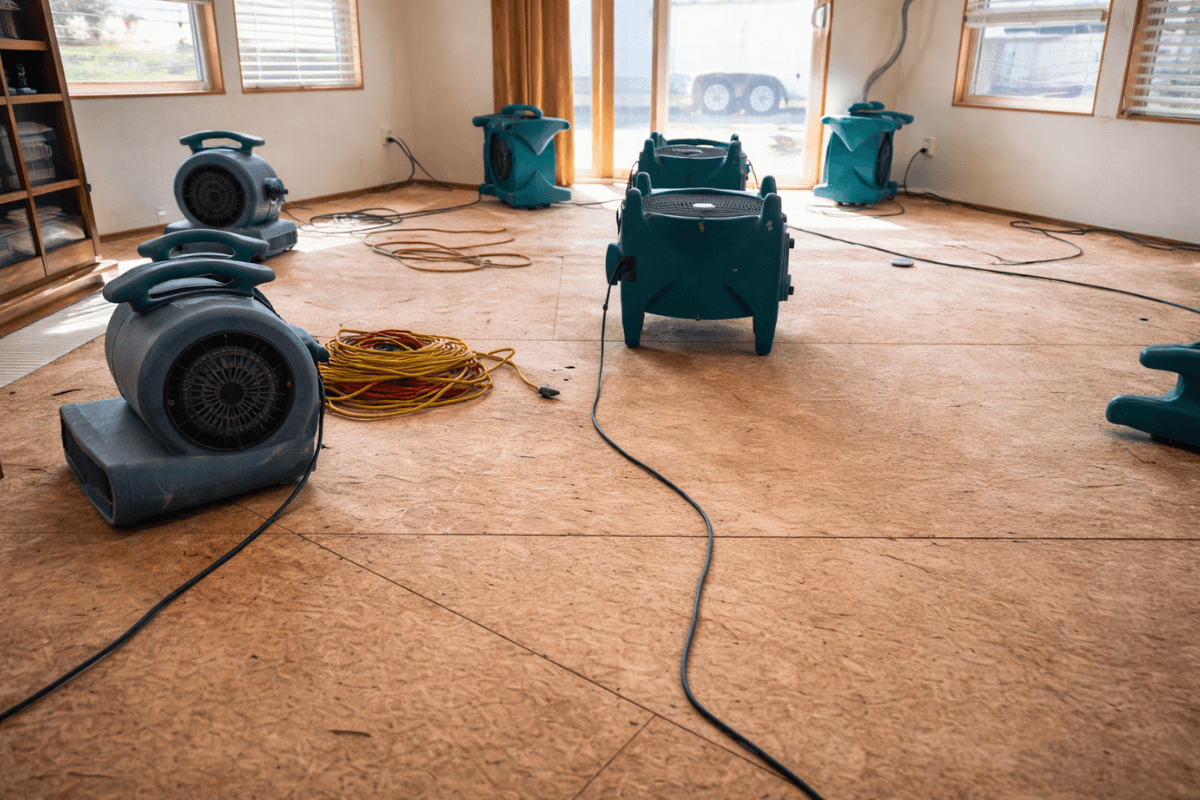
Water damage gets expensive fast.
A small clean-water issue might land in the $1,700 to $5,000 range, while multi-room or contaminated jobs can jump well past $10,000. The spread is wide enough that most owners aren’t sure what they’re really walking into.
We’ll break down what drives those numbers so you can get a clear read on your actual water damage restoration cost.
Key Notes
NYC water damage restoration ranges from $1,700 to $16,000+ depending on severity.
Water category (clean, gray, black) is one of the biggest cost drivers.
Older NYC buildings, hidden moisture, and compliance requirements raise prices further.
Quick Look: Water Damage Restoration Costs in NYC
Most NYC water damage restoration jobs fall into three brackets:
Minor damage (clean water, contained): $1,700–$5,000
Moderate damage (multiple rooms, mold risk, demolition): $5,000–$10,000+
Severe or contaminated damage (black water, hidden mold, structural work): $10,000–$16,000+
Cost by Water Category (Clean, Gray, Black)
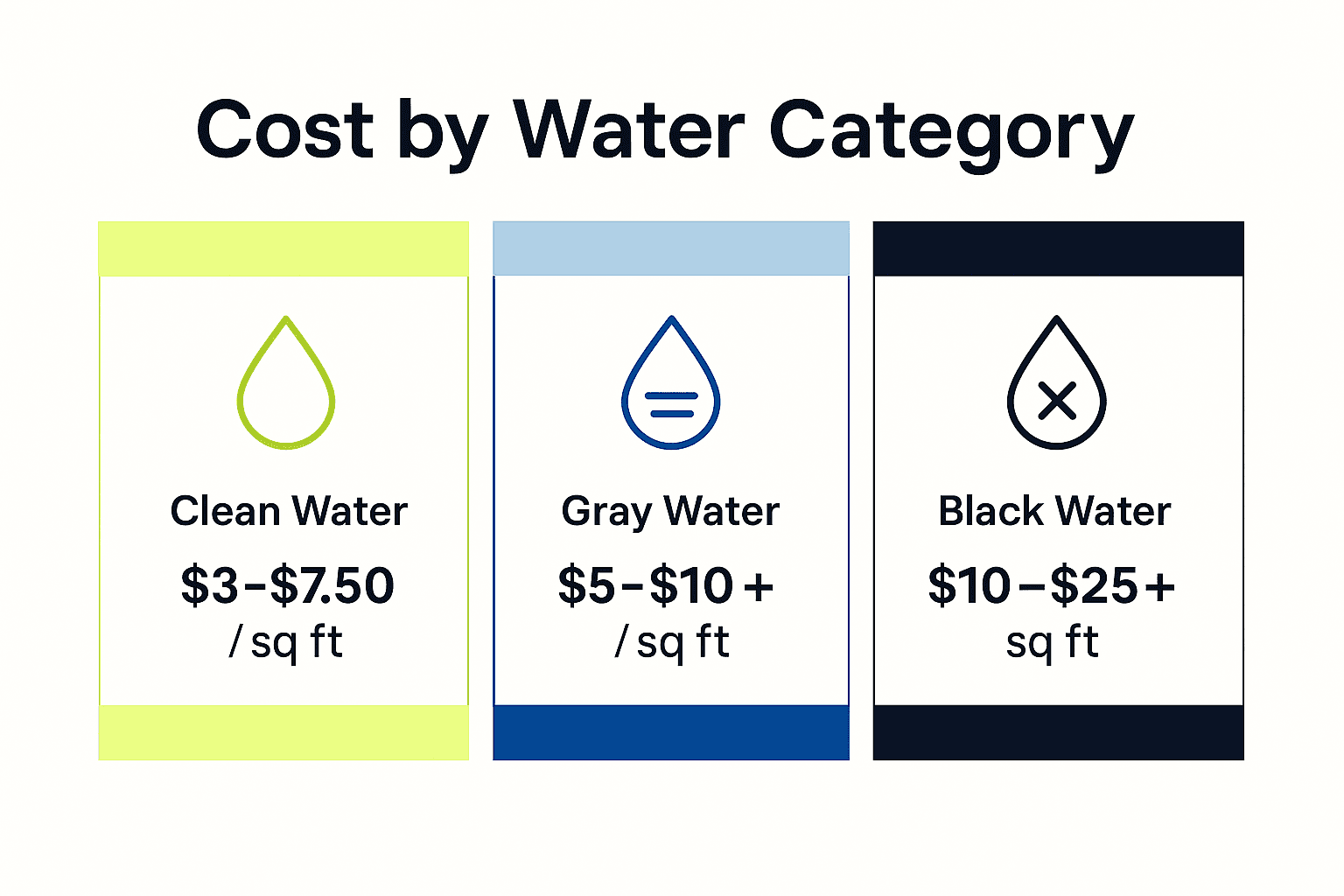
Contamination determines demolition requirements, protective gear, disposal costs, and how deep restoration needs to go.
Category 1: Clean Water
Clean water is the most forgiving type – broken supply lines, appliance failures, or rainwater entry.
Costs stay lower because cleanup requires extraction, drying, and targeted sanitization. As long as the response is fast, materials can often be saved.
Typical Range: $3–$7.50 per sq ft depending on area size and materials.
Category 2: Gray Water
Gray water carries detergents, food particles, soaps, and bacteria. Think dishwashers, washing machines, and showers.
Once water is in this category, contaminated materials like lower drywall and insulation usually need to come out.
Typical Range: Higher than clean water due to demolition and disinfection – often $5–$10+ per sq ft.
Category 3: Black Water
The expensive one. Black water includes sewage backups, floodwater, street runoff, and overflow from drains. All porous materials must be removed and disposed of.
Full containment is required, crews wear PPE, and negative air machines run continuously.
Typical Range: Can double or triple the cost of clean water jobs – $10–$25+ per sq ft depending on affected areas.
How Exposure Time and Severity Change Cost
Even clean water becomes gray if it sits too long. Clean water becomes a mold job when it sits over 24–48 hours. By that point, it’s not drying – it’s demolition and rebuild.
Immediate Response (0–24 Hours)
Rapid extraction and targeted drying usually keep the job in the lower bracket. Materials can often be salvaged. This is the window every property manager wants to stay in.
Moderate Exposure (24–72 Hours)
Drywall softens, insulation holds moisture, flooring cupps, and mold begins. At this stage, demolition is more likely, and antimicrobial treatments are required.
Prolonged Exposure (3+ Days)
Hidden water finds every cavity. Mold takes hold, framing can swell, and electrical or plumbing may be compromised.
These jobs move into multi‑room demolition, mold remediation, and rebuild – the $10k+ territory.
Cost Breakdown by Work Phase
Here is the part most property owners don’t see until the invoice: the work phases that make up a water damage project.
Water Extraction
Removing standing water is the first step. Pumps and wet vac systems run continuously until floors are clear.
Cost: $3–$7 per sq ft, depending on access and volume.
Drying and Dehumidification
Air movers, dehumidifiers, and moisture monitoring stay on site for days. Basements take the longest due to humidity and limited airflow.
Cost: $4,700–$5,500 for large rooms or basements.
Mold Prevention or Remediation
A simple antimicrobial treatment is inexpensive. Active mold is not. NYC requires a licensed assessor and licensed remediator, which adds time and structure.
Cost: $500 for small areas up to $10,000+ for extensive mold.
Demolition and Material Removal
Wet drywall, flooring, insulation, and baseboards come out. Plaster walls or multi‑layer assemblies take considerably longer.
Cost: Varies by material and square footage.
Structural Repairs and Rebuild
Drywall, ceilings, framing, flooring, and sometimes electrical or plumbing need replacement.
Typical Costs:
Drywall: $300–$850
Ceilings: $450–$1,600
Roof components: $400–$2,000+
Content Pack‑Out and Storage
Furniture and belongings are removed, cleaned, and stored offsite.
Specialized Equipment
HEPA air scrubbers, negative air machines, thermal imaging, moisture mapping – all standard on complex NYC jobs.
Cost Differences by Property Type
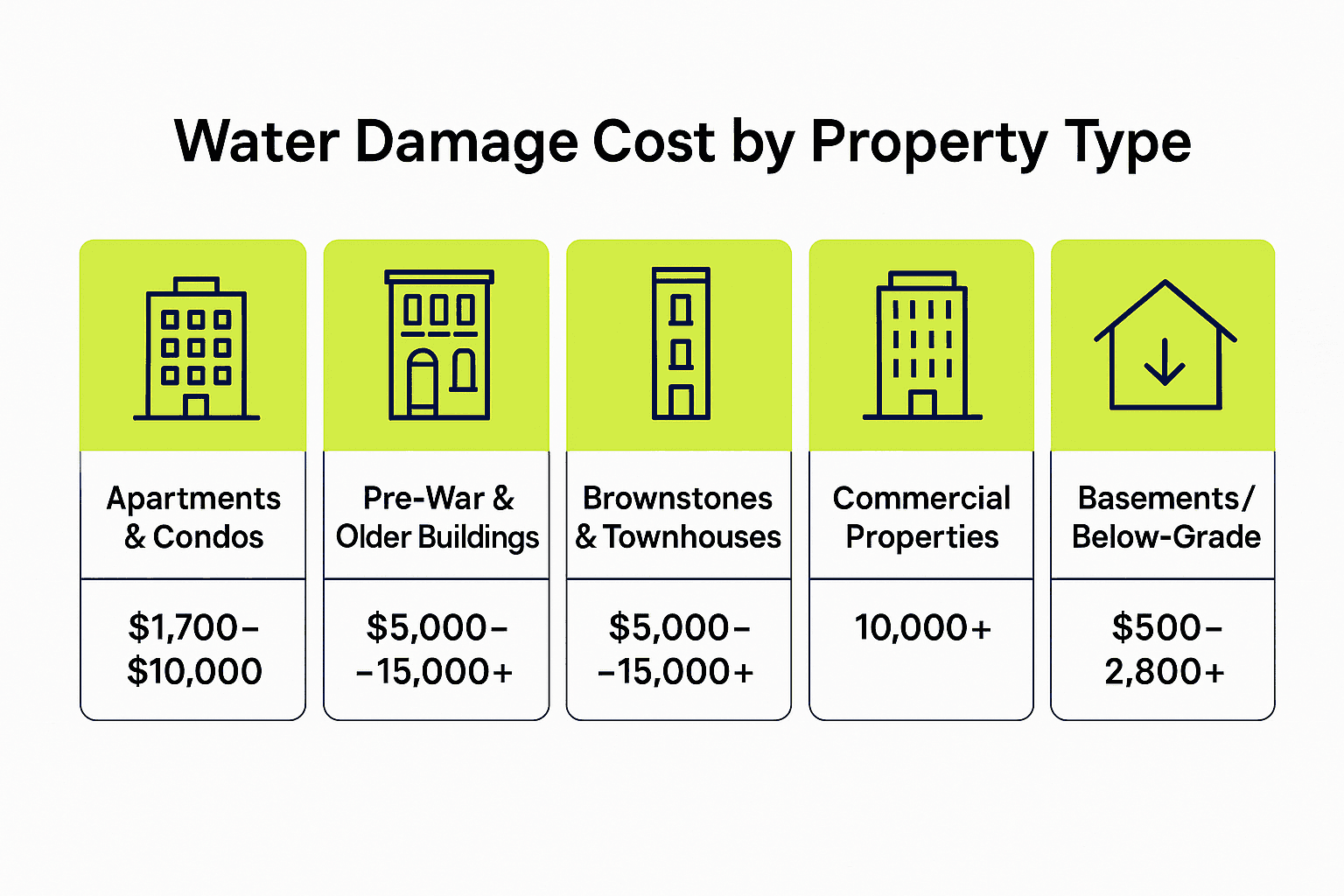
Different property types in NYC respond to water differently.
Apartments & Condos
These jobs are often contained but complicated by shared walls and plumbing stacks. Water can migrate vertically quickly.
Typical Range: $1,700–$10,000
Pre‑War and Older Buildings
Layers of plaster, lath, steel studs, and aging pipes turn a simple job into a detective project. Water hides everywhere.
Typical Range: $5,000–$15,000+
Brownstones & Townhouses
Multi‑level water migration is common. A second‑floor pipe break rarely stays on one floor.
Typical Range: $5,000–$15,000+ depending on how many floors are affected
Commercial Properties
More systems, more equipment, and more urgency. HVAC, server rooms, retail fixtures – everything adds cost.
Typical Range: $10,000+ for moderate damage
Basements / Below‑Grade Areas
These spaces deal with groundwater, drainage failures, and high humidity.
Typical Range: $500–$2,800 for minor drying; higher with structural or mold issues
Unexpected Costs To Plan For
This is where budgets slip.
Mold behind walls: Even if the room looks dry, wall cavities tell a different story.
Structural damage: Swollen studs, soaked insulation, electrical corrosion – none of it obvious at first glance.
Disposal costs: Black water means special disposal and higher labor.
After‑hours premiums: Emergencies don’t wait, and neither do crews. 20% is standard.
Permits and inspections: Certain repairs trigger DOB requirements and add weeks.
Insurance gaps: Not every policy covers every scenario. Flooding is a separate policy.
Insurance: What’s Covered & What’s Not
Sudden and accidental water damage is usually covered – burst pipes, appliance malfunctions, sudden roof leaks. Long‑term leaks from deteriorating pipes typically are not.
Flooding from storms or rising water requires a separate flood policy. Sewer backups need an endorsement. Mold coverage varies and often has a cap.
Documentation is key. Photos, videos, and professional reports help ensure fair claims.
Cost-Saving Tips for NYC Property Owners & Managers
Immediate Steps to Reduce Damage
Cut the water source. Shut off the main. Get fans moving if it's safe. Document everything. The faster the extraction happens, the smaller the footprint of the damage.
Even simple actions like moving furniture or rolling up rugs help prevent secondary damage that becomes billable later.
Preventive Maintenance That Cuts Costs
Most water jobs start long before the leak is visible.
Regular inspections of roofs, plumbing risers, HVAC condensate lines, and window seals go a long way. Clear gutters. Check sump pumps. Look for staining on ceilings and walls.
Small fixes now prevent expensive emergencies later.
Leak Detection Technology
Smart leak sensors aren’t only for high-end homes. Installing detection devices on risers, mechanical rooms, laundry rooms, and boiler rooms can reduce damage by over 90%.
Some systems can shut off the main automatically when a leak is detected.
How to Avoid After-Hours Premiums (When Possible)
Not every water incident is a five-alarm emergency. If the source is controlled and there’s no contamination, some work can be scheduled during regular hours to avoid the 20% after-hours premium.
Always ask your restoration partner whether the job needs an overnight crew or if it can safely wait.
Frequently Asked Questions
How long does water damage restoration usually take in NYC?
Most small to mid-sized clean water jobs take 3–5 days. Add mold, structural repairs, or DOB permits and the timeline stretches into 1–3 weeks. High-rise access, holidays, or multi-unit impacts can extend things further.
Can water damage spread to other units in an apartment building?
Yes. In NYC buildings, water often migrates vertically through risers, chases, and shared wall cavities. It’s common for one leak to affect multiple apartments, which increases both cost and scope quickly.
Do I need to vacate the property during restoration?
For clean-water jobs, usually not. For mold, black water, or large-scale demolition, temporary relocation may be recommended for safety and comfort. Licensed contractors can isolate work zones to minimize disruption.
How accurate are initial water damage estimates?
They’re usually solid for the visible work, but hidden moisture, trapped water behind walls, and mold can shift the scope once demolition begins. A good contractor explains what’s confirmed versus what’s contingent.
Need An Accurate Water Damage Estimate?
Get a licensed team on-site fast to price your situation.
Conclusion
Water damage in NYC comes with a price range that depends heavily on what kind of water you’re dealing with and how long it’s been sitting.
Most clean-water jobs that are caught early stay in the $1,700 to $5,000 bracket, while multi-room damage or mold-risk situations climb into the $5,000 to $10,000+ zone. Once you’re dealing with black water, hidden moisture, or older buildings with layers of plaster and steel studs, it’s common for projects to land in the $10,000 to $16,000+ range.
The big swing in water damage restoration cost isn’t random. It comes from contamination level, demolition needs, and the realities of NYC construction.
If you want to know where your situation falls on that spectrum, getting a licensed team on-site is the fastest way to get a clear, accurate number. Get a free quote and we’ll assess the damage properly so you can make decisions with realistic costs.