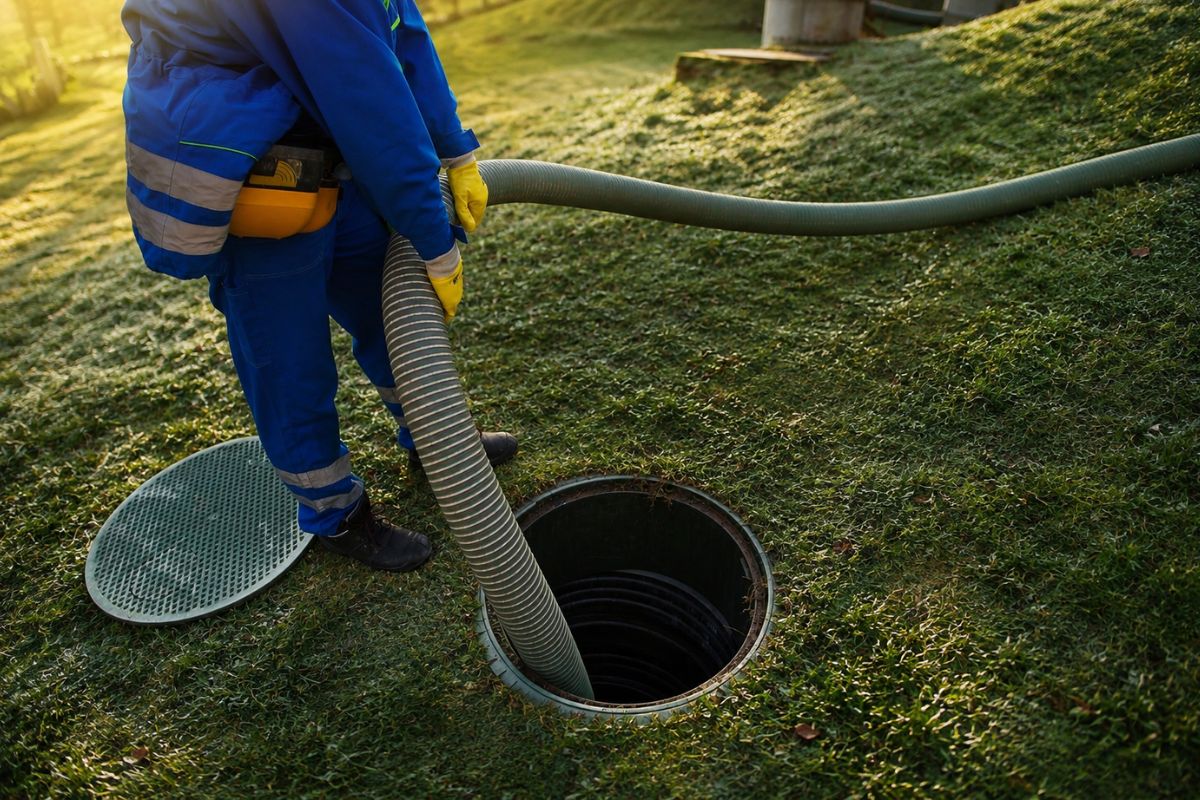
Sewage cleanup in NYC starts at around $2,000 and climbs from there.
How high it climbs depends on a handful of variables: how fast crews mobilize, what materials got hit, whether the building has elevator access, whether mold had time to set in.
The range tops out past $20,000 on severe jobs.
We’ll cover realistic NYC pricing, cost drivers, insurance coverage, and where bills spike.
Key Notes
Sewage cleanup runs $7–$15+ per square foot in NYC, with finished basements pricing significantly higher.
Mold sets in within 24–48 hours, turning a $3,000 cleanup into $10,000+ fast.
Standard homeowners policies exclude sewer backups (a $50–$250/year rider is the only real coverage).
Sewage Cleanup Cost In NYC: The Quick Numbers
Job Size | Affected Area | Typical NYC Cost |
Low-End / Contained | Under 50 sq ft | $2,000 – $3,500 |
Mid-Range | 50 – 200 sq ft | $3,500 – $6,500 |
High-End / Severe | 200 – 500+ sq ft | $6,500 – $20,000+ |
Per Square Foot Rate | — | $7 – $15+ |
Minimum Service Call | — | $500 – $1,000 |
One Thing Worth Flagging:
The per-square-foot number covers extraction, removal of contaminated porous materials, cleaning, and antimicrobial treatment. It does not cover rebuild (new drywall, flooring, paint, cabinetry).
That's a separate line item and often a separate phase entirely.
What Drives Sewage Cleanup Costs Up Or Down?
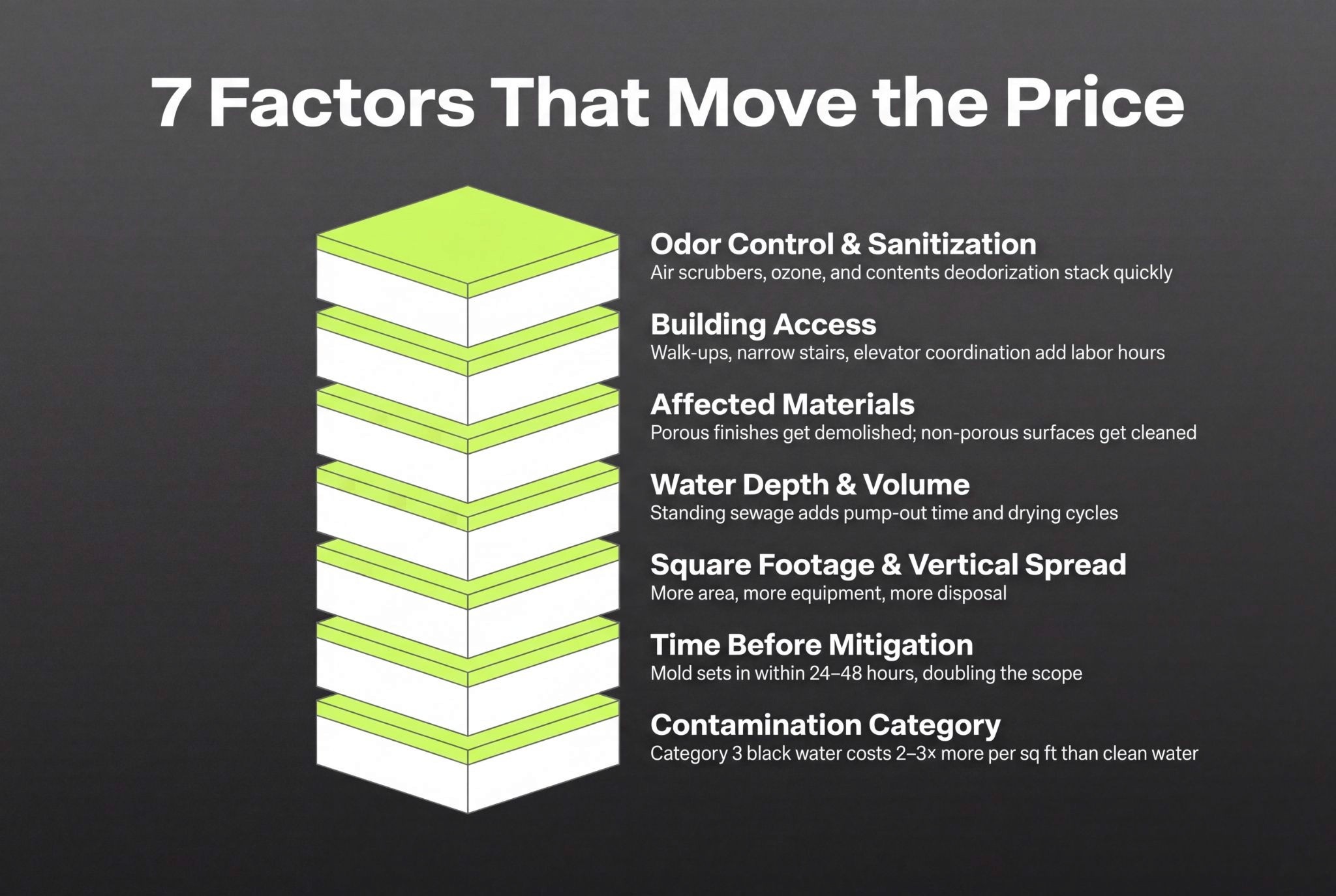
Prices vary so widely because seven different factors stack on top of each other. Some you can control. Most you can't.
Sewage Cleanup Cost By Scenario
Different spaces, different pricing logic.
Here's what you can expect across the most common situations:
Sewage Backup Cleanup Cost (General Residential)
A typical sewage backup cleanup cost in NYC sits between $2,000 and $12,000, with most homeowners paying $4,500 to $6,500 once extraction, disinfection, and basic demolition are accounted for.
Pricing By Spread:
Single-room contained event: Under $3,500
Whole-floor contamination across multiple rooms: $7,000+, climbing into five figures with finished surfaces
What makes sewage backups more expensive than other water damage is the contamination class. Clean-water losses like a burst supply line can often be dried in place. Black water means porous material is cut out, hauled away as regulated waste, and replaced so you're paying for both the mitigation and a partial rebuild.
Basement Sewage Cleanup Cost
Basement sewage cleanup cost in NYC typically lands between $3,500 and $10,000+, with finished basements running significantly higher than unfinished ones:
Unfinished basement (concrete, minimal finishes): $3,500 – $7,000
Finished basement (carpet, drywall, insulation, trim): $6,500 – $15,000+
Why Basements Skew Expensive:
Sewage pools and sits longer, increasing saturation and mold risk
Mechanicals (furnace, water heater, laundry) need to be disconnected and cleaned around
Older NYC buildings add labor hours through narrow stairs and long hose runs
Crawl Space Sewage Cleanup Cost
Crawl space sewage cleanup cost in NYC typically runs $2,000 to $8,000+ depending on size, access, and whether mold or encapsulation are added.
These are some of the toughest jobs in the category. Tight clearances and poor lighting mean every step (setup, extraction, demolition, equipment placement) takes longer.
Common Added Scope In Crawl Spaces:
Soil removal where sewage has saturated the ground
Vapor barrier replacement
Extensive disinfection of piers and subfloor undersides
Mold remediation (almost always part of the picture given the moist, enclosed conditions)
Toilet Overflow With Sewage
A toilet overflow contained to a single bathroom typically runs $1,500 to $3,500 for a Category 3 cleanup, with floor size and materials driving the variation.
Where Pricing Escalates:
Overflow contacts carpet, wood, drywall, or other porous materials
Water travels into adjacent rooms or down to the floor below
Once spread happens, you're looking at $2,000 to $7,000+ depending on how far it traveled.
Multi-Unit & Commercial Properties
For property managers and building owners, sewage events scale with the number of impacted units and shared systems. A backup that hits a single apartment, a hallway, and a unit below pulls three separate scopes into one job.
What Gets Layered On Top Of Cleanup:
Tenant displacement coordination
ALE (additional living expense) documentation
Compliance reporting for HPD or building management
What's Included vs. What Costs Extra
Most NYC sewage cleanup quotes bundle a standard scope, with extras billed separately. Knowing the split keeps surprises off the final invoice.
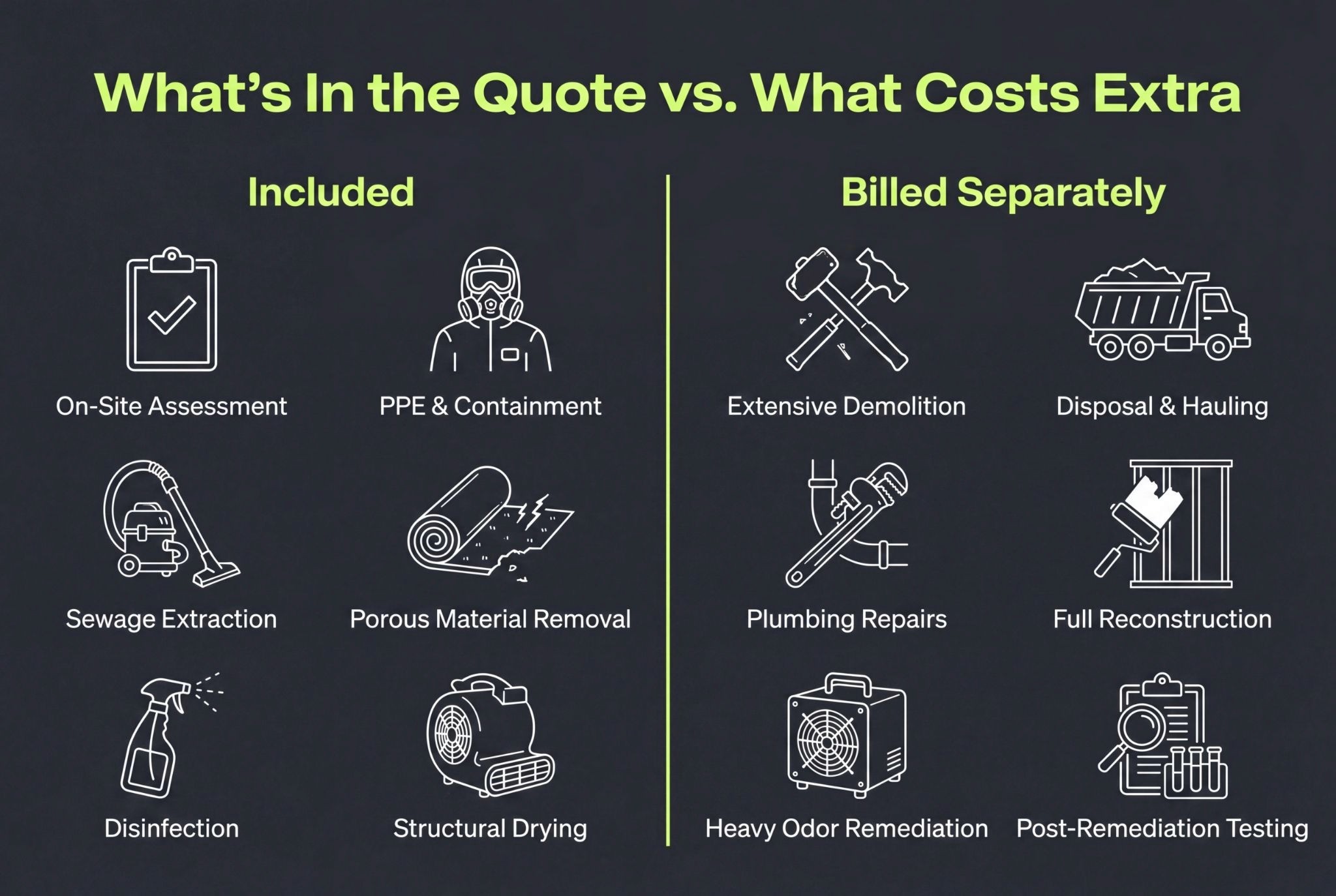
Demolition and disposal alone can account for 20% to 40% of the total bill on heavily finished spaces. Worth budgeting for upfront rather than reacting to it later.
Insurance, Deductibles & Out-of-Pocket Costs
Standard NYC homeowners policies usually exclude sewer and drain backups. You need a specific endorsement for any meaningful coverage.
The Sewer/Water Backup Rider
This is the add-on that puts sewage cleanup into your policy.
Annual cost: $50 – $250
Coverage limits: typically $5,000 – $25,000
What The Rider Generally Covers:
Professional cleanup and disinfection
Structural damage
Personal property up to sub-limits
Additional living expenses if the home is uninhabitable
Where Coverage Falls Short:
Even with the rider in place, insurance walks away from a few common scenarios:
Floods and groundwater (separate flood insurance required)
Long-term or maintenance-related damage
Sewer line repair outside the home (separate service line endorsement needed)
Anything above the rider's coverage cap
Realistic Out-Of-Pocket Costs
Even with good coverage, you'll still pay:
Your deductible: $500 – $2,500
Any overage above the rider limit
On a $20,000 loss with a $10,000 rider and a $1,000 deductible, you're paying $11,000 out of pocket.
How the Claims Process Affects Pricing
Most insurers allow emergency mitigation to begin immediately – you don't need to wait for an adjuster to start extraction and disinfection. Rebuild approvals are where claims slow down.
A restoration contractor who documents Category 3 protocols correctly speeds the approval process and reduces back-and-forth.
That means:
Moisture readings logged on day one
Photo documentation of every affected area
IICRC-aligned scope of work matched to insurer pricing standards
The Sewage Cleanup Process & Where Costs Spike
A typical NYC sewage cleanup runs 1 to 5 days for mitigation, with rebuild scheduled afterward.
Day 1: Assessment, containment, extraction, initial demolition, first disinfection pass
Days 2 – 4: Continued drying, moisture monitoring, additional disinfection, odor control
Rebuild phase: Several days to several weeks depending on scope
Costs Don't Climb Evenly Across That Timeline
They jump at specific moments:
When light cleaning turns into demolition. Cutting out carpet, drywall, and subfloor pulls in disposal fees and labor hours.
When equipment runtime extends past 3 to 4 days. Air movers and dehumidifiers bill daily.
When mold develops. A separate remediation scope gets layered on top, often adding $2,000 to $6,000+.
When mitigation crosses into full reconstruction. This is where one-room cleanups become five-figure projects.
How To Reduce Sewage Cleanup Costs
You can meaningfully control the final bill by what you do in the first few hours.
Right After A Backup:
Stop the source – shut off water, stop using toilets and drains, kill power to the affected area if it's safe to reach
Keep people out of the contaminated zone to avoid tracking sewage into clean rooms
Move clean, uncontaminated items away from the spread zone
Ventilate to outside windows and doors, but do not run central HVAC (it spreads contaminants and odors building-wide)
Call a licensed Category 3 restoration contractor within hours
Long-Term Prevention Worth The Investment:
Annual main line camera inspection to catch root intrusion or cracks early
Routine sump pump testing and backwater valve maintenance
A professionally installed backflow prevention valve ($200 – $1,000) for at-risk basements
A sewer/water backup endorsement on your homeowners policy
A backwater valve trades a small predictable cost for protection against an event that easily runs $10,000 to $20,000+. For finished basements or buildings with a known history of municipal sewer overload during heavy rain, it's one of the best returns in property risk management.
Sewage Cleanup Cost FAQs
How quickly should sewage cleanup start after a backup?
Sewage cleanup should start within the first 24 hours of a backup, ideally within hours. Sewage drives mold growth in 24–48 hours, and porous materials soak deeper the longer water sits, so delays push the cleanup scope (and bill) up significantly.
Can I clean up a sewage backup myself?
You can DIY a sewage backup only if it's a tiny spill on hard, non-porous surfaces (tile, sealed concrete) and you have proper PPE. Anything involving standing water, porous materials, or spread beyond one small area is a Category 3 biohazard and needs licensed professional cleanup for health and insurance reasons.
How long does sewage cleanup take in a basement?
Basement sewage cleanup typically takes 3 to 5 days for the mitigation phase – extraction, demolition, disinfection, and structural drying. Reconstruction (drywall, flooring, finishes) is a separate phase that can run several days to several weeks depending on scope and contractor availability.
Is sewage backup cleanup covered if the city sewer caused it?
Sewage backup cleanup caused by a city sewer issue is only covered if you have a sewer/water backup endorsement on your homeowners policy. The city itself rarely pays out unless clear municipal negligence is proven, and those claims are slow and difficult to win – your own rider is the realistic coverage path.
Dealing With A Sewage Mess Right Now?
Certified NYC crews on-site fast, with clear upfront pricing.
Conclusion
Sewage cleanup cost in NYC sits in a wide band – $2,000 on the contained end, well past $20,000 when finished basements and delayed response are in play – and the variables that decide where you land are mostly knowable upfront.
Square footage, response time, finishes, building access, and whether a sewer/water backup rider is on your policy will tell you within a few thousand dollars where the final invoice will fall.
The biggest swing factor remains time. A six-hour response and a two-day response are different jobs at different prices.
If sewage just hit your building and you need a realistic number for your specific situation, an on-site assessment from a licensed Category 3 contractor will give you one within hours. Get your free quote now.