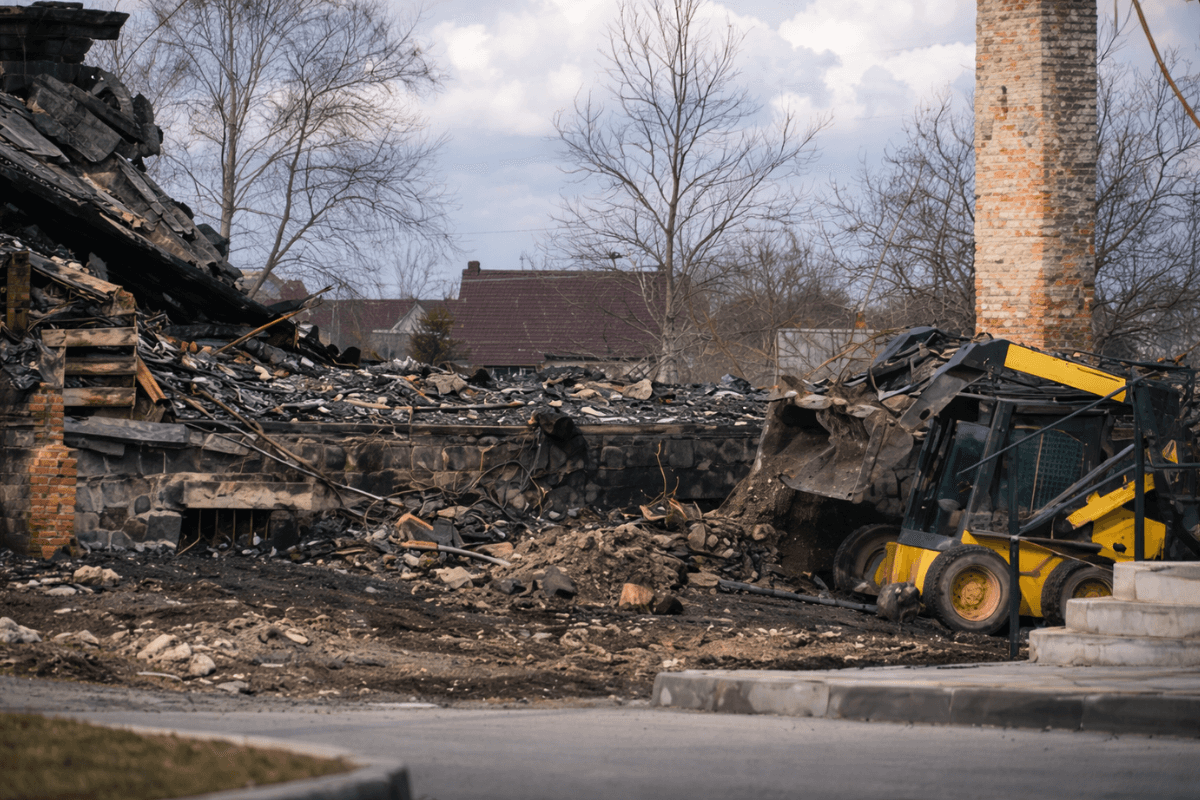
Fire damage in NYC comes with layers: the fire itself, the water that follows, the soot that settles everywhere, and the permits and inspections that slow nothing down but still have to happen.
Costs add up fast, and understanding why is half the battle.
We’ll break down the drivers behind fire damage restoration cost in NYC – from per-square-foot pricing to the compliance steps that make this city its own category.
Key Notes
NYC fire restoration typically costs $3–$7+ per square foot, depending on severity.
Compliance, access, and multi-agency inspections significantly increase timelines and total project cost.
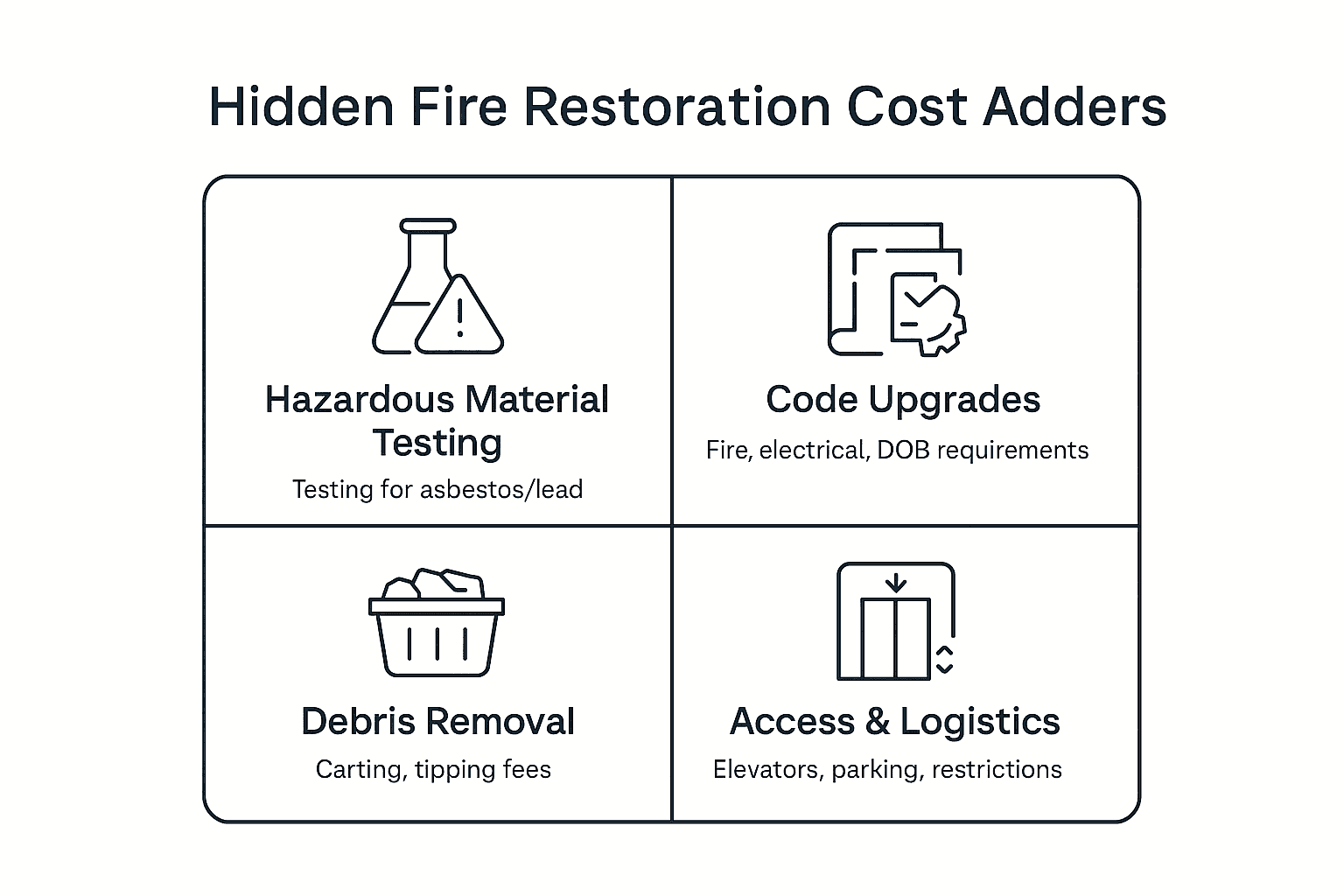
Debris removal, hazardous material testing, and required code upgrades are common hidden cost adders.
Quick Answer: NYC Fire Restoration Cost Ranges
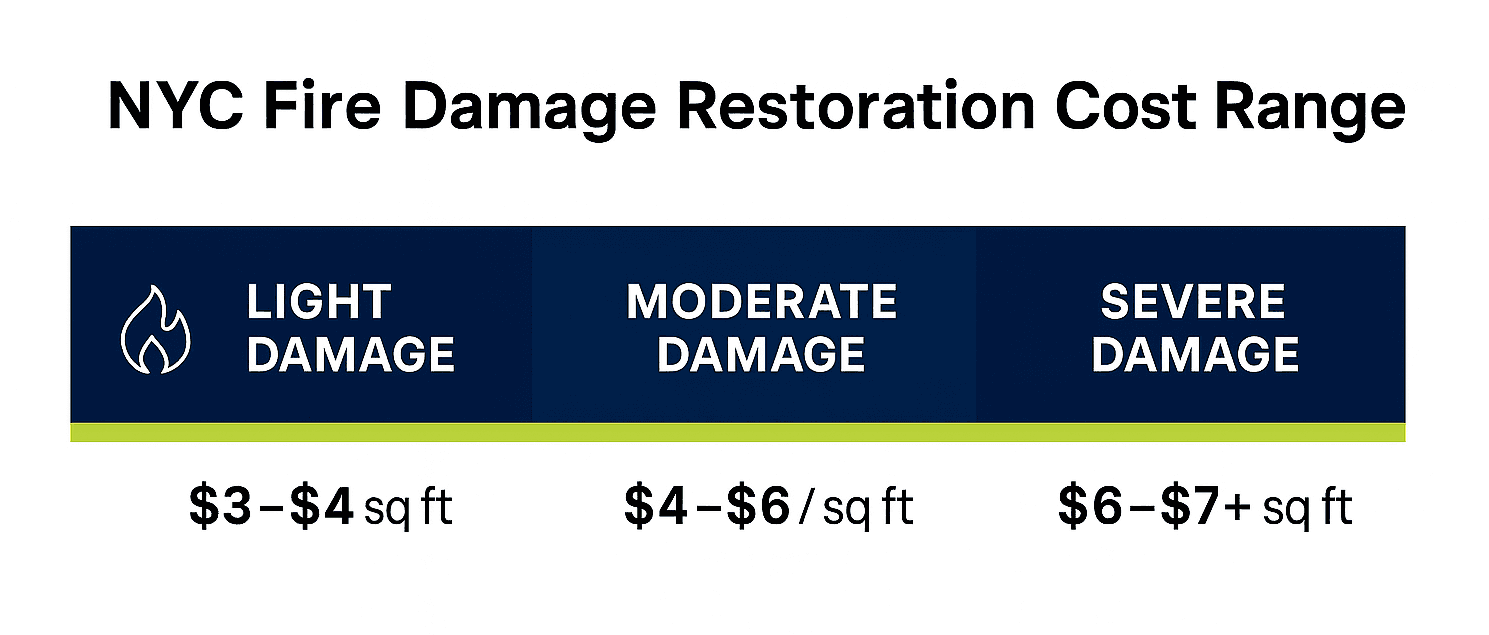
Most NYC fire restoration projects land in these brackets:
Light damage: about $3 to $4 per sq ft
Moderate damage: roughly $4 to $6 per sq ft
Severe damage: $6 to $7+ per sq ft (and in structural cases, easily higher)
Labor and compliance push NYC toward the upper end of national averages. Once you involve DOB permits, FDNY inspections, union labor, hazardous material testing, and high-rise access rules, the numbers climb fast.
Brackets Explained
Light Damage ($3–$4 per sq ft): Small, contained areas. Light soot, minor water, limited material replacement.
Moderate Damage ($4–$6 per sq ft): Multiple rooms affected. Mixed smoke types, water intrusion, partial reconstruction.
Severe Damage ($6–$7+ per sq ft): Structural repairs, system replacements, or heavy demolition. Easily climbs once framing, electrical, or plumbing need full replacement.
What Does Fire Damage Restoration Include in NYC?
Fire restoration isn’t a single task – it’s a whole chain of tightly sequenced work.
In New York, that chain is held together by compliance. You’re documenting, filing, meeting inspectors, coordinating with adjusters, and keeping tenants or residents safe while work is underway.
Core Components Include:
Emergency response and assessment
Property security (board-ups, tarps, door reinforcements)
Water extraction and drying
Soot, smoke, and odor cleanup
Demolition and debris removal
Structural repairs and full rebuilds
Clearance testing and final documentation
NYC Adds Extra Layers:
FDNY must inspect within 48 hours of a structural fire
DOB permits are often required before repairs
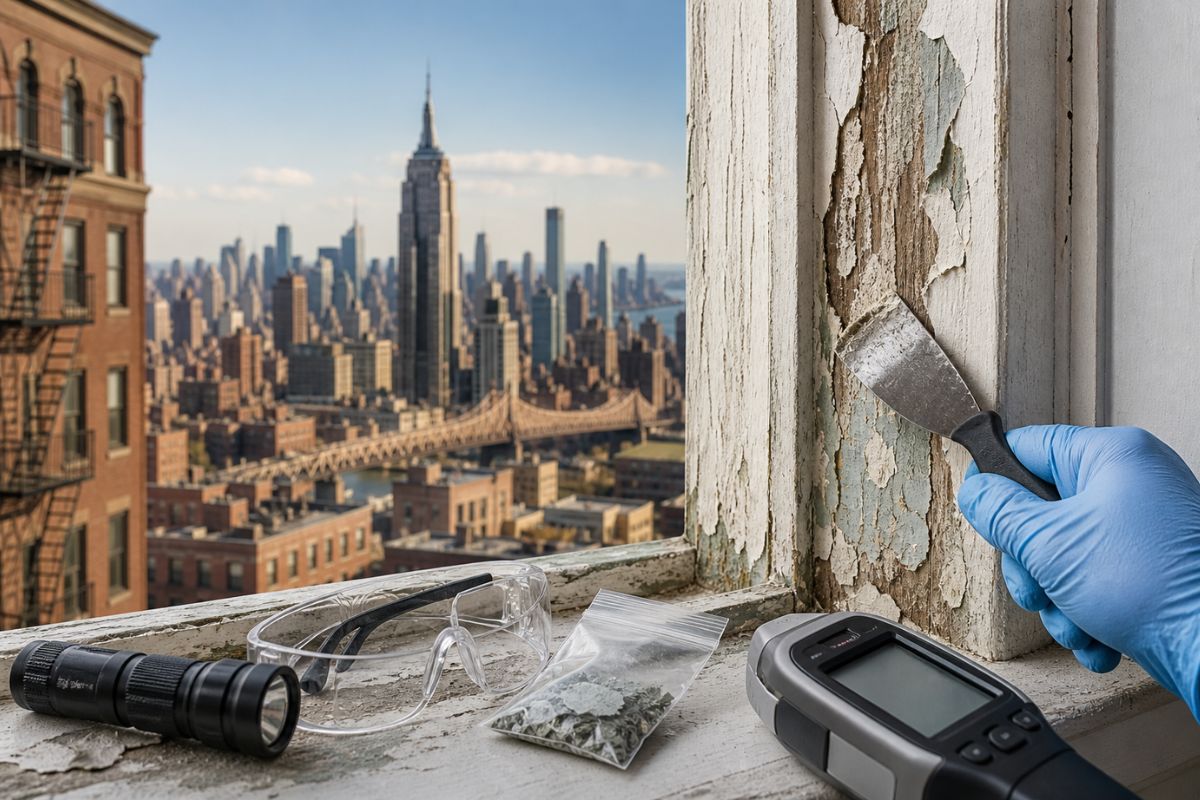
And many buildings need asbestos or lead testing before any demolition happens
That's why having a licensed, insured, compliance-ready partner isn’t optional here.
Stage-by-Stage Costs & Timelines
A full NYC fire restoration follows a predictable path, even if the scope varies:
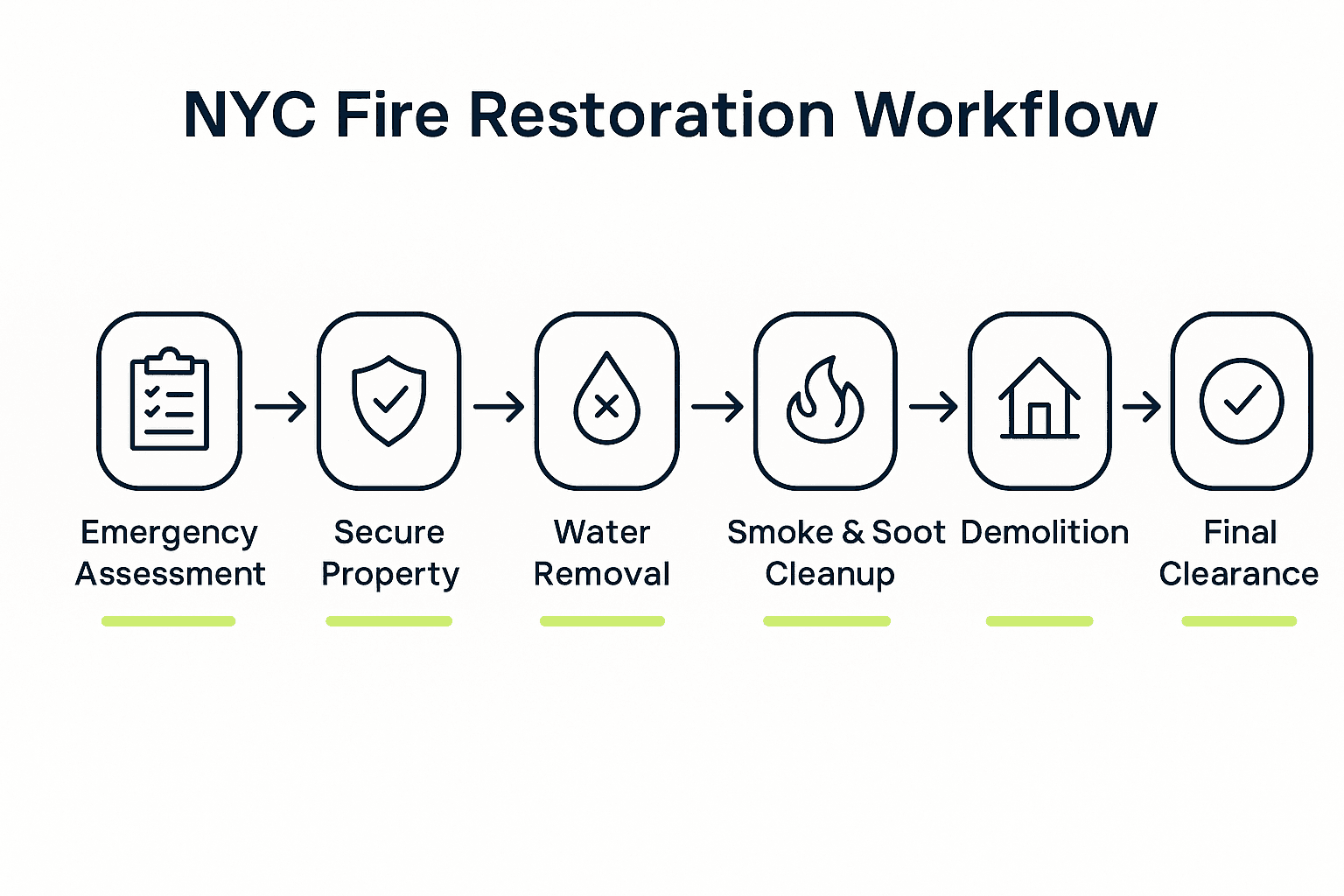
1. Emergency Response & Assessment
Crews assess fire, smoke, and water damage; document structural concerns; and coordinate with adjusters and building staff.
This first step influences the entire budget because hidden conditions discovered later become change orders.
2. Securing the Property
Boarding up windows, securing doors, tarping roof sections, or installing temporary barriers.
In NYC, this may also require sidewalk protection, scaffolding, or coordination with building management to safely access upper floors.
3. Water Removal & Structural Drying
Most fires come with water damage. Pumps, air movers, and dehumidifiers run around the clock. Slow drying causes mold and secondary damage, which stacks on more cost.
4. Soot, Smoke & Odor Remediation
Different smoke types behave differently. Dry soot is easy compared to wet smoke (thick, sticky, smeary) or protein smoke (near-invisible but extremely odorous).
Cleanup may include:
HEPA vacuuming
Dry sponging
Chemical degreasers
Thermal fogging
Ozone treatments
This is labor-heavy and one of the costliest phases.
5. Demolition & Debris Removal
Debris removal in NYC gets expensive fast. Carting fees, union labor, elevator restrictions, and tipping fees at $136–$150 per ton add up.
Hazardous debris (lead paint, asbestos, chemicals) requires special handling.
6. Repairs & Reconstruction
Drywall, insulation, framing, electrical, plumbing, flooring, paint, finishes – whatever the fire touched needs repair or replacement.
Code upgrades are often triggered here. Even if your building was up to code pre-fire, you may have to bring affected areas up to 2025 fire and electrical standards.
7. Final QA, Testing & Documentation
Air quality testing, DOB re-inspections, insurer documentation, and walkthroughs.
Debris Removal Costs
Debris hauling in NYC runs higher than in most cities.
Factors include:
Tipping fees ($136–$150 per ton)
Hazardous material rules
Union labor rates
Elevator and access limitations
Night work premiums
Most residential fire debris removal ranges $2,000 to $5,000 but large or contaminated loads climb higher.
Hidden Costs To Keep In Mind
Asbestos or lead testing and abatement
Code upgrades triggered by restoration
Temporary relocation or storage
Extra cleaning for shafts, hallways, and adjacent units
Change orders once walls are opened
These are the items that blow up budgets when not planned for early.
Insurance Basics for NYC Fire Losses
Insurance can cover most restoration costs, but only if the claim is documented cleanly and scope aligns with policy limits.
Watch For:
ACV vs RCV (Replacement Cost Value is always safer)
Code upgrade endorsements
Limitations on smoke and odor coverage
Disputes over material pricing or hidden damage
Experienced contractors work with adjusters daily, which avoids unnecessary back-and-forth and keeps timelines tight.
How to Reduce Costs Without Cutting Corners
Act fast on mitigation (secondary damage is expensive)
Bundle repairs and upgrades
Restore what can be saved instead of replacing everything
Work with a partner who understands NYC rules and avoids delays
Every day a fire-loss property sits untouched, the costs climb.
Fire Restoration Compliance Checklist for Property Managers
Confirm the FDNY inspection is complete
Schedule asbestos/lead testing before demo
Secure DOB permits
Plan containment and airflow controls
Coordinate elevator or access schedules
Maintain documentation for insurer
This is where many NYC restorations get stuck.
Frequently Asked Questions
How long should I wait for FDNY to release the property after a fire?
FDNY usually issues clearance within hours, but structural or safety concerns can hold that up. Once they give the green light, restoration teams can enter, assess, and start securing the property.
Can fire restoration work begin before insurance approves the full claim?
Yes. Mitigation work like board-ups, water removal, and drying should start immediately. Waiting risks secondary damage, which insurers often don’t cover if the delay makes things worse.
Do I need separate contractors for smoke, water, and structural repairs?
Not in NYC if you choose the right partner. A licensed, full-service restoration provider can handle all phases, streamline inspections, and keep the project compliant and moving.
Is it possible to keep parts of the building occupied during fire restoration?
In many cases, yes. With proper containment, negative air setup, and safety controls, unaffected units or spaces can stay open. It depends on the building layout, severity of damage, and DOB requirements.
Need A Clear Plan After A Fire?
Get fast, compliant guidance from a team that understands NYC buildings.
Conclusion
Fire damage restoration cost in NYC usually falls somewhere between $3 and $7+ per square foot, depending on how far the fire traveled, how much water got into the structure, and what DOB or FDNY requires before repairs move forward.
Smaller, contained fires stay on the lower end. Multi-room or structural damage quickly climbs once demolition, debris removal, soot cleanup, electrical work, and code upgrades enter the picture.
Add in high-rise logistics, union labor, hazardous material testing, and mandatory inspections, and you start to see why budgeting here feels different from other cities.
If you want realistic numbers tailored to your building and its conditions, request a free quote. A quick on-site look lets you plan smarter, avoid delays, and get the restoration moving in the right direction.